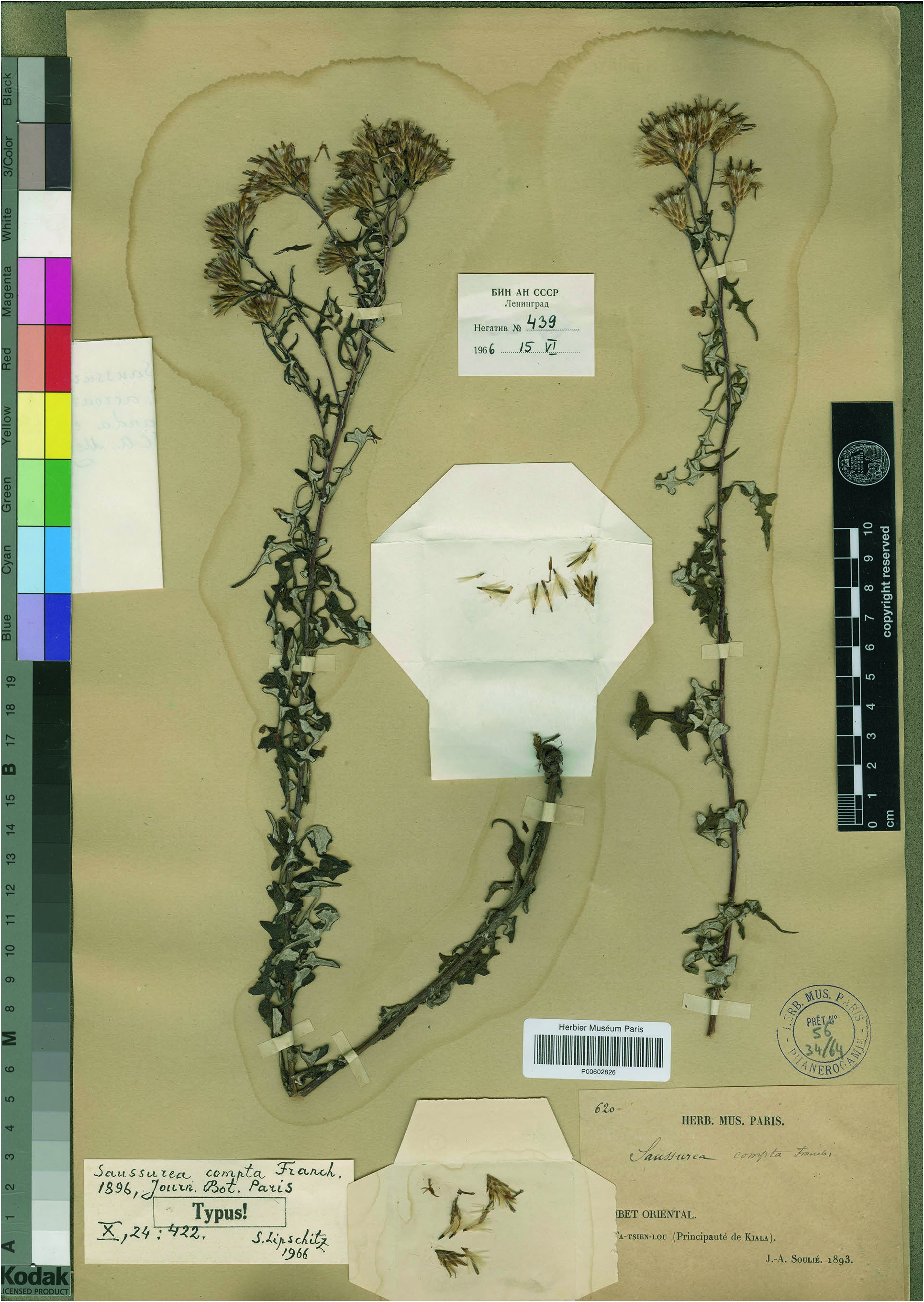
golden hawk's-beard
Crepis aurea (L.) Cass.

Crepis aurea (L.) Cass., known as golden hawk's-beard, is a perennial herb in the Asteraceae family. It is native to parts of Europe and the Balkans, including Switzerland, France, Germany, and others. The plant grows to a height of 2-30 cm and features a swollen caudex, with flowering stems that are scapelike and glabrous or hirsute. Rosette leaves are elliptic to obovate, while cauline leaves are reduced to scales. The inflorescence consists of 20-50-flowered heads with reddish, orange, and yellow ligules. Achenes are fusiform, with 16-18 ribs, and a persistent white pappus.
Description
Crepis aurea is a member of the Asteraceae family, characterized by its perennial growth habit and flowering stems that are 1-8 in number. The involucre is campanulate, 6-11 mm long, with linear outer bracts and narrowly ovate inner bracts. The corolla is ligulate, 7-16 mm long, with a ligule up to 2 mm wide. The anther tube is 3 mm long, and the style branches are up to 2 mm long. Achenes are 5-6 mm long, subterete, and pale brown. The pappus is white, 4-6 mm long, and persistent. The species was first described in 1822 by Cassini, with the specific epithet originally spelled 'aureum' in the protologue.
Other common names
golden hawk's-beard
Distribution
Switzerland · France · Liechtenstein · Turkey · Poland · Albania · Germany · Slovenia · Andorra · Montenegro · Bosnia-Herzegovina · Croatia · Austria · Greece · Italy · Serbia · SE · PL · Yugoslavia
Synonyms
Geracium aureumCalliopea aureaBrachyderea aureaCrepis kitaibeliiAracium aureumHieracium aureumAndryala aureaLeontodon aureusApargia aureaCrepis aurea subsp. typicaCrepis aurea var. typicaHieracioides aureaCrepis aurea var. halleriana