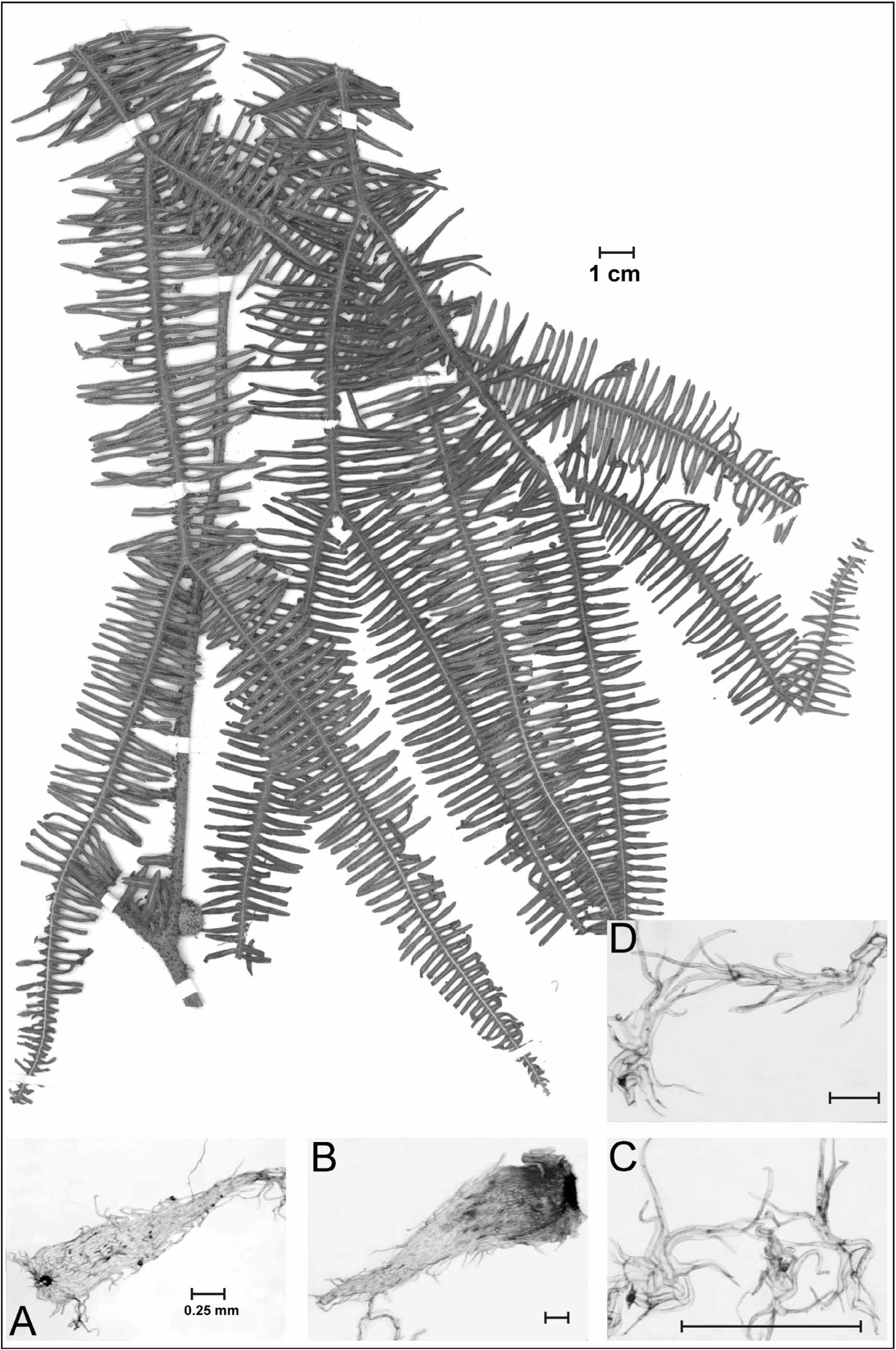
Gleichenia polypodioides
Gleichenia polypodioides (L.) Sm.

Gleichenia polypodioides (L.) Sm., a member of the Gleicheniaceae family, is a widespread rhizomatous fern native to tropical and southern Africa, as well as the western Indian Ocean region. It is found in countries including South Africa, Lesotho, Eswatini, Angola, Malawi, Burundi, Tanzania, Mozambique, Zimbabwe, Mauritius, Réunion, Amsterdam Island, and Madagascar. First described by Carl Linnaeus in 1771 as Onoclea polypodioides, it is known for its glabrous, brown, wiry stipes and forms dense thickets, especially in disturbed areas like pine plantations. It is often mistaken for an exotic invader but is a useful plant for rehabilitation and peat production, showing resistance to herbicides.
Description
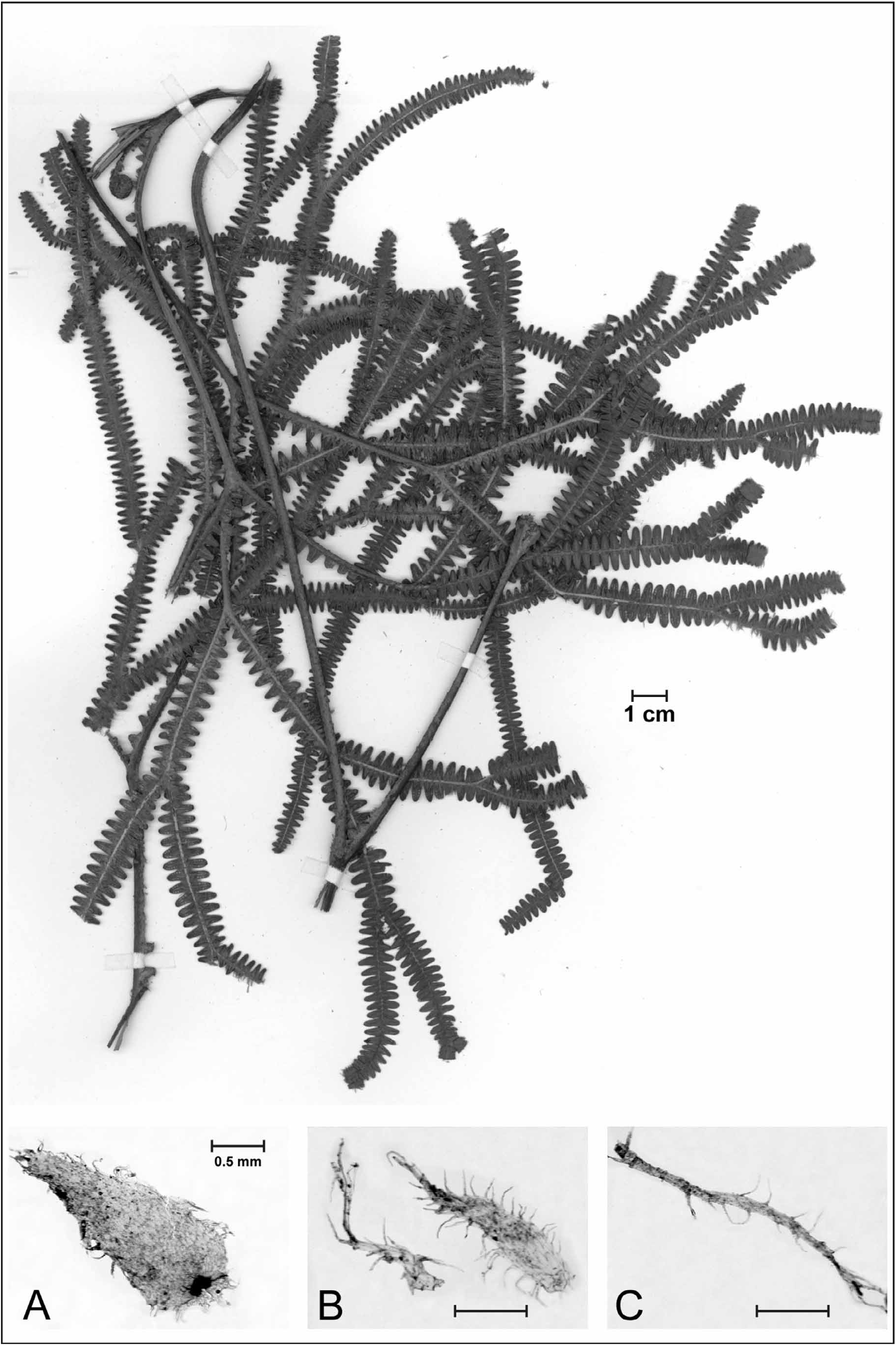
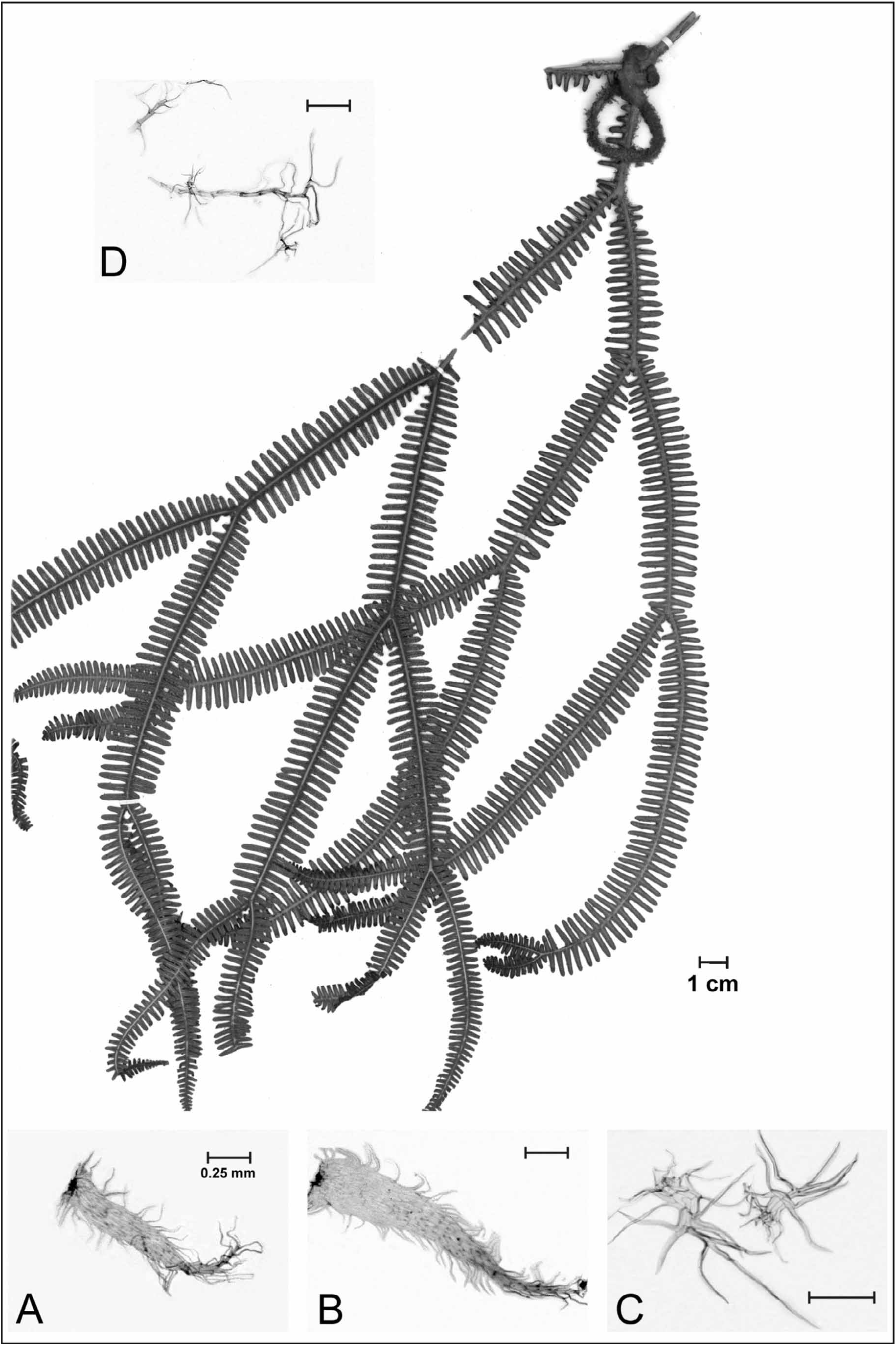
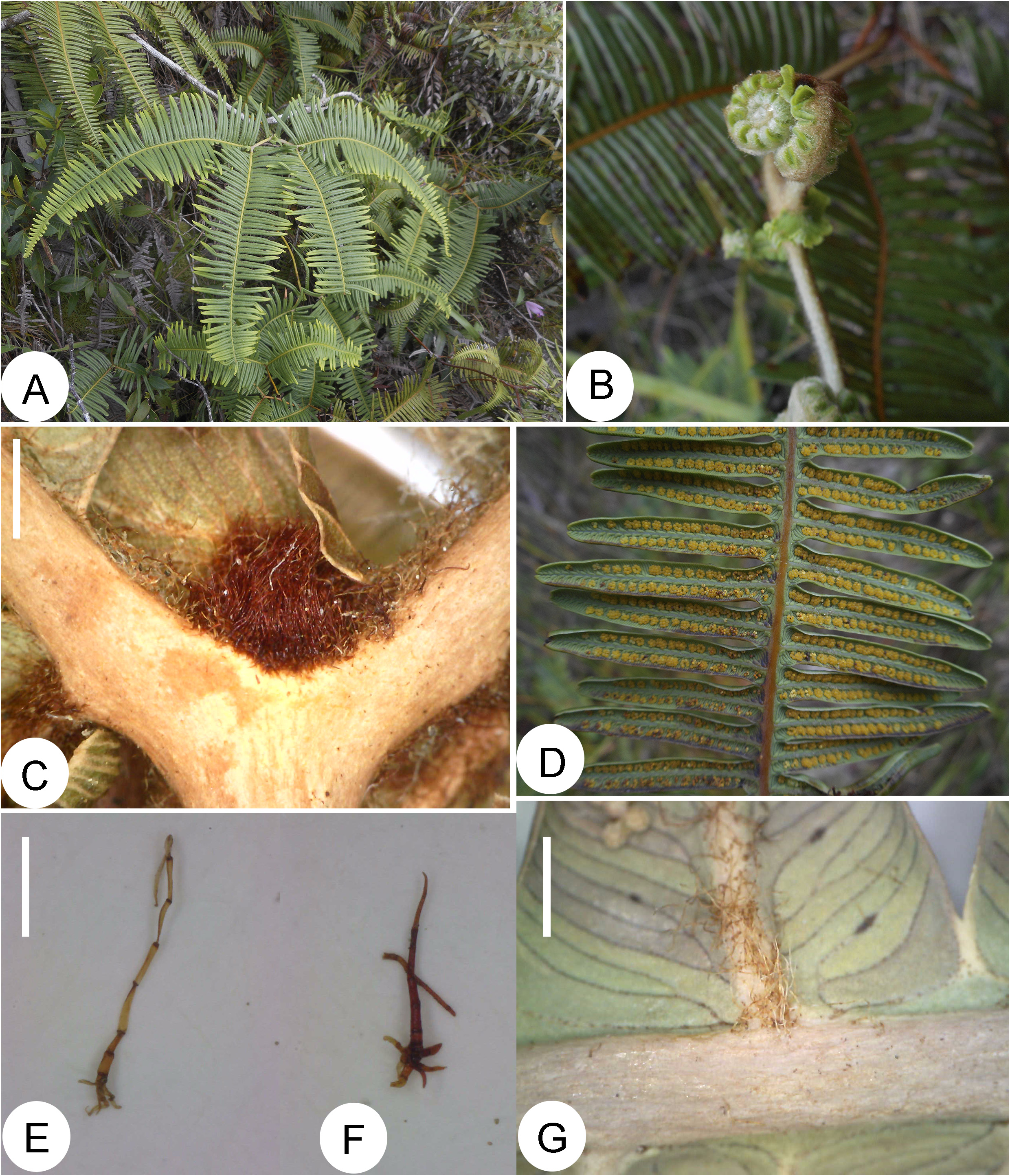
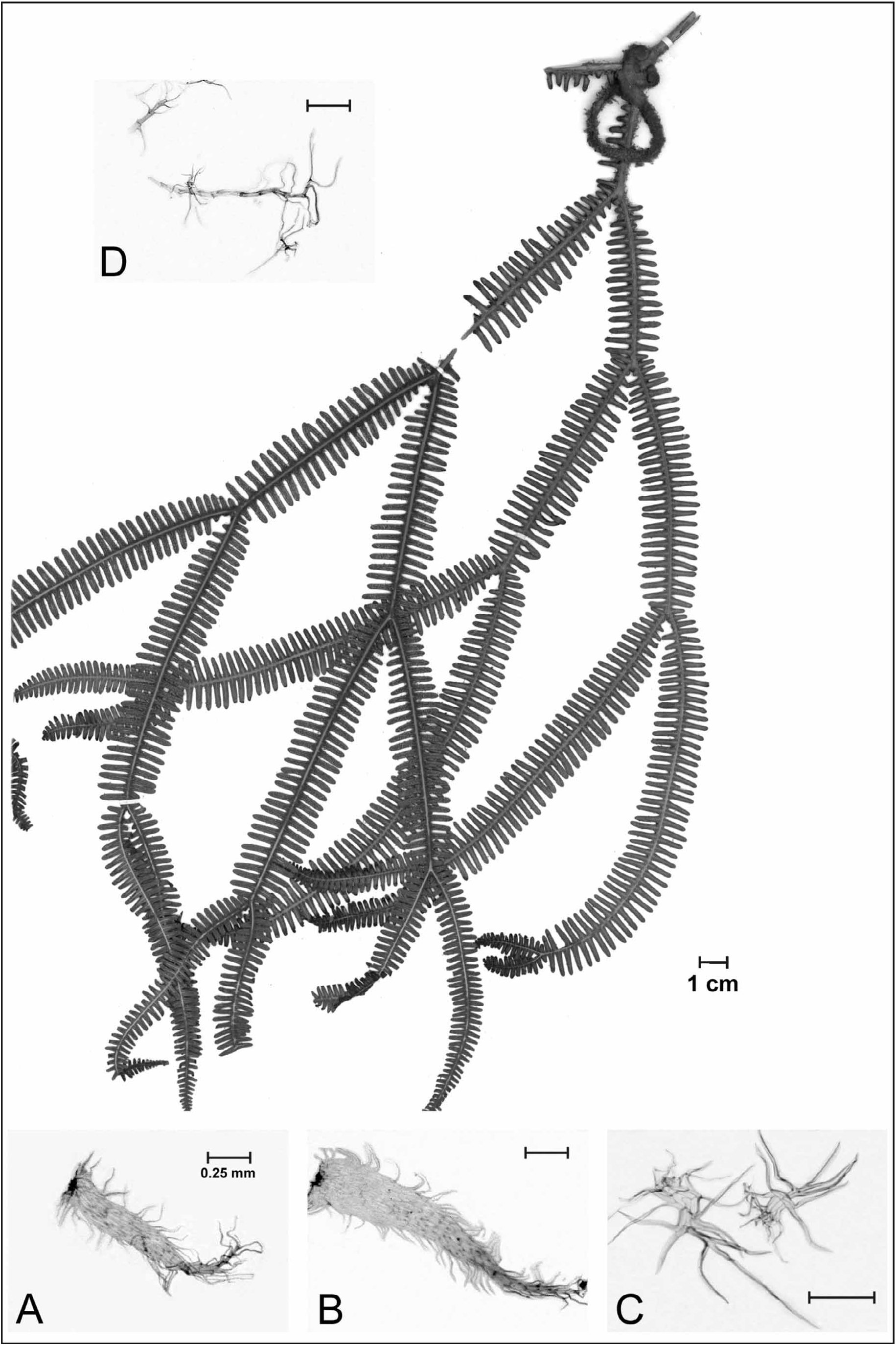
Gleichenia polypodioides is a rhizomatous perennial fern with a creeping rhizome up to 2.5 mm in diameter, covered in long-spined dark-brown scales. The stipes are castaneous, reaching 60 cm in length and 1.5 mm in diameter, and are glabrous or sparsely scaled. The fronds are bifurcate to reniform-lunate in shape, with one level of false dichotomy in each lateral branch system. The pinnules are linear, up to 7 x 0.75 cm, and pinnate. Aborted apical buds are up to 1.2 mm long and covered in dark-brown, lanceolate, laciniate scales. This species is commonly known as coral fern, kystervaring, or ystervaring.
Distribution
Amsterdam-St.Paul Is · Angola · Burundi · Cape Provinces · Free State · KwaZulu-Natal · Lesotho · Madagascar · Malawi · Mauritius · Mozambique · Northern Provinces · Réunion · Swaziland · Tanzania · Zimbabwe
Synonyms
Calymella polypodioidesOnoclea polypodioidesGleichenia glaucaGleichenia bijouxiiMertensia coeruleo-glaucaGleichenia argenteaGleichenia glauca var. nudiusculaGleichenia polypodioides var. argentea