Genlisea repens
Genlisea repens Benj.

Genlisea repens is a terrestrial or helophytic carnivorous plant species native to various regions in South America, particularly in Brazil. It is a member of the Lentibulariaceae family, known for its unique adaptations to nutrient-poor environments. This species is characterized by its glabrous (hairless) scape, bracts, bracteoles, pedicels, and sepals, as well as a yellow corolla with a trilobed lower lip and a spur that is parallel to the lower lip. It is primarily found in campo rupestre vegetation and other high-altitude habitats.
Description
Genlisea repens is a slender and flexible herb with a glabrous scape and ascending pedicels in fruits. The plant features a yellow corolla with a gibbous palate, glabrous lips, and a trilobed lower lip. The spur is glabrous, acute, and longer than the lower lip, and the capsule is circumscissile and glabrous. This species is easily distinguished from other yellow-flowered congeners in Bahia by the absence of hairs on its scape, bracts, bracteoles, pedicels, sepals, corolla, and capsule. Its unique morphology and habitat preferences make it a notable member of the Lentibulariaceae family.
Habitat
Genlisea repens is primarily found in campo rupestre vegetation, a type of high-altitude, rocky savanna ecosystem. It is also reported to inhabit restinga areas, which are coastal sandy plains, and veredas, which are seasonally flooded grasslands. These habitats are typically nutrient-poor and well-drained, conditions that are well-suited to the carnivorous lifestyle of Genlisea species. The plant is distributed across several regions in Brazil, including the Itacolomi State Park in Minas Gerais, as well as other high-altitude savannas in the Neotropical region.
Cultivation
Cultivating Genlisea repens requires a careful replication of its natural habitat, particularly the nutrient-poor, well-drained soils typical of campo rupestre and other high-altitude environments. The plant thrives in bright, indirect light and requires consistent moisture without becoming waterlogged. A mix of sand and peat moss, or a similar well-draining medium, is recommended. Due to its carnivorous nature, it may benefit from the presence of small insects or the addition of diluted liquid fertilizer to supplement nutrient intake. However, over-fertilization should be avoided to prevent damage to the plant.
Uses
Genlisea repens is primarily of ecological and botanical interest due to its unique adaptations to nutrient-poor environments. It plays a role in the biodiversity of campo rupestre and other high-altitude ecosystems, contributing to the complex interactions within these habitats. The species is also of interest to researchers studying the phytogeography and conservation of the Lentibulariaceae family. While it has no known economic or agricultural uses, its presence in specific habitats can serve as an indicator of ecosystem health and stability.
Distribution
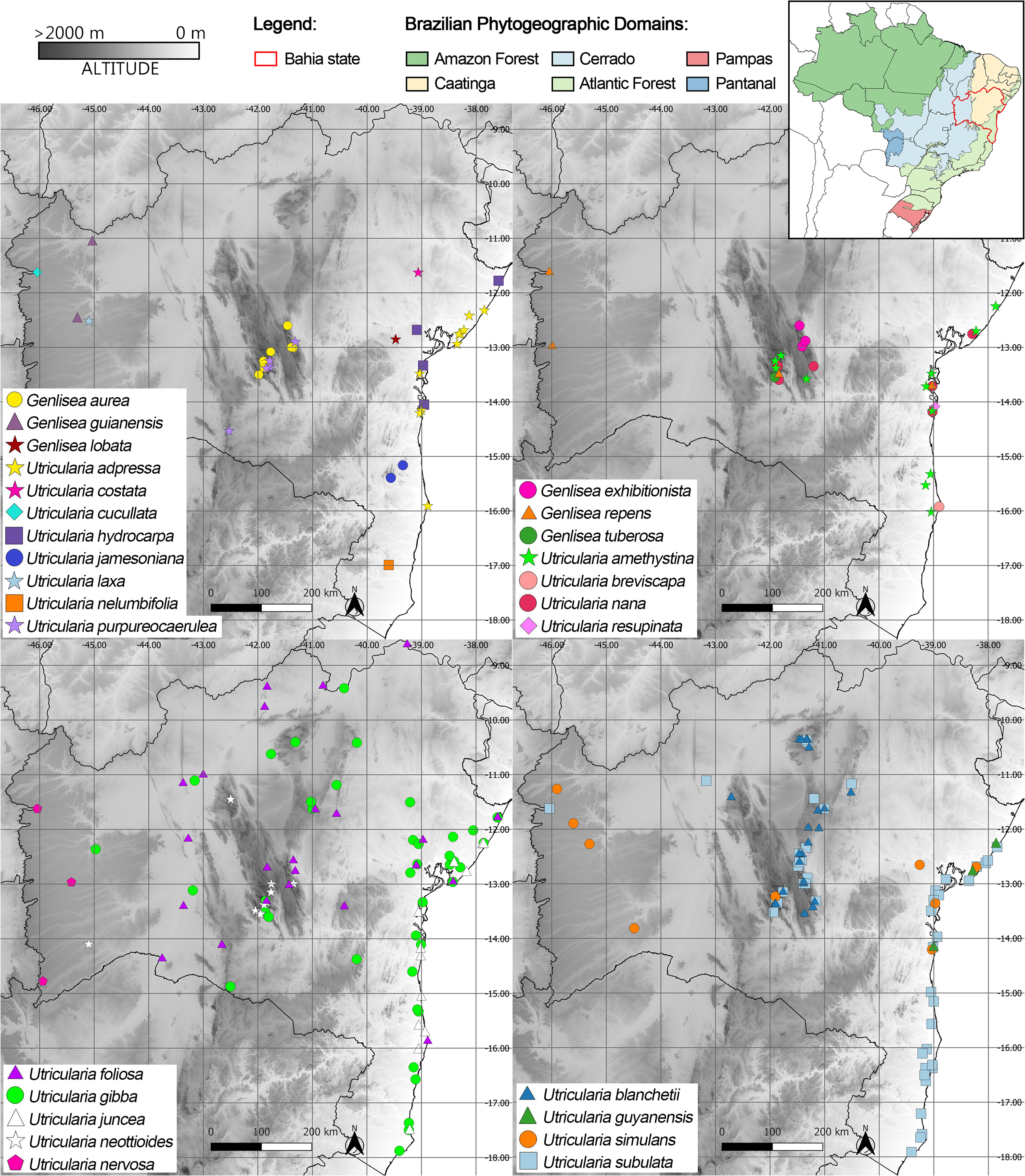
Itacolomi State Park, Lagoa Seca, MG, Brazil · BR · Nearctic · Neotropical · Guainía · Brazil Northeast · Brazil North · Brazil Southeast · Brazil South · Brazil West-Central · Colombia · Guyana · Paraguay · Suriname · Venezuela
Synonyms
Genlisea pusillaUtricularia obovata