Genlisea filiformis
Genlisea filiformis A.St.-Hil.

Genlisea filiformis is a carnivorous plant species belonging to the Lentibulariaceae family, commonly found in South America, Mesoamerica, and the Caribbean. It is characterized by its slender, flexible scape and yellow corolla with a pale-yellow spur. The plant is adapted to a variety of habitats, including campos rupestres, restingas, and veredas, and it plays a role in its ecosystem through its unique trapping mechanisms.
Description
Genlisea filiformis is a terrestrial or helophytic species with a slender and flexible scape. The plant's scape, bracts, bracteoles, and sepals are either glabrous or sparsely covered with eglandular and long-stalked glandular trichomes. The fruits are borne on ascending pedicels that are covered exclusively with long-stalked glandular trichomes. The corolla is yellow with a pale-yellow spur that is saccate and longer than the lower lip. The lower lip is trilobed and glabrous or sparsely glandular. The circumscissile capsule is covered with eglandular trichomes. This species can be distinguished from other yellow-flowered congeners by its saccate spur and capsule with only eglandular trichomes.
Habitat
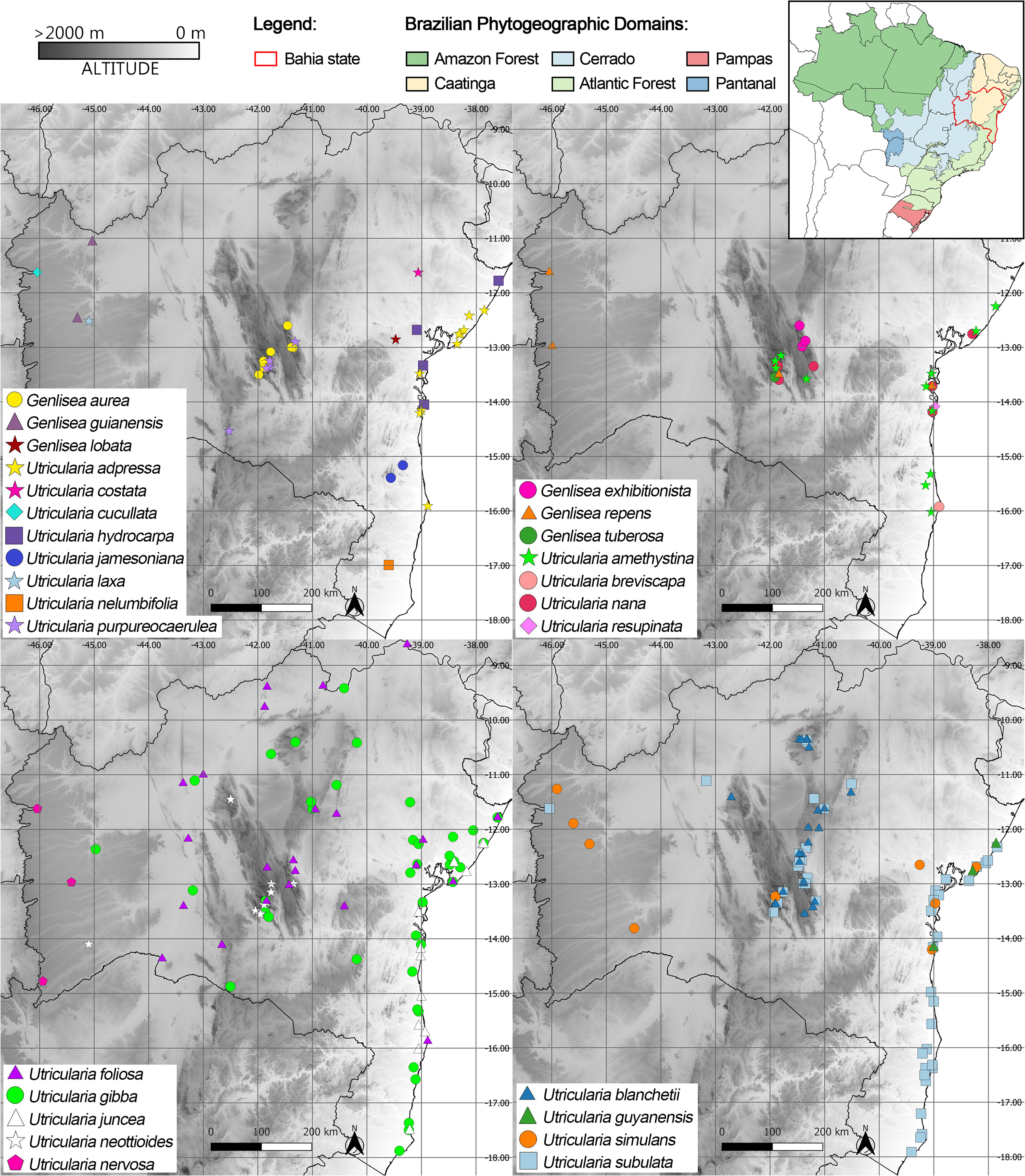
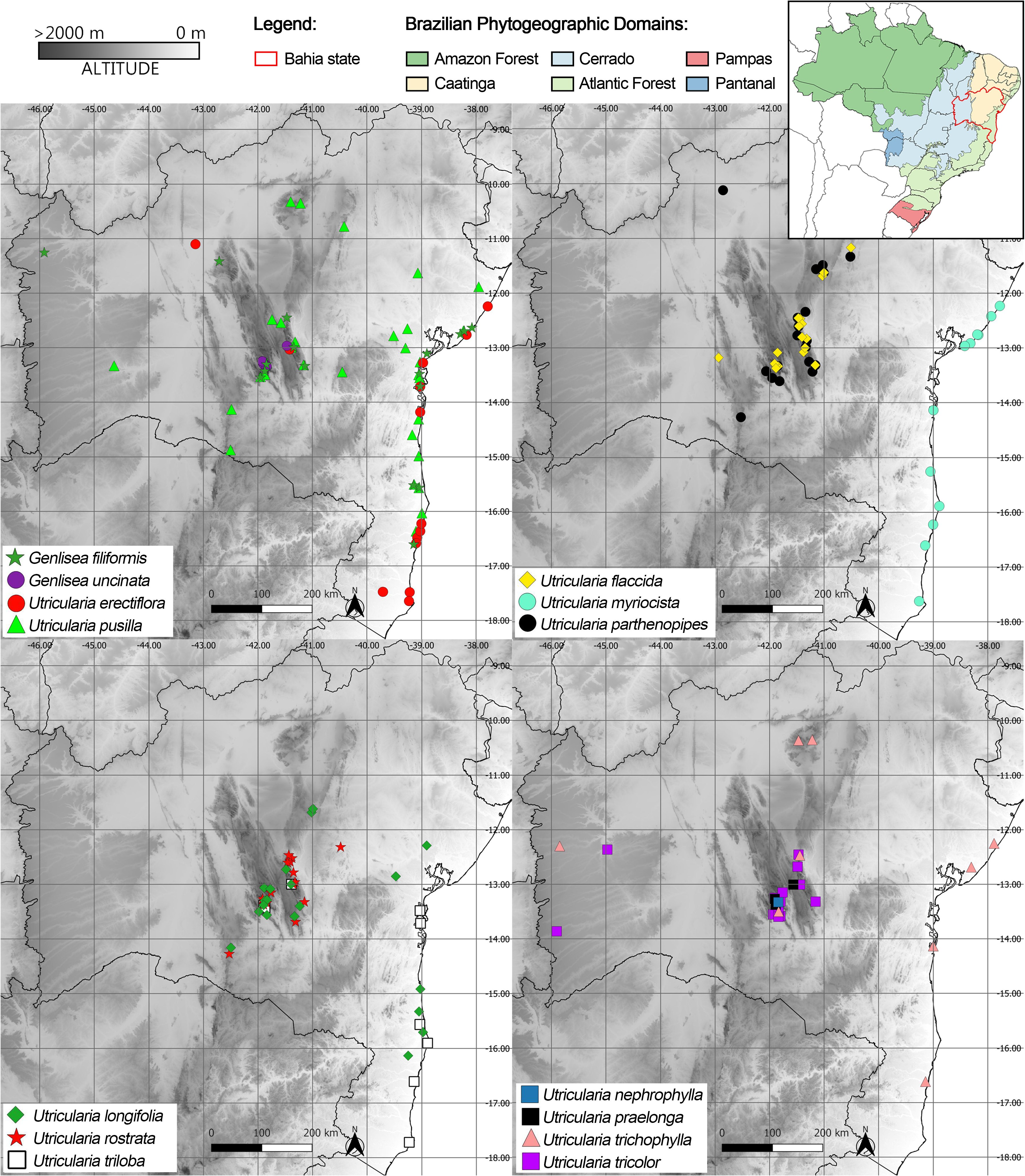
Genlisea filiformis is found in a wide range of habitats, including campos rupestres (rocky fields), restingas (coastal plains), and veredas (wetlands). It is adapted to a wide altitudinal range and is often associated with moist, nutrient-poor soils. The species is distributed across several countries in South America, Mesoamerica, and the Caribbean, including Brazil, Colombia, Mexico, and Venezuela.
Cultivation
Cultivation of Genlisea filiformis requires specific conditions to mimic its natural habitat. It thrives in moist, well-draining soils with high humidity and indirect light. The plant should be grown in a container with a mix of peat moss and perlite or sand to ensure proper drainage. Due to its carnivorous nature, it benefits from the presence of small insects or the use of diluted liquid fertilizer. It is important to maintain a consistent moisture level and avoid overwatering, as this can lead to root rot.
Uses
Genlisea filiformis is primarily of interest for its ecological role and horticultural appeal. As a carnivorous plant, it contributes to nutrient cycling in nutrient-poor environments by capturing and digesting small insects. It is also cultivated by enthusiasts for its unique morphology and yellow flowers. Additionally, the species is studied for its phytogeographic significance and its role in conservation efforts in its native habitats.
Distribution
BR · Parque Nacional Natural Serranía de Chiribiquete · Neotropical · Huila, Meta, Vichada · Parque Nacional Natural Serranía de Chiribiquete (PNNSCh) · Belize · Bolivia · Brazil Northeast · Brazil North · Brazil Southeast · Brazil West-Central · Colombia · Cuba · French Guiana · Guyana · Honduras · Mexico Southeast · Nicaragua · Suriname · Venezuela · Archipiélago de Cuba
Synonyms
Genlisea anfractuosaGenlisea luteoviridisUtricularia foliosa