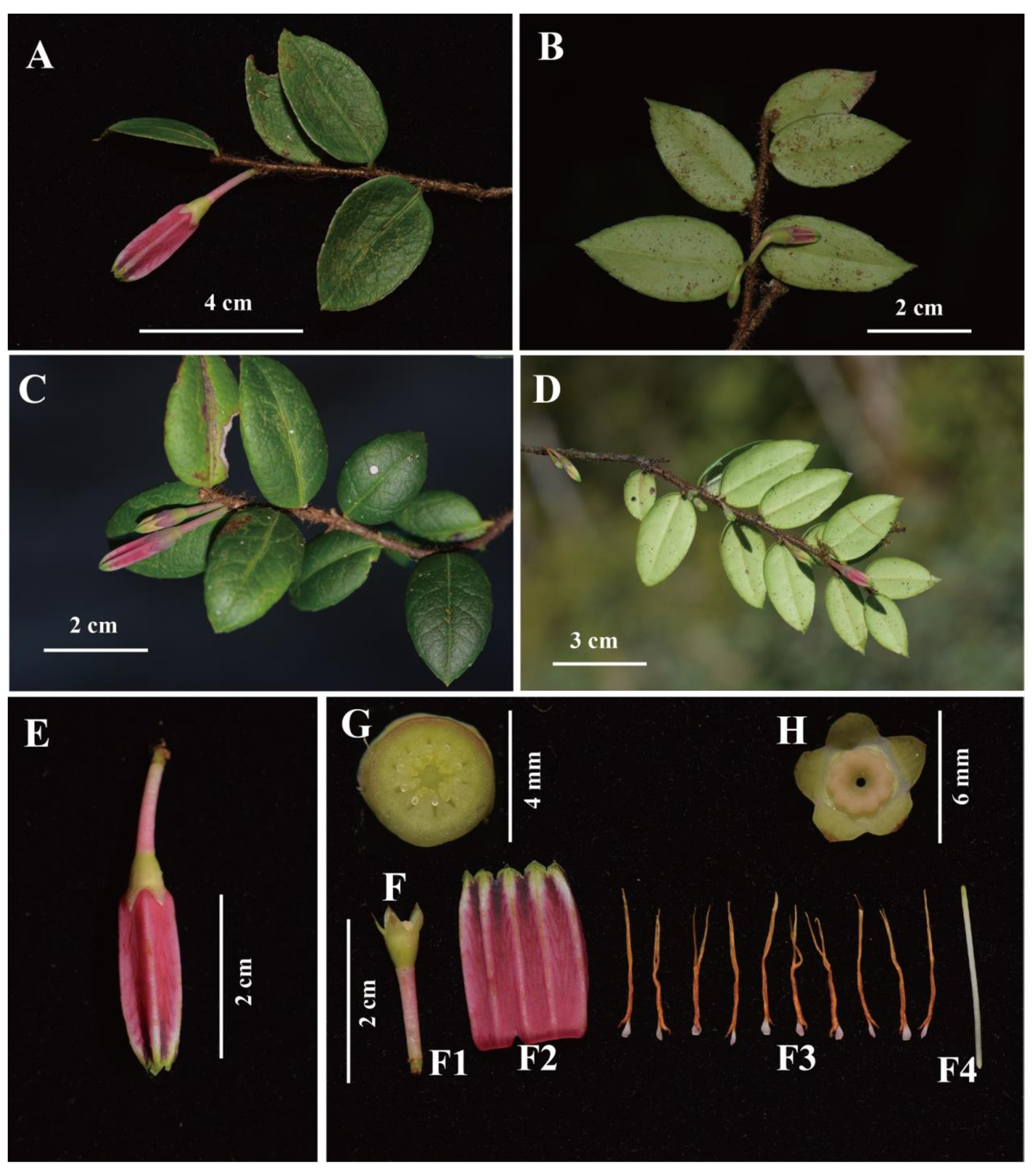
Gaylussacia incana
Gaylussacia incana Cham.

Gaylussacia incana is a species in the genus Gaylussacia, belonging to the family Ericaceae. It was first described in 1826 by the botanist Charles-Marie de Sales de Chamisso, as indicated by the author citation 'Cham.' The species is native to Brazil, specifically found in the Northeast and Southeast regions of the country.
Description
Gaylussacia incana is a member of the Ericaceae family, a group of flowering plants commonly known as the heath or heather family. This species is part of the genus Gaylussacia, which includes various shrubs native to the Americas. The plant is distributed in the Brazilian regions of the Northeast and Southeast. It was first scientifically described in 1826 by Charles-Marie de Sales de Chamisso, a French naturalist and explorer. The species name 'incana' typically refers to a whitish or hoary appearance, which may describe a characteristic feature of the plant's foliage or bark.
Distribution
BR · Brazil Northeast · Brazil Southeast
Synonyms
Lussacia incanaGaylussacia ledifoliaGaylussacia thymelaeoidesGaylussacia thymelaeoides var. acutifoliaVaccinium ledifolium