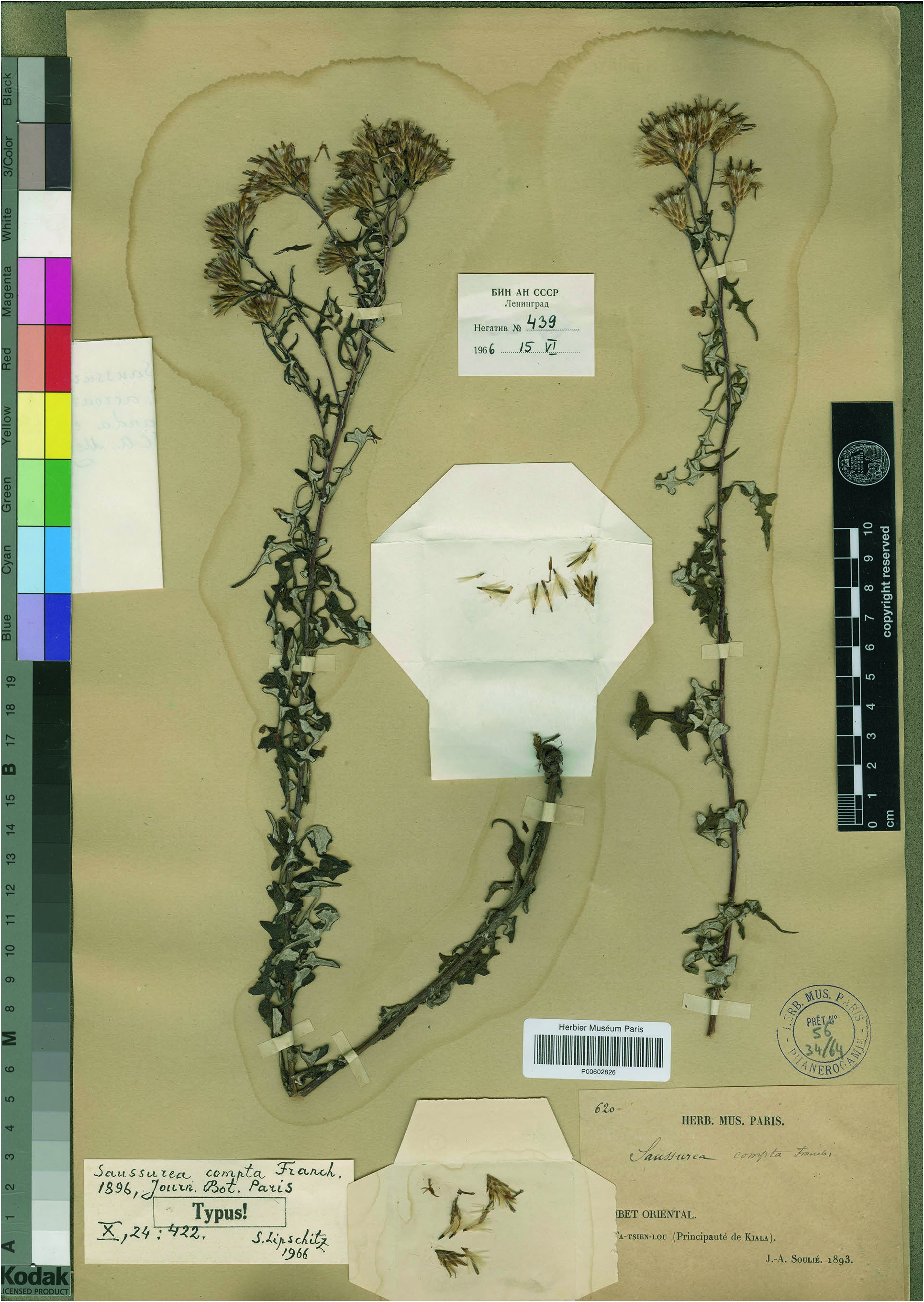
elephant's-foot
Elephantopus mollis Kunth

Elephantopus mollis, commonly known as elephant's-foot or soft elephantsfoot, is a perennial herb native to tropical regions. It is a member of the Asteraceae family and is characterized by its tall, hairy stems and distinctive inflorescences. The plant is widely distributed across several national parks and protected areas in South America and the Caribbean. Its scientific name was first published in 1818 by Kunth.
Description
Elephantopus mollis is a tall perennial herb that can grow between 0.5 to 2.0 meters in height. The stems are erect or procumbent, terete, and sparsely hairy. The leaves are alternate, elliptic or oblong, measuring 10 to 20 cm in length and 3 to 5 cm in width, with a crenate margin and an acute apex. Both leaf surfaces are sparsely covered with filiform hairs, cylindrical hairs, and capitate glands. The plant produces terminal and axillary capitulescences in a paniculate arrangement. The capitula are tubular, with white, zygomorphic corollas and four florets. The achenes are clavate, hairy, and ribbed, with a pappus of five bristles.
Habitat
This species is commonly found in wetland and forested habitats, including protected areas such as Complejo Humedales Hato Corozal, Parque Nacional Natural Serranía de Los Yariguíes, and Parque Nacional Natural Sierra de la Macarena. It thrives in tropical climates and is often associated with moist, shaded environments.
Cultivation
While not widely cultivated, Elephantopus mollis can be grown in tropical and subtropical gardens with well-drained, moist soil and partial shade. It requires regular watering and protection from strong winds. The plant's hairy stems and leaves may deter some herbivores, making it relatively easy to maintain in a garden setting.
Uses
Elephantopus mollis is primarily of ecological interest and is not commonly used in horticulture or traditional medicine. Its presence in protected areas suggests it may play a role in local biodiversity and ecosystem stability. However, specific cultural or economic uses are not well documented.
Other common names
Soft elephantsfootfalse tobaccotobacco-weedelephant's-footelephantopus
Distribution
Complejo Humedales Hato Corozal · BR · CO · Parque Nacional Natural Serranía de Los Yariguíes | Parque Nacional Natural Tatamá | Parque Nacional Natural Las Orquídeas | Parque Nacional Natural Sierra de la Macarena | Parque Nacional Natural Los Katíos · TW · VU · SC · CK · PW · SB · BI · CD · BF · Núcleo Manuelita · KM · FM · VN · MU · Charta | Floridablanca | Los Santos | Páramo | Piedecuesta | Puerto Wilches | San Gil · WF · YT · NG · CM · ID · MY · MG · PG · ST · GA · LR
Synonyms
Elephantopus martiiElephantopus serratusElephantopus pilosusElephantopus mollis var. mollisElephantopus pilosusElephantopus cernuusElephantopus martiiElephantopus cernuusElephantopus scaber var. martiiElephantopus mollis var. capitulatusElephantopus scaber var. tomentosusElephantopus scaber var. tomentosusElephantopus mollis var. bracteosusElephantopus carolinianus var. mollisElephantopus sericeusElephantopus hypomalacusAsterocephalus cochinchinensis