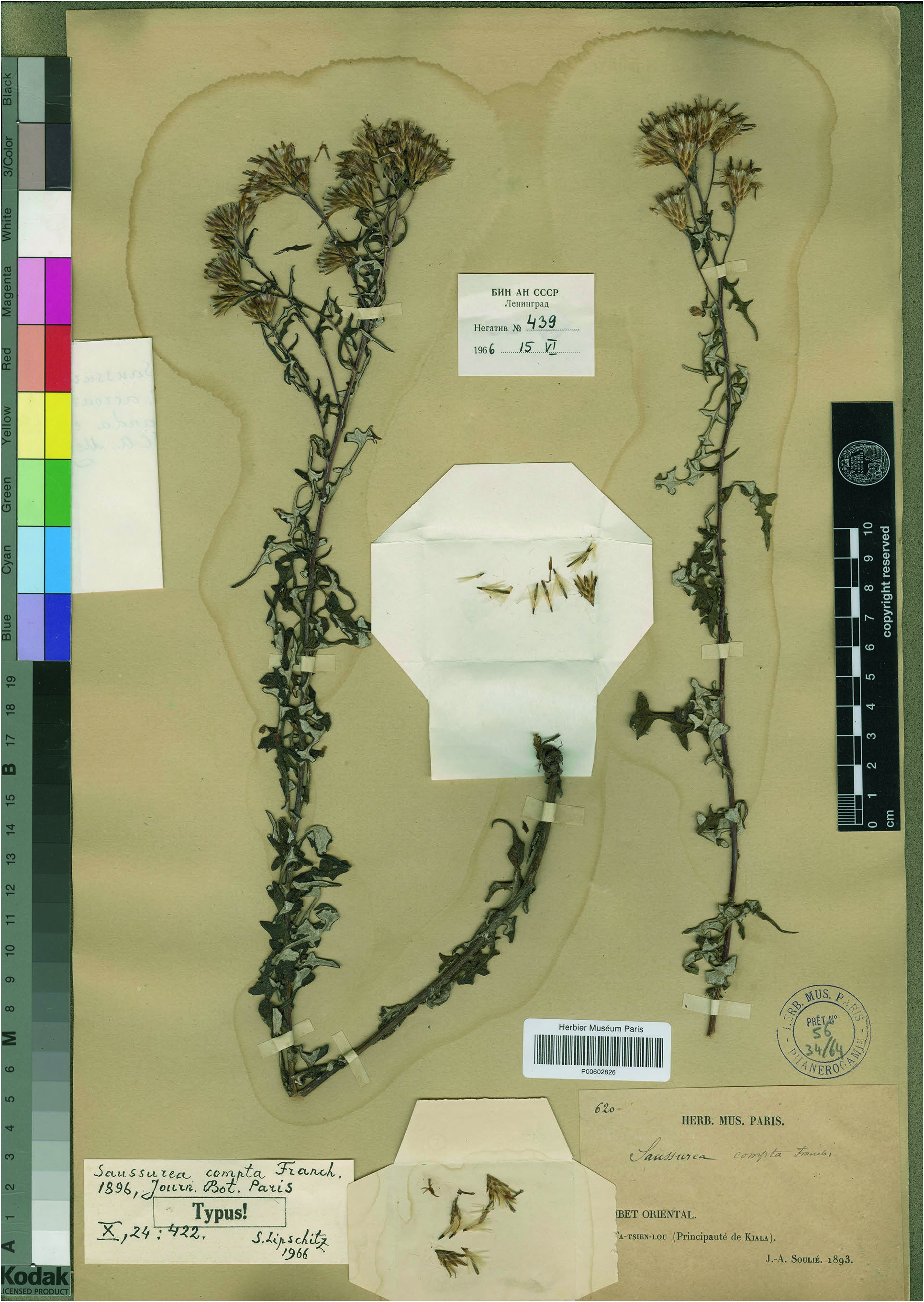
elegant hawksbeard
Askellia elegans (Hook.) W.A.Weber

Askellia elegans, commonly known as elegant hawksbeard, is a perennial herb native to central and western Canada and the northwestern United States. It belongs to the Asteraceae family and is part of the tribe Cichorieae. This species is characterized by its compact growth, yellow flowers, and distinctive involucral bracts. It is adapted to a range of habitats, including alpine and subalpine regions, and is often found in rocky or gravelly soils.
Description
Askellia elegans is a perennial herb that typically grows between 15 and 25 cm in height, though it can reach up to 30 cm. The plant is glabrous and features a thick, lignified taproot. Its caudex is 4.0 to 6.0 cm wide and may be wrinkled or scaly. Flowering stems are numerous, ranging from 5 to 20, and are either spreading-erect or ascending. The stems are terete, reddish brown, and striate, with branching that may occur from the base in older plants. Rosette leaves are obovate, up to 6.0 cm long, with entire or coarsely dentate margins and a glaucous, purple-tinged appearance. Cauline leaves are linear and gradually reduce to scales toward the apex. The synflorescence is paniciform, with 10 to 100 or more heads, each containing 6 to 10 flowers. The involucre is cylindrical, 8.0 to 10.0 mm long, with outer bracts that are ovate or ovate-oblong and inner bracts that are oblong and purplish at the apex. The corolla is ligulate, yellow, and 6.0 to 8.0 mm long, with a glabrous tube and a 1.0 mm wide ligule. Achenes are fusiform, yellowish brown, and have 10 ribs, ending in a distinct apical disk. The pappus is white, caducous, and 4.0 to 5.0 mm long.
Habitat
Askellia elegans is typically found in alpine and subalpine habitats, including rocky slopes, gravelly soils, and open meadows. It is adapted to cold climates and is often associated with high elevation environments. The species is native to central and western Canada, as well as the northwestern United States, where it thrives in areas with well-drained soils and full sun exposure.
Cultivation
Cultivating Askellia elegans requires a well-drained, gravelly or rocky soil and a sunny location. It is best suited for alpine or rock gardens and can tolerate cold temperatures and short growing seasons. The plant is relatively low-maintenance and does not require frequent watering or fertilization. Propagation can be achieved through seed, though germination may require cold stratification to mimic natural conditions. Due to its compact size and ornamental flowers, it is a suitable candidate for specialized horticultural settings.
Uses
Askellia elegans is primarily of interest for its ornamental value in alpine and rock gardens. It is not widely cultivated for commercial or agricultural purposes but is appreciated by botanists and horticulturists for its unique appearance and ecological niche. The species plays a role in its native ecosystems by contributing to biodiversity in high elevation environments. It is also of scientific interest due to its taxonomic position within the tribe Cichorieae and its morphological characteristics.
Other common names
elegant hawksbeard
Distribution
Alberta · British Columbia · Manitoba · Northwest Territories · Ontario · Saskatchewan · Yukon · Montana · Alaska · Wyoming · NO · Northwest Territorie
Synonyms
Crepis elegansBarkhausia elegansHieracioides elegansYoungia elegans