Davilla angustifolia
Davilla angustifolia A.St.-Hil.
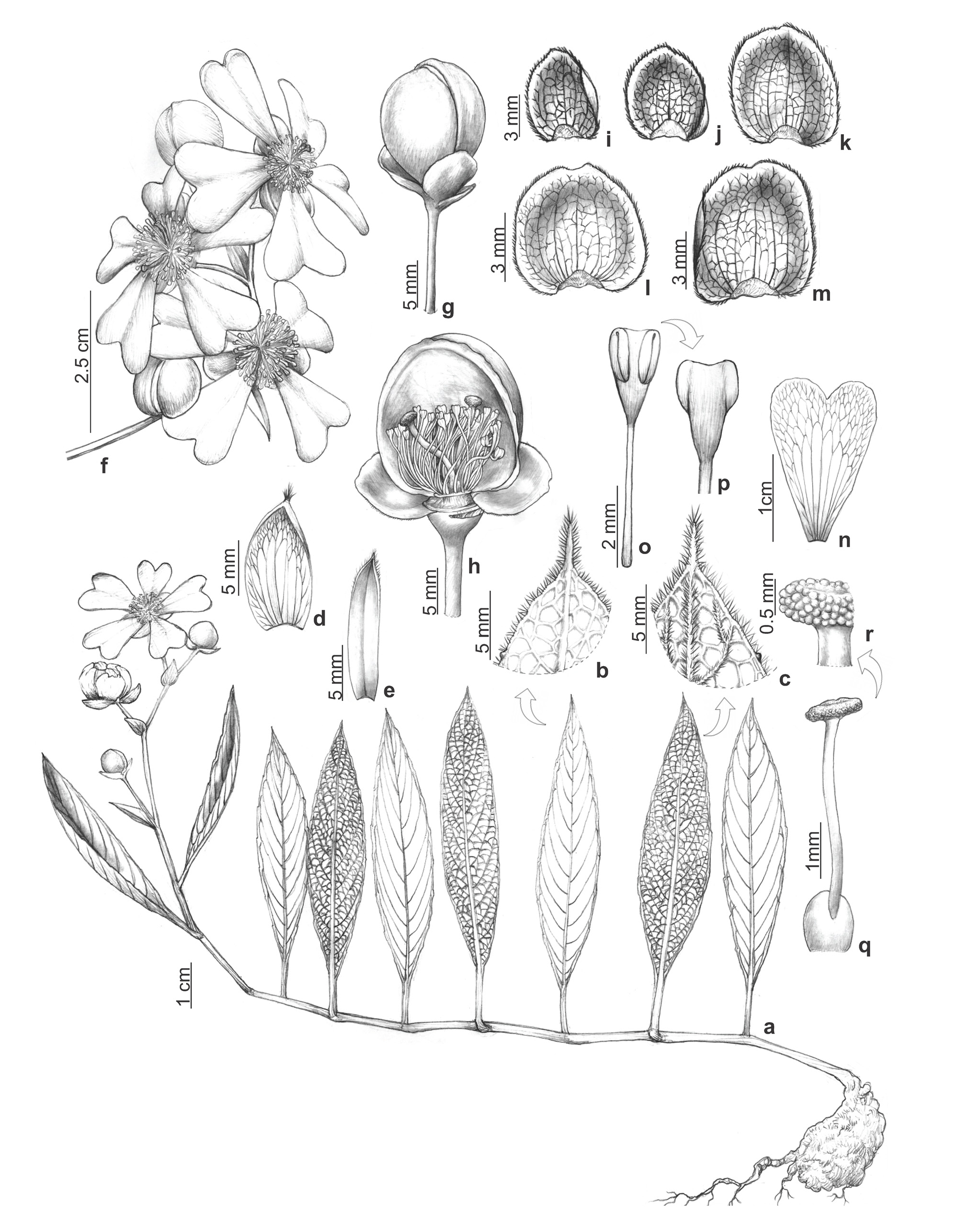
Davilla angustifolia is a species in the genus Davilla, belonging to the Dilleniaceae family. It was first described by A. St.-Hil. in 1824 and is native to Brazil, specifically the Northeast and Southeast regions.
Description
Davilla angustifolia is a member of the Dilleniaceae family, a group of flowering plants commonly found in tropical and subtropical regions. This species is part of the genus Davilla, which includes several species known for their unique fruit structures. The plant is native to Brazil, where it occurs in the Northeast and Southeast regions. It was formally described and published in 1824 by A. St.-Hil., contributing to the early botanical documentation of the region's flora. The species is distinguished by its narrow leaves, as indicated by the specific epithet 'angustifolia,' which refers to the leaf morphology. Its presence in the Dilleniaceae family places it among plants that often exhibit simple leaves, stipules, and flowers with numerous stamens. The ecological and morphological characteristics of Davilla angustifolia remain subjects of botanical study, particularly in the context of the biodiversity of the Brazilian flora.
Distribution
BR · Brazil Northeast · Brazil Southeast