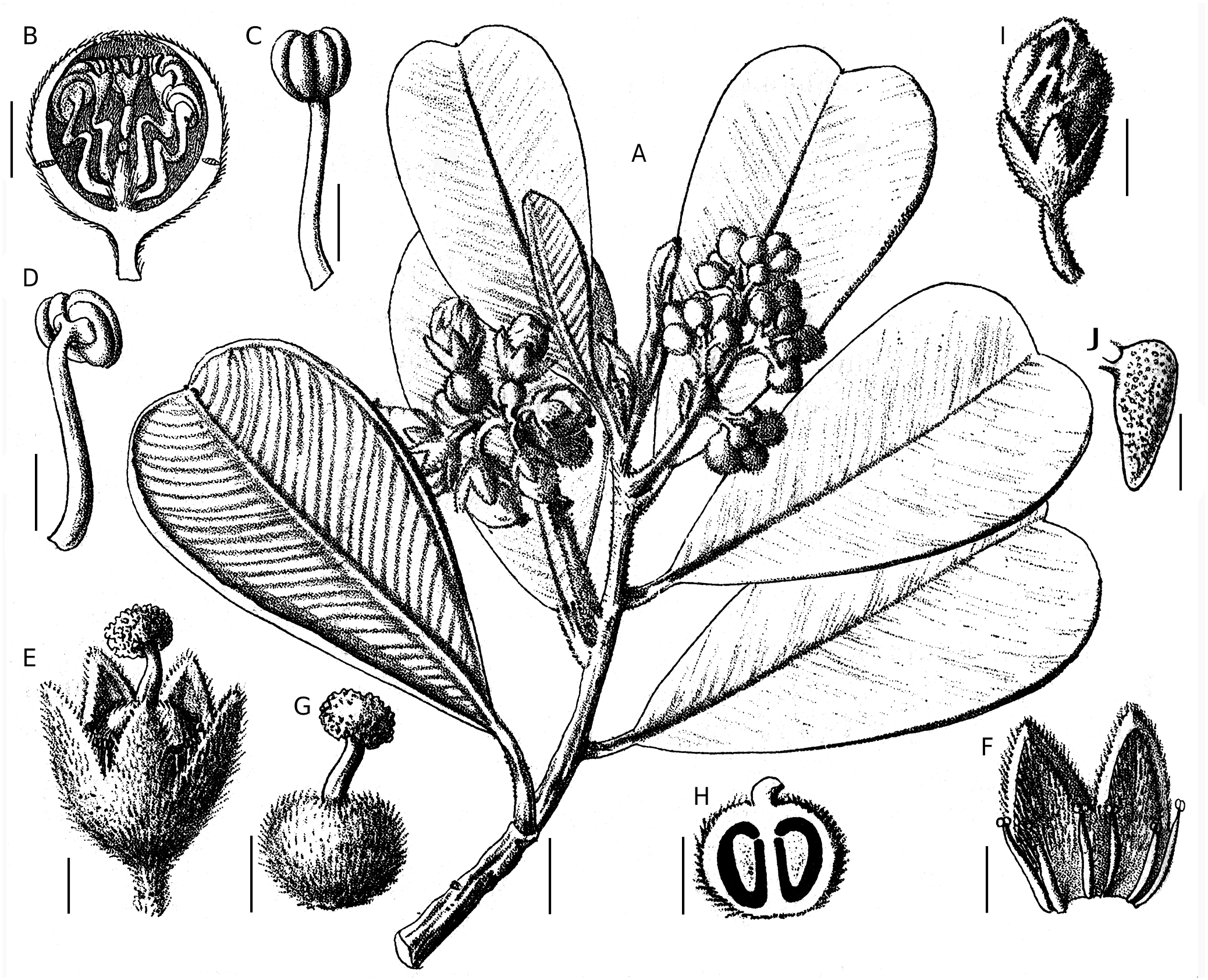
Daphne kiusiana
Daphne kiusiana Miq.

Daphne kiusiana is a species in the Thymelaeaceae family, native to China South-Central, China Southeast, Japan, Korea, Nansei-shoto, and Taiwan. It was first described in 1867 by Miq.
Description
Daphne kiusiana is a shrub with alternate, simple or compound leaves, with stipules and swollen petioles. The inflorescence may be solitary, cymose, or racemose. The flowers are hypogynous and complete, with distinct sepals, petals, stamens, and a pistil. The sepals, petals, and stamens occur in two whorls. The calyx is composed of four or six sepals that fall early and may resemble petals in some species. The petals are equal to or more numerous than the sepals and may appear as nectar glands. The stamens are equal in number to the petals and are arranged in a whorl. Anthers open by longitudinal slits or longitudinal furrows. The ovary is unilocular, with a narrow upper part that leads directly to the stigma without a style. The ovules are one to many. The fruit is a drupe or capsule, with small, elongated, thin seeds. The embryo and endosperm are well developed, with cotyledons present.
Distribution
China South-Central · China Southeast · Japan · Korea · Nansei-shoto · Taiwan
Synonyms
Daphne cannabina var. kiusianaDaphne odora var. kiusiana