Cycad
Ceratozamia zaragozae Medellín

Ceratozamia zaragozae is a species in the Zamiaceae family, native to northeastern Mexico. It is characterized by a semihypogeous stem, persistent cataphylls, and twisted petioles and rachises. The species is Critically Endangered due to habitat loss.
Description
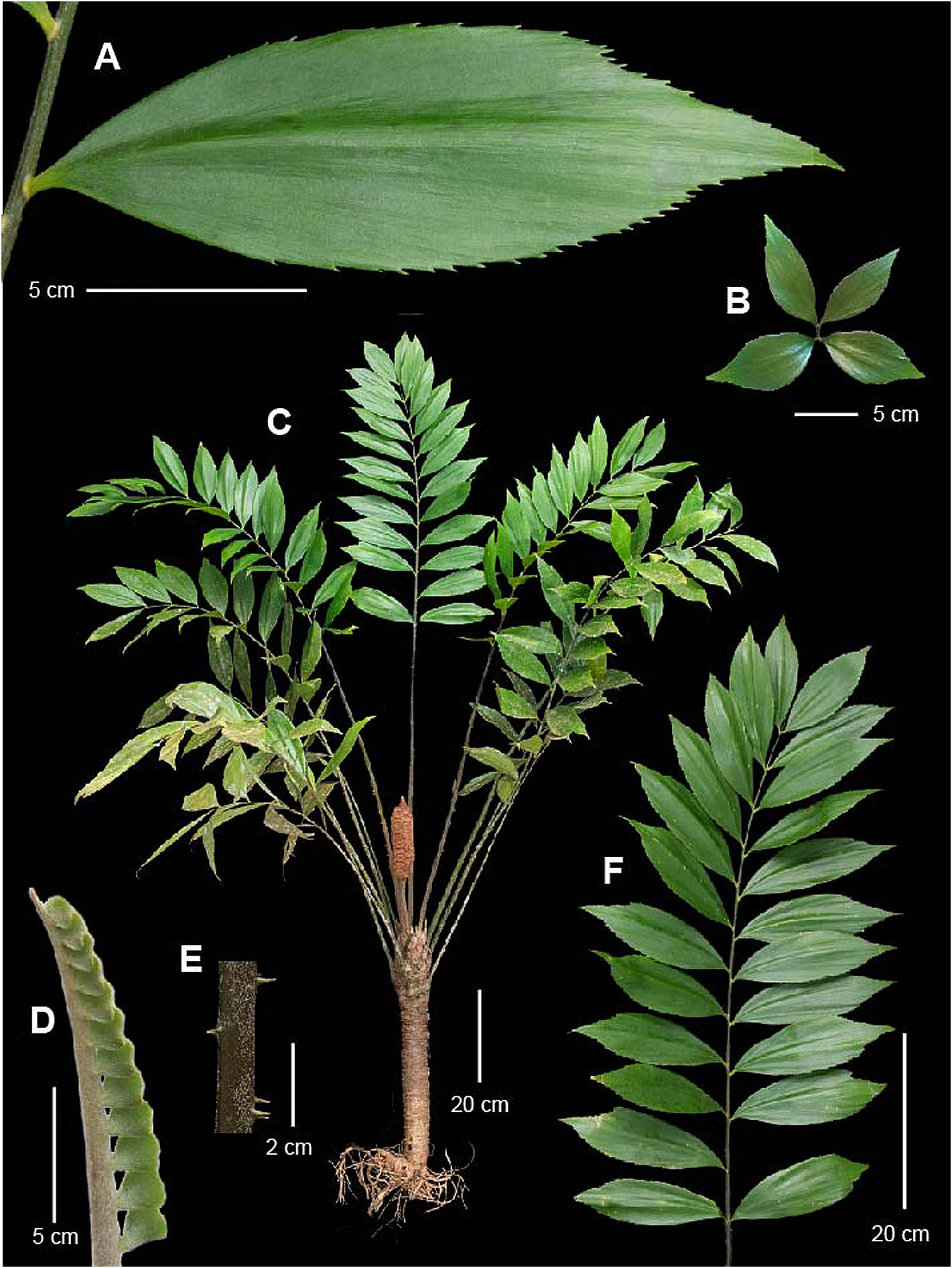
Ceratozamia zaragozae is a cycad species with a semihypogeous stem 10–20 cm long and 10–15 cm in diameter. The persistent cataphylls are triangular, reddish-brown, and tomentose at emergence. Leaves number 3–27, are 95–202 cm long, and have a twisted, unarmed petiole (11–36 cm) and rachis (40–77 cm). Leaflets are linear, membranaceous, and strongly caniculate, with 25–46 per leaf. Polliniferous strobili are cylindrical, 15–19 cm long, with greenish to reddish-brown microsporophylls. Ovuliferous strobili are 8.2–12 cm long, cylindrical, and dark green at maturity. The species is distinguished by its unarmed petiole and membranaceous leaflets, differing from C. norstogii, which has prickles and coriaceous leaflets. Ceratozamia zaragozae is endemic to the Rio Verde in El Capulín, San Luis Potosí, and is Critically Endangered due to habitat loss.
Other common names
Cycad
Distribution
Global · Mexico Northeast