Cycad
Ceratozamia robusta Miq.

Ceratozamia robusta is a cycad species in the family Zamiaceae, native to Belize, Guatemala, and Mexico. It grows in subtropical or tropical moist lowland forests and is threatened by habitat loss. The species is characterized by a stem 30–100 cm long, persistent cataphylls, and leaves 138–266 cm long with lanceolate leaflets. It has the largest pollen strobilus in the genus, up to 70 cm long. It differs from C. subroseophylla by its dark green ovulate strobilus with sparse blackish trichomes and distinct horn morphology.
Description
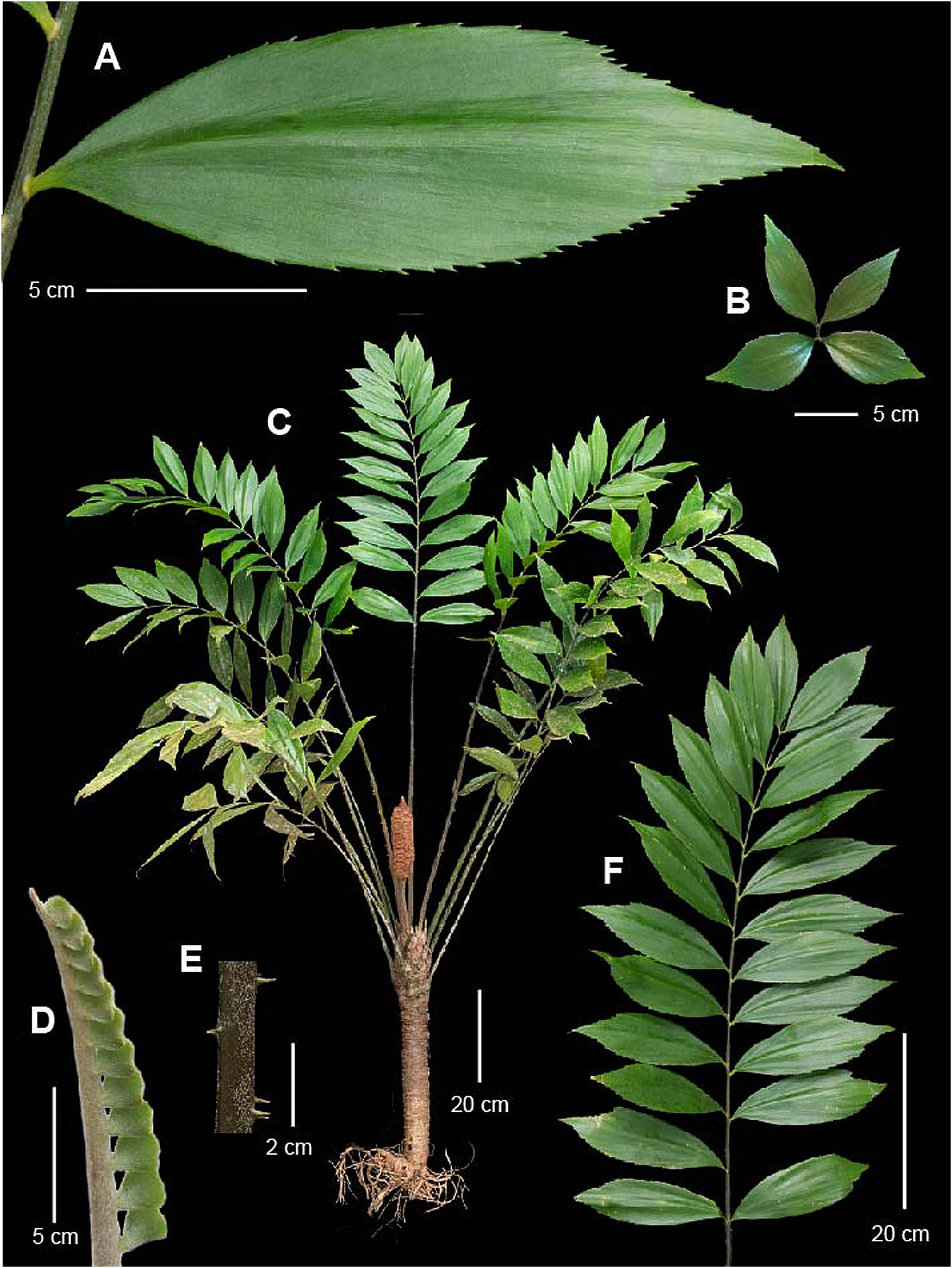
Ceratozamia robusta is a member of the Zamiaceae family, with a stem that is 30–100 cm long and 20–40 cm in diameter. It has 5–9 cataphylls that are reddish brown and tomentose at emergence. The plant produces 10–50 leaves, each 138–266 cm long, with petioles 56–85 cm long and rachises 60–190 cm long. Leaflets are 20–45 pairs, lanceolate, and papyraceous, with green adaxial and glaucous abaxial surfaces. The pollen strobilus is 50–70 cm long, cylindrical, and yellowish cream with reddish brown trichomes at maturity. The species is distinguished by its dark green ovulate strobilus and straight horns at a right angle, differentiating it from C. subroseophylla.
Other common names
Cycad
Distribution
Global · Belize · Guatemala · Mexico Southeast
Synonyms
Ceratozamia mexicana var. longifoliaCeratozamia mexicana var. robusta