Cycad
Ceratozamia latifolia Miq.

Ceratozamia latifolia is a species of cycad in the family Zamiaceae, native to northeastern Mexico. It is characterized by its unbranched, semi-hypogeous stem and pinnate leaves forming an open crown. The plant has reddish-brown leaves at emergence that turn olive green at maturity. Leaflets are oblong, papyraceous, and oppositely arranged. The species is distinguished by unarmed or rarely armed petioles, discoid microsporophylls with rounded distal faces, and ovulate strobili with greyish light brown trichomes at maturity.
Description
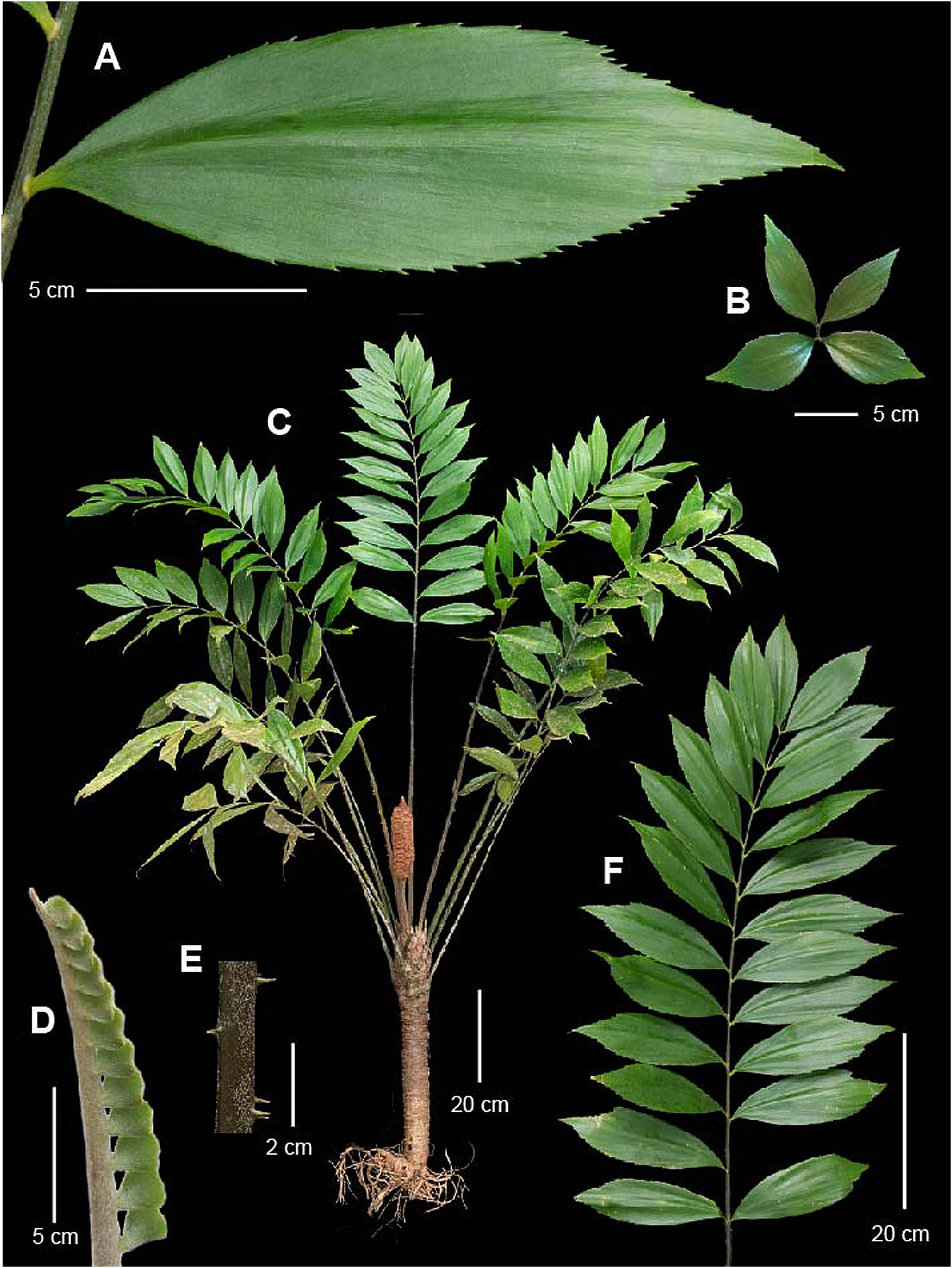
Ceratozamia latifolia is a rupicolous, unbranched cycad with a short, semi-hypogeous stem, 8–10 cm tall and 10–12 cm in diameter. It bears 2–6 leaves per crown, which are 60–219 cm long and 19.8–56.2 cm wide, forming an open, ascending crown. The leaves are pinnate, with 7–20 pairs of oblong or long oblanceolate leaflets, 9.9–28.1 cm long and 2.5–4.9 cm wide, spaced 1.9–7.5 cm apart. Petioles are 14.5–62 cm long, generally unarmed, and rachises are 42–161 cm long, unarmed or rarely with sparse prickles. Microstrobili are conical, 17–18 cm long, with tomentose surfaces and discoid microsporophylls. The specific epithet 'latifolia' refers to the wide leaves. This species is endemic to cloud zone oak forests in the Sierra Madre Oriental, found in Querétaro, Hidalgo, and San Luis Potosí.
Other common names
Cycad
Distribution
Global · Mexico Northeast
Synonyms
Ceratozamia karstenianaCeratozamia mexicana var. latifoliaCeratozamia microstrobila