Cycad
Ceratozamia kuesteriana Regel

Ceratozamia kuesteriana is a cycad species in the Zamiaceae family, native to the Sierra Madre Oriental in northeastern Mexico. It was named after Baron K. von Kuester, a 19th-century plant collector. The species is distinguished by its canaliculate leaflets and ascending leaves, setting it apart from similar species like C. sabatoi. It has a semi-buried stem, persistent cataphylls, and features both pollen and ovuliferous strobili.
Description
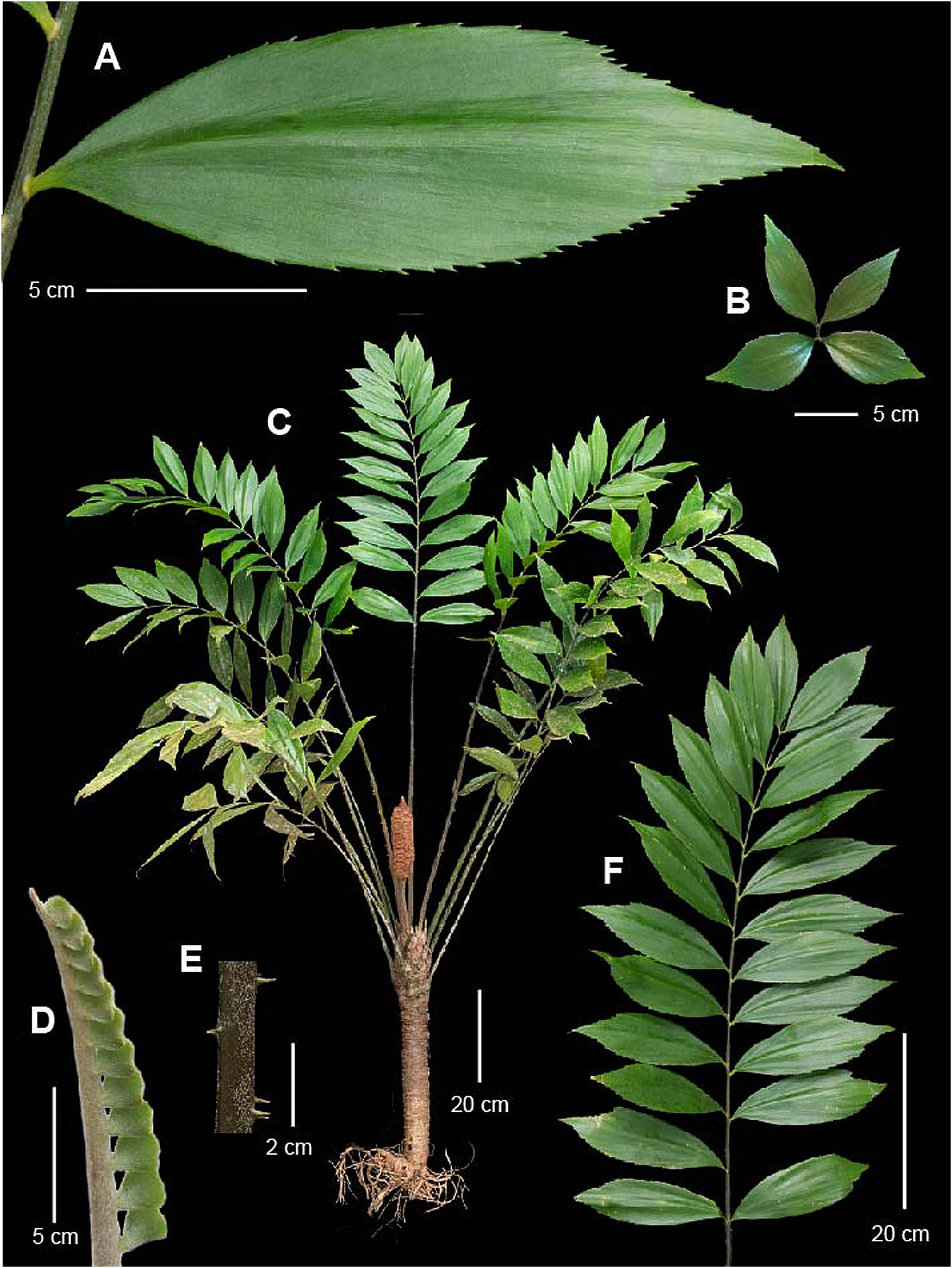
Ceratozamia kuesteriana has a semi-hypogeous, upright stem measuring 10–30 cm in length and 10–25 cm in diameter. Its persistent cataphylls are triangular, reddish-brown, and densely tomentose at emergence. Leaves are 1–11 in number, ascending, 80–133 cm long, and initially reddish-brown with whitish-gray trichomes, becoming glabrous at maturity. The petiole is 30–72 cm long, terete, and armed with thin prickles. Leaflets are linear, adaxially curved, and canaliculate, with median leaflets 17–32 mm long and 0.6–1 cm wide. Pollen strobili are cylindrical, 11–15 cm long, and yellowish-brown at maturity, while ovuliferous strobili are 13–21 cm long, cylindrical, and greyish-light green with black trichomes at maturity.
Other common names
Cycad
Distribution
Global · Mexico Northeast
Synonyms
Ceratozamia angustifolia