Crumenaria decumbens
Crumenaria decumbens Mart.

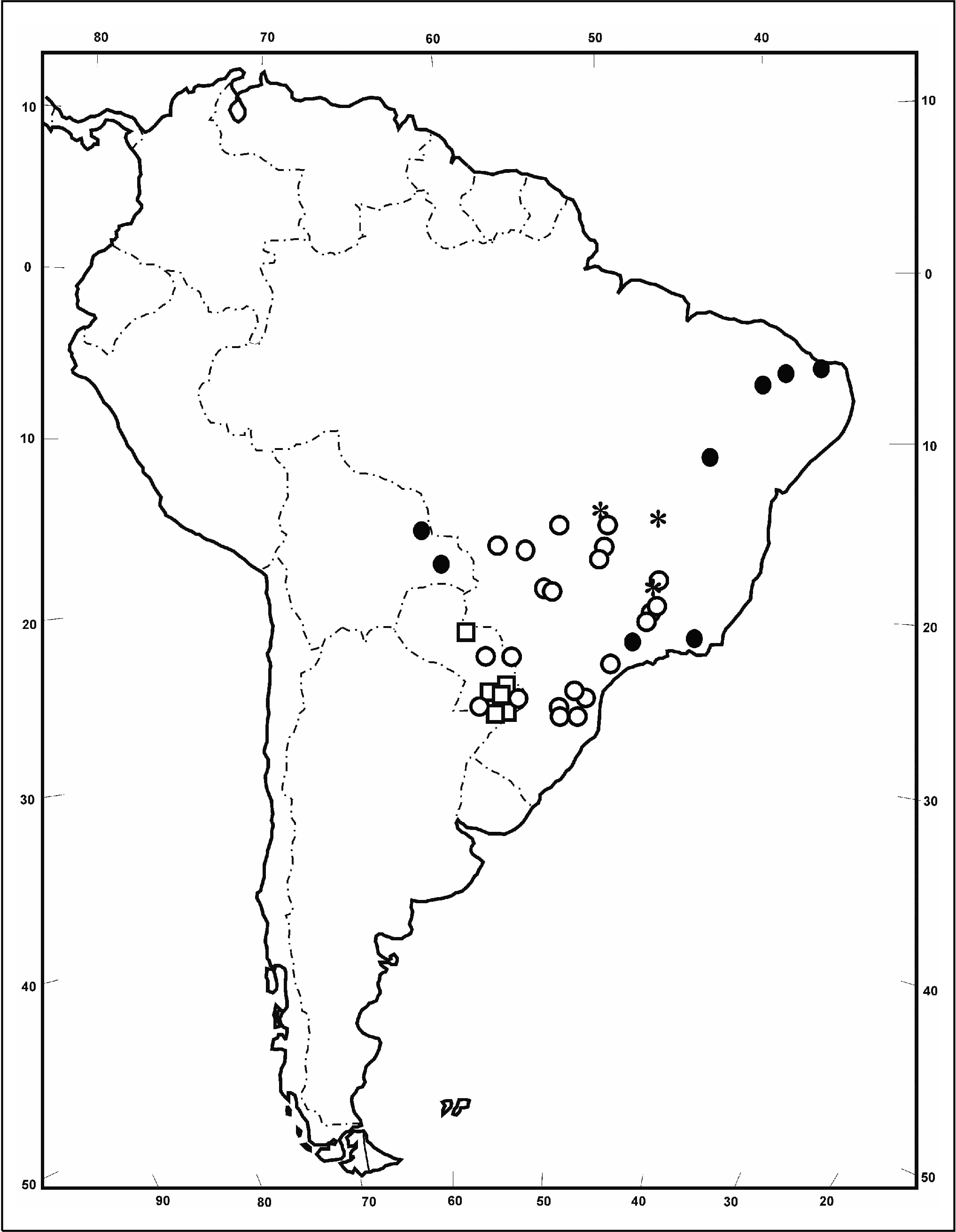
Crumenaria decumbens is an annual herb in the Rhamnaceae family, native to regions including Brazil, Bolivia, Guatemala, and Honduras. It is distinguished from other perennial species in the genus by its slender, decumbent growth habit and annual life cycle. The plant flowers from August to May and has membranous leaves with various margin forms and a cordate base. Its inflorescences are axillary with white flowers and a turbinate-campanulate floral tube. The fruit is small, with a scarcely emarginate apex and ciliate margin. The species was first described in 1827 by Mart.
Description
Crumenaria decumbens is a slender, annual, leafy herb reaching up to 50 cm in height, with thin roots and stems that are either erect or decumbent. The leaves are membranous, ovate to subtriangular, with a cordate base and margins that may be entire, subcrenate, or minutely toothed. The abaxial surface of the leaves has appressed hairs on the nerves. The axillary inflorescences bear one to two white flowers, with glabrous or pubescent pedicels and a floral tube that is turbinate-campanulate in shape. The fruit is 4 mm long, with a sparse hairy surface and a ciliate margin. The species is closely related to Crumenaria diffusa and C. steyermarkii, but differs in habit and leaf morphology.
Distribution
BR · Bolivia · Brazil Northeast · Brazil Southeast · Guatemala · Honduras
Synonyms
Crumenaria diffusaCrumenaria steyermarkii