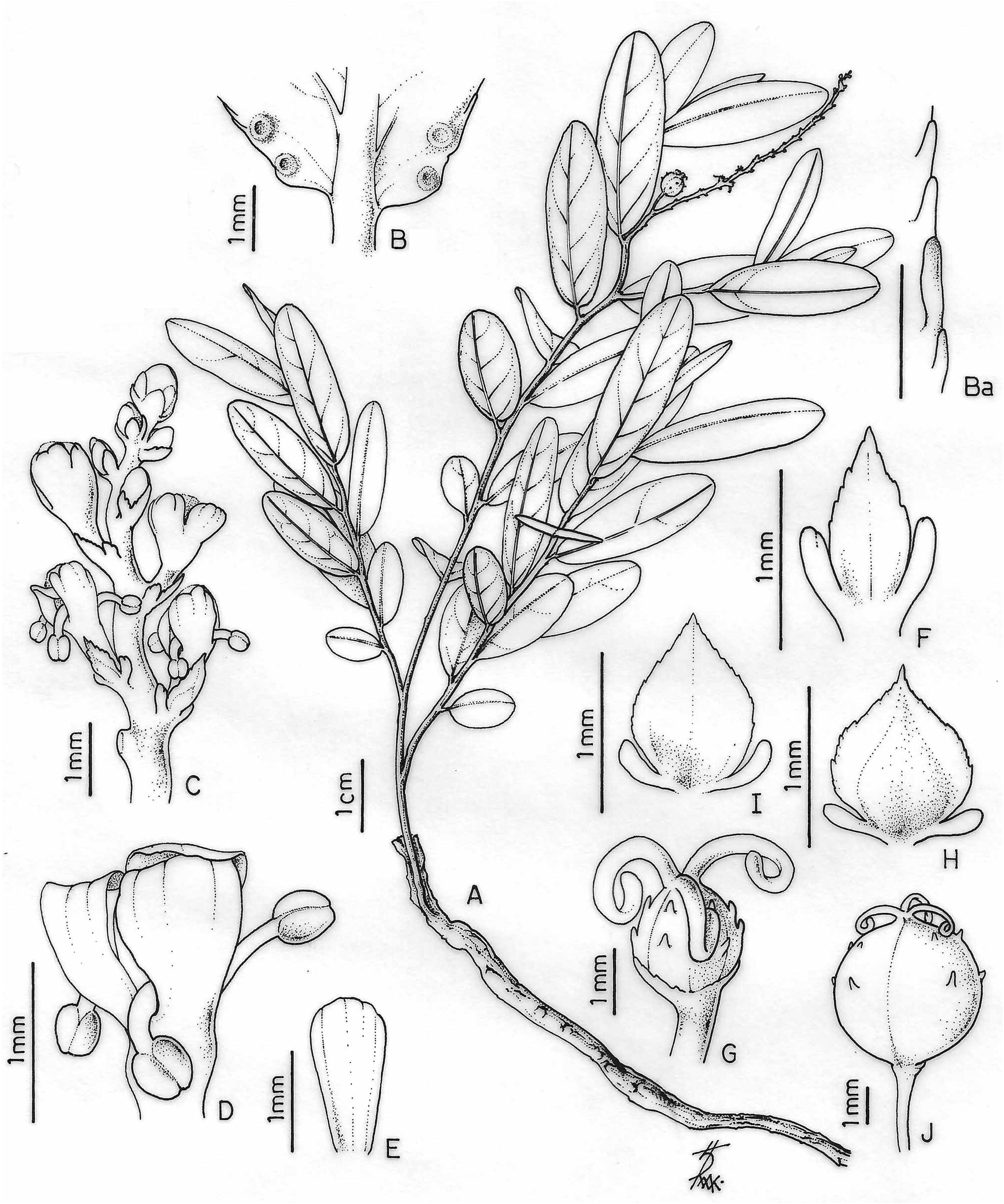
Croton lundianus
Croton lundianus (Didr.) Müll.Arg.

Croton lundianus is a subshrub species within the Euphorbiaceae family, native to several regions in South America, including Brazil and Paraguay. It is characterized by its distinct vegetative and reproductive features, particularly the presence of stipitate acropetiolar nectary glands and inflorescences with a sterile region between the pistillate and staminate flowers. The species is part of the sect. Geiseleria subsect. Podostachys. It blooms and fruits from January to May and September to December.
Description
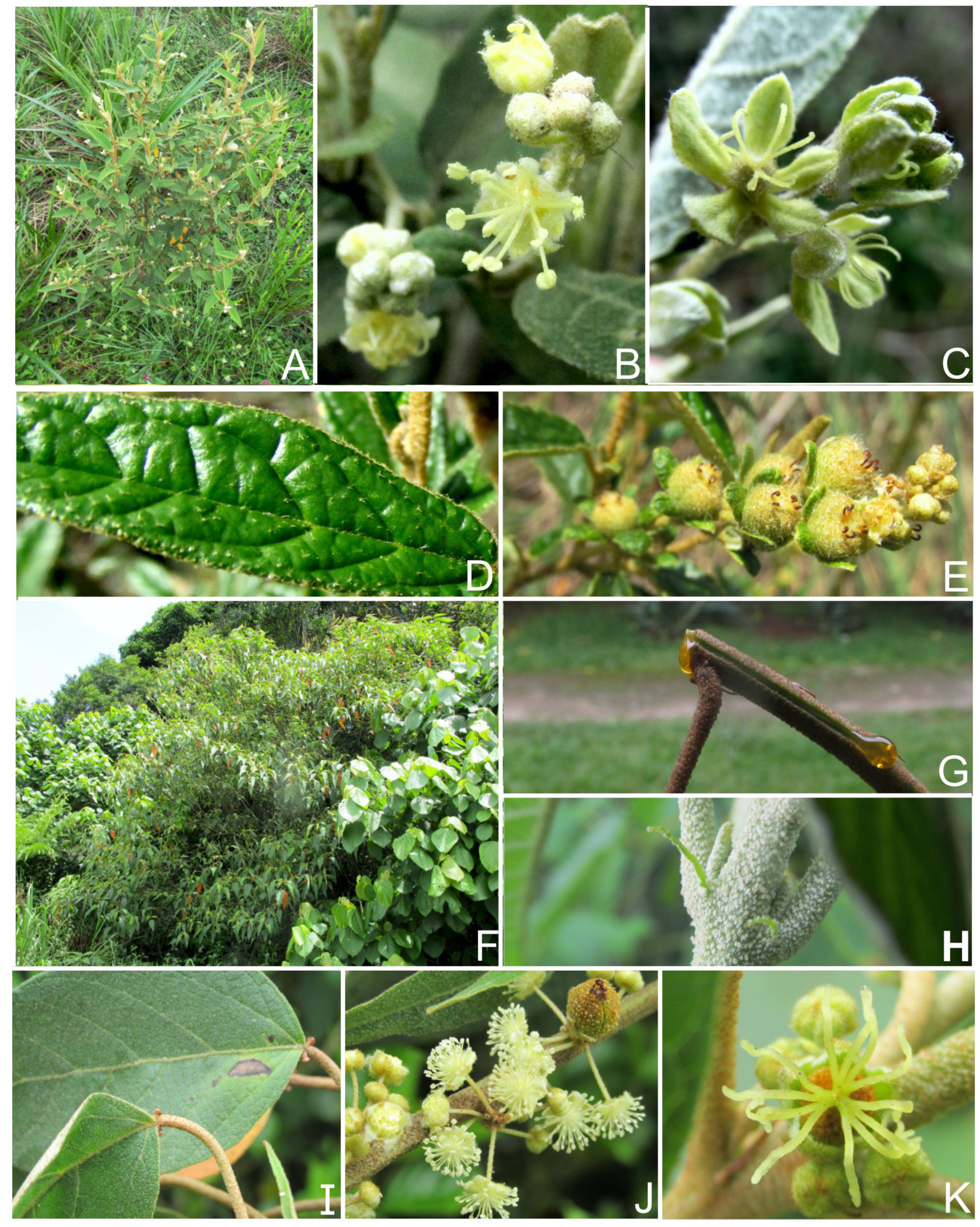
Croton lundianus is a subshrub that can be distinguished by its pair of stipitate acropetiolar nectary glands and inflorescences with a sterile region separating the pistillate and staminate flowers. The lobes of the pistillate calyx are slightly laciniate in most specimens and appear white at anthesis. The species is similar to C. glandulosus but differs in vegetative and reproductive traits. It also resembles C. trinitatis, which has continuous thyrses and pedicellate pistillate flowers with entire sepals, whereas C. lundianus has discontinuous inflorescences and subsessile pistillate flowers with slightly laciniate sepals.
Habitat
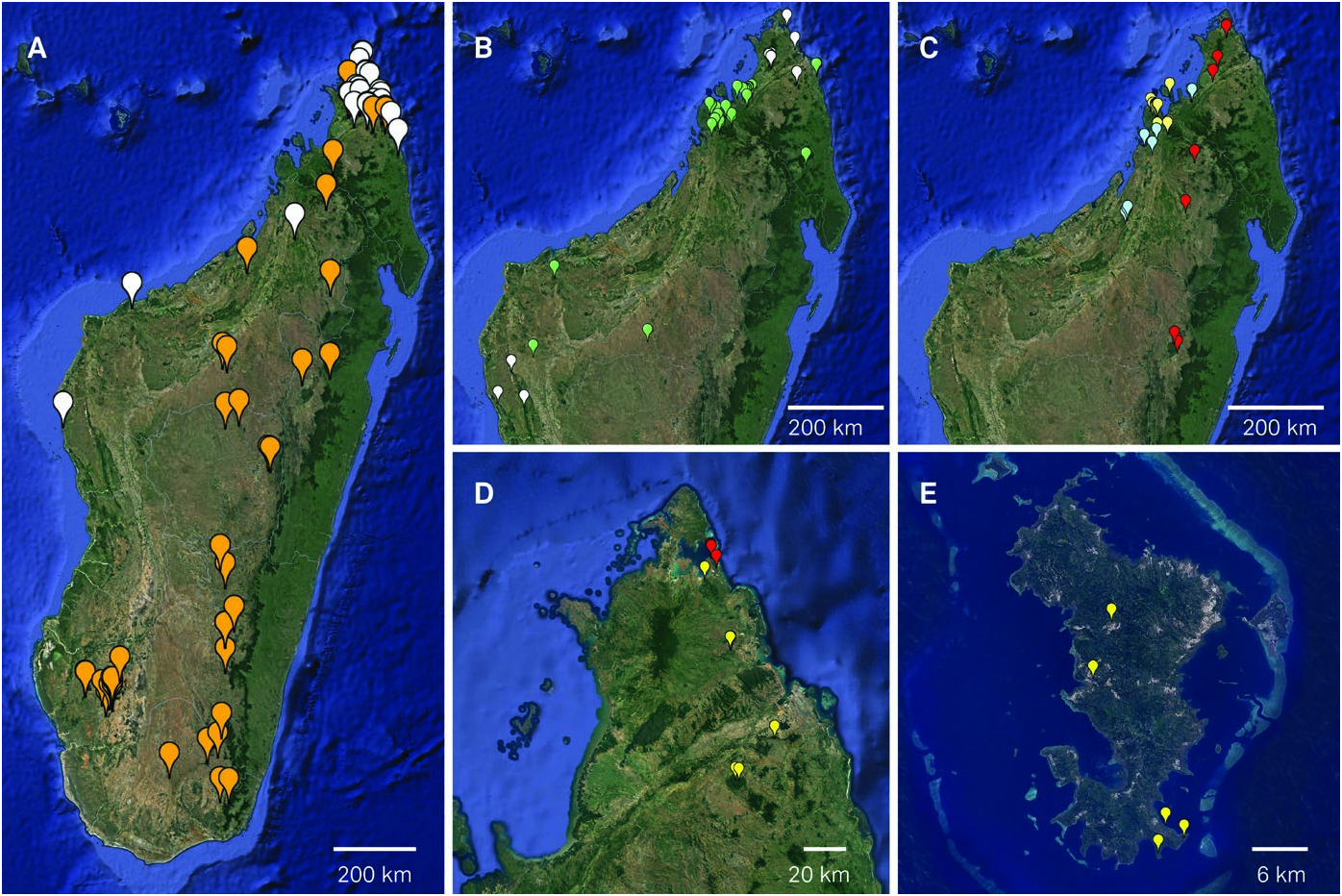
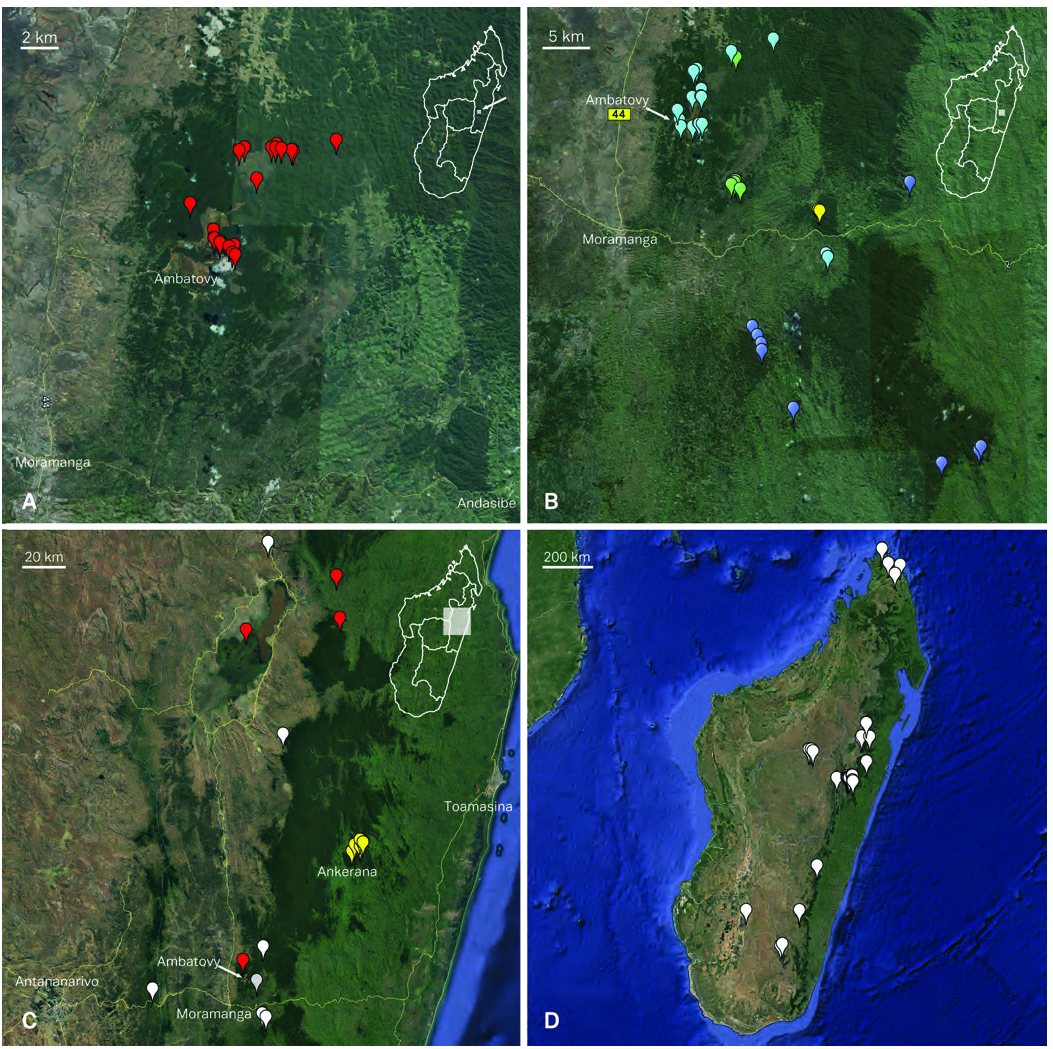
Croton lundianus is distributed across several regions in South America, including the Brazilian states of the Northeast, North, Southeast, South, and West-Central, as well as Argentina's Northeast and Paraguay. It is commonly found in the Euphorbiaceae flora of the Brazilian state of Paraná, where it is part of the local plant diversity.
Cultivation
While specific cultivation details for Croton lundianus are not widely documented, it is likely to thrive in tropical and subtropical climates similar to its native habitats. As a member of the Euphorbiaceae family, it may require well-drained soils and moderate to high light conditions. Propagation could be achieved through seeds or cuttings, though further research would be necessary to determine the most effective methods for cultivation outside its native range.
Uses
There are no specific documented uses for Croton lundianus in horticulture, medicine, or industry. However, as a member of the genus Croton, it may have potential for ornamental use due to its unique morphological features. Further studies could explore its possible applications in ecological restoration or as a model species for botanical research.
Distribution
BR · Argentina Northeast · Brazil Northeast · Brazil North · Brazil Southeast · Brazil South · Brazil West-Central · Paraguay
Synonyms
Podostachys lundianusPodostachys subfloccosaOxydectes subfloccosaOxydectes teucridiumPodostachys incanaPodostachys sellowianaPodostachys serrataCroton dentifoliusCroton glandulosus var. lundianusCroton klotzschiiCroton klotzschii var. bahiensisCroton klotzschii var. hilariiCroton klotzschii var. latifoliusCroton klotzschii var. microphyllusCroton lundianus var. bahiensisCroton lundianus var. glabrescensCroton lundianus var. gracilentusCroton lundianus var. hilariiCroton lundianus var. hirtusCroton lundianus var. intercedensCroton lundianus var. latifoliusCroton lundianus var. leptophyllusCroton lundianus var. majorCroton lundianus var. microphyllusCroton lundianus var. mollisCroton lundianus var. psilophyllusCroton lundianus var. pubescensCroton lundianus var. rufidulusCroton lundianus var. serratusCroton lundianus var. similis