crossvine
Bignonia capreolata L.

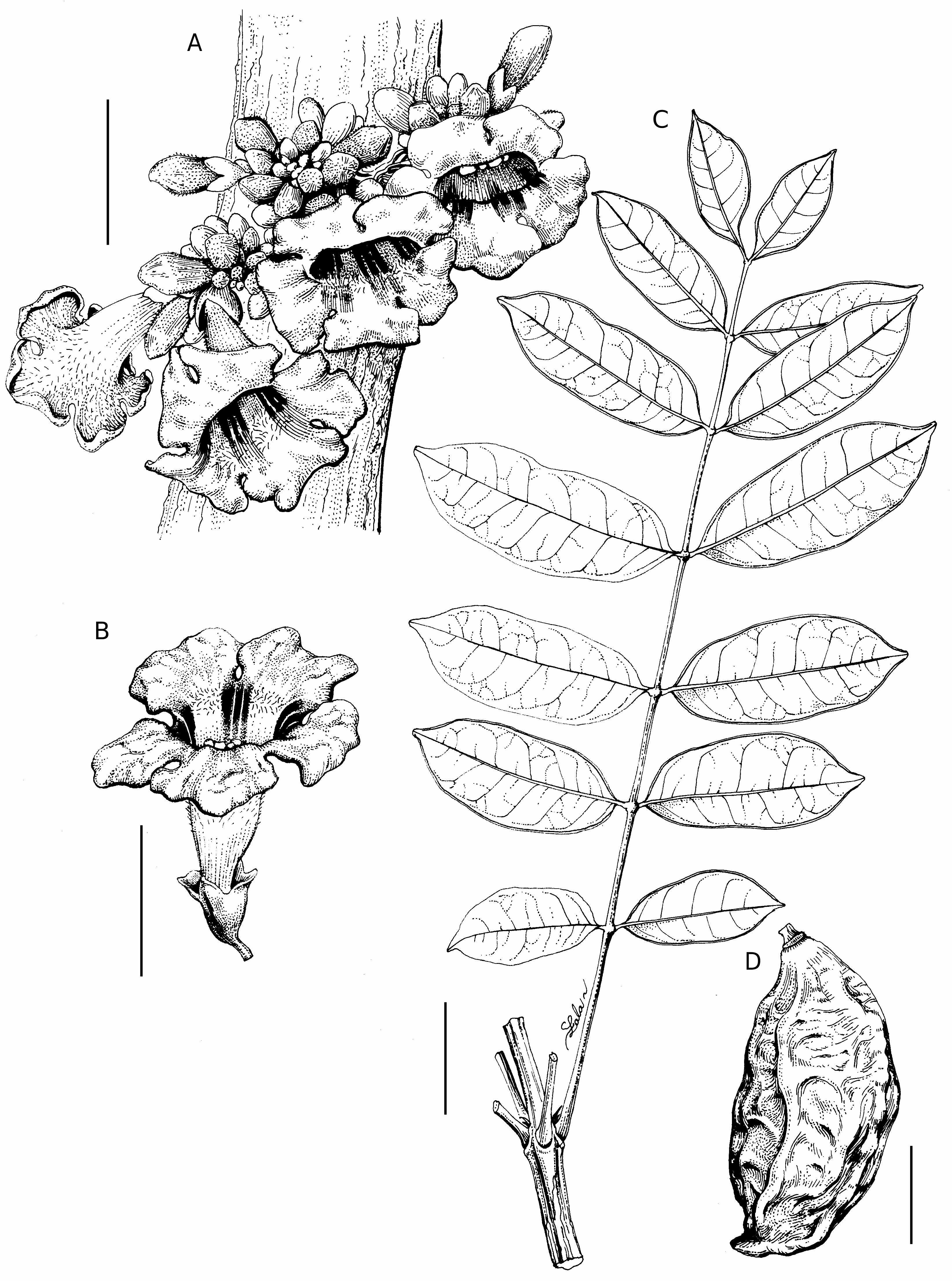
Bignonia capreolata, known as crossvine, is a climbing vine native to the central and southern United States. It is characterized by a cross-shaped stem pattern formed by four radial wedges of phloem within the xylem. The plant produces red and yellow tubular flowers with a mocha fragrance. Its leaves are dark green to purple, arranged in opposite pairs with terminal tendrils. Crossvine spreads via stolons and may require management in cultivated settings.
Description
Bignonia capreolata is a member of the Bignoniaceae family and was first described in 1753 by Carl Linnaeus. It is found in 21 U.S. states, from Indiana to Florida and west to Texas. The vine does not twine but uses tendrils to climb, often reaching great heights with foliage concentrated at the top. Its flowers are tubular and attract pollinators such as hummingbirds. The plant can be invasive in gardens due to its aggressive spreading habit.
Other common names
crossvinequartervine
Distribution
IN · Alabama · Arkansas · Florida · Georgia · Illinois · Indiana · Kentucky · Louisiana · Maryland · Mississippi · Missouri · North Carolina · Ohio · Oklahoma · South Carolina · Tennessee · Texas · Virginia · West Virginia
Synonyms
Bignonia capreolata var. atro-sanguineaAnisostichus capreolataBatocydia capreolataBignonia capreolata f. luteaDoxantha capreolataBignonia argyrea unranked violascens