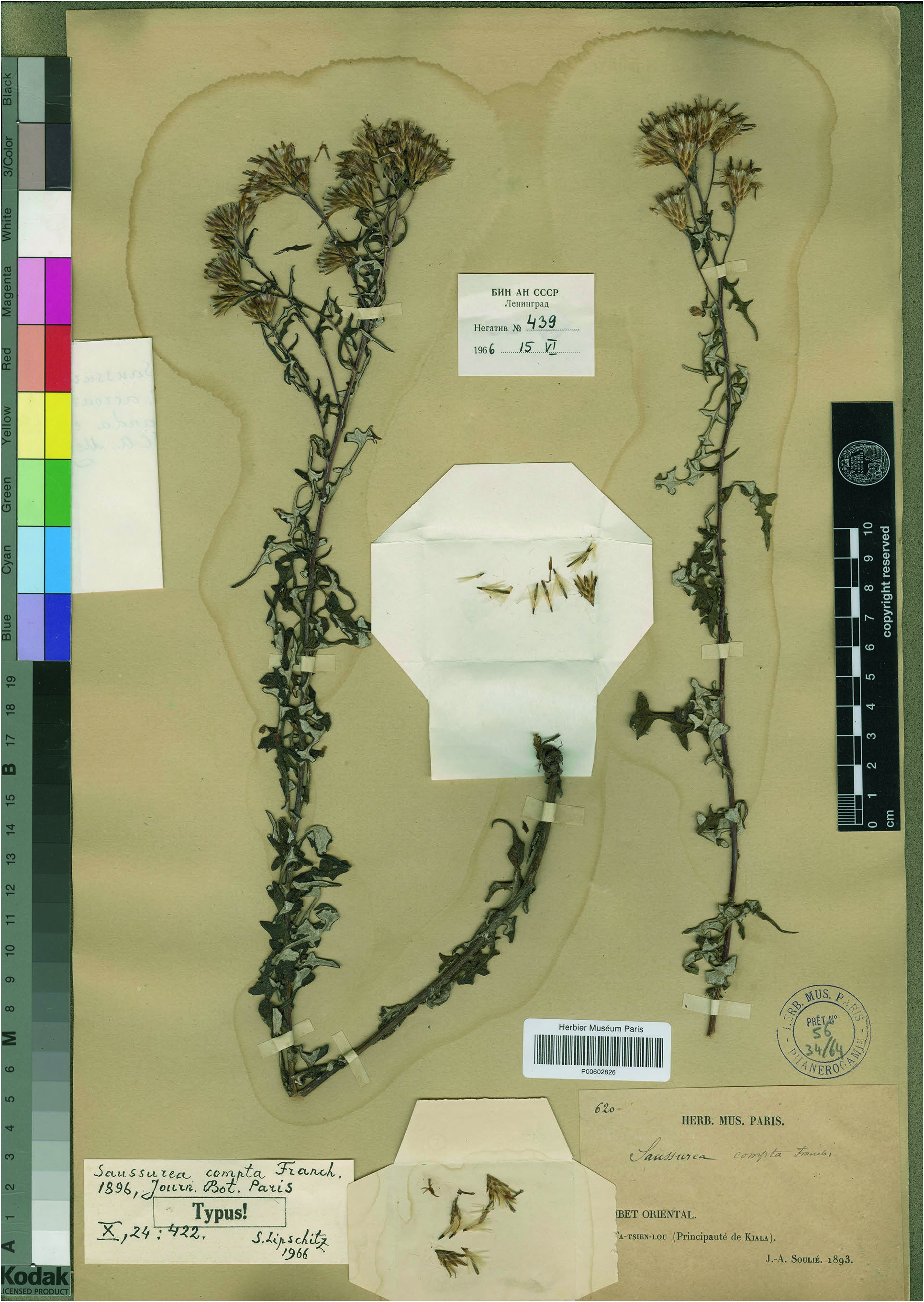
Crepis rhaetica
Crepis rhaetica Hegetschw.

Crepis rhaetica is a perennial herb in the Asteraceae family, native to Switzerland, Austria, Italy, and France. It was first described in 1840 by Hegetschw. The plant grows to 2-9 cm in height, with a simple caudex and scapelike, densely pubescent flowering stems. Rosette leaves are narrowly obovate, while cauline leaves are linear-ovate. It produces a single head with 35-40 yellow flowers. The involucre is campanulate, dark green, and densely hirsute. Achenes are cylindrical, brown, and 6.0-8.0 mm long, with a persistent, flexible pappus.
Description
Crepis rhaetica is a low-growing perennial herb in the Asteraceae family, found in alpine regions of Switzerland, Austria, Italy, and France. It features a simple caudex and scapelike, erect stems covered in dense pubescence. Rosette leaves are few, narrowly obovate, 2.0-5.0 cm long, with petiole-like, winged bases that may be puberulous or glabrous. Cauline leaves are linear-ovate, acute, and more or less pubescent. The plant produces a single synflorescence head with 35-40 yellow ligulate flowers. The involucre is campanulate, 11.0-13.0 mm long, dark green, and densely hirsute, with narrowly ovate outer and inner bracts. Achenes are cylindrical, smooth or finely muricate, with 18-20 ribs and a persistent, greyish or yellowish white pappus 6.0-7.0 mm long.
Distribution
Switzerland · Austria · Italy · France
Synonyms
Crepis heeriiSoyeria rhaeticaSoyeria jubataHieracium bellidifoliumCrepis jubata