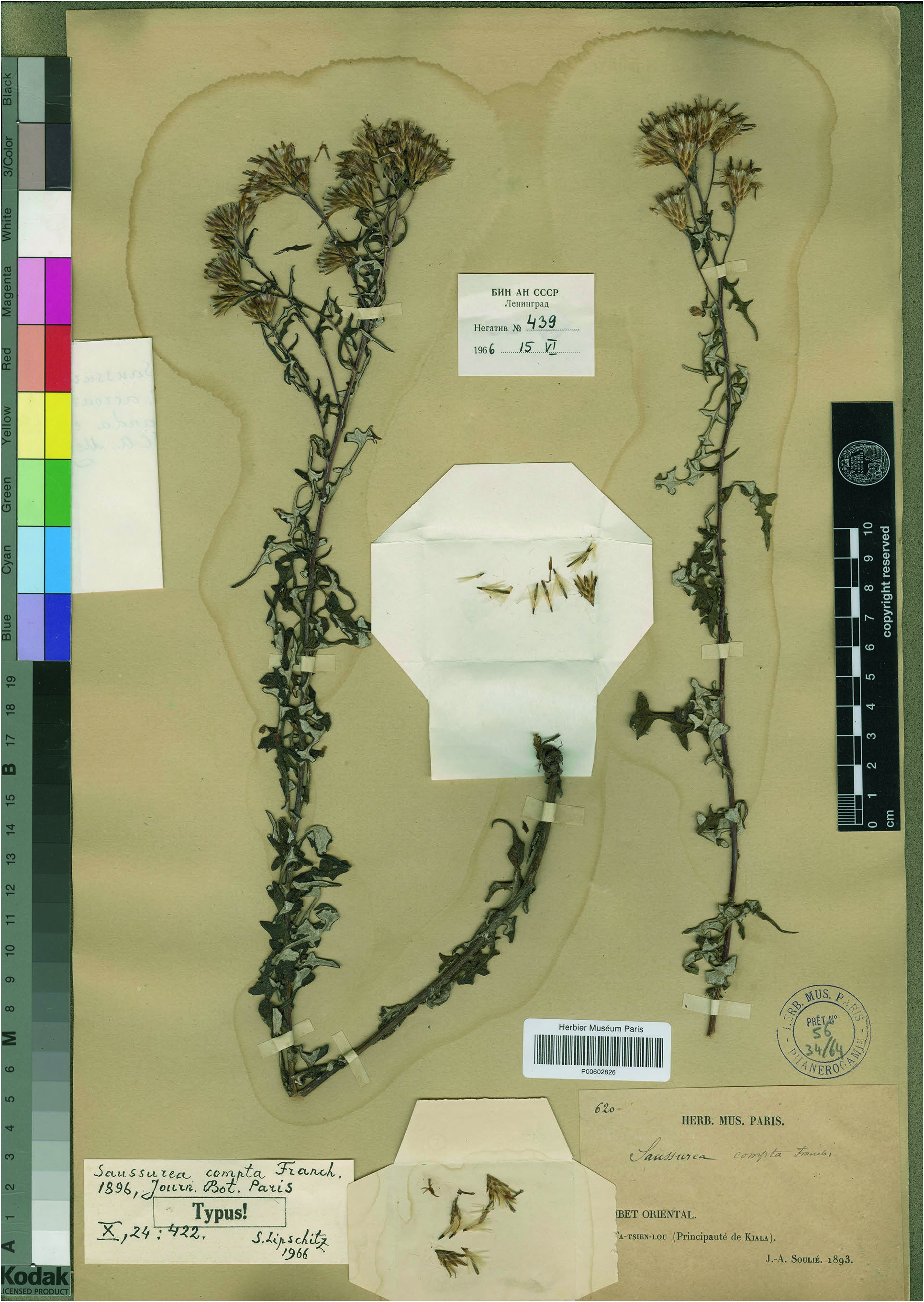
Crepidiastrum ameristophyllum
Crepidiastrum ameristophyllum (Nakai) Nakai

Crepidiastrum ameristophyllum is a subshrub in the Asteraceae family, native to Ogasawara-shoto. It was described by Nakai in 1920. The plant has erect or ascending stems, reaching 1-2 m in height, and produces white ligulate flowers from November to January. It has a chromosome number of 2n = 10.
Description
Crepidiastrum ameristophyllum is a subshrub with erect or ascending stems, 1-2 m tall, and simple growth. Leaves are petiolate, with a clasping base, and vary in shape from oblanceolate-oblong to oblong-lanceolate, measuring 14-32 cm in length and 4-6.5 cm in width. Upper leaves are bract-like, ovate-oblong, 12-15 mm long. The plant produces many heads in corymbs, with slender peduncles 5-13 mm long. The involucre is tubular, 7 mm long, with 5 inner linear-oblong phyllaries. Each head contains 5 white ligulate flowers, with a ligule 7-7.5 mm long and a 3-3.5 mm long tube. Achenes are 4-4.5 mm long, 1 mm wide, and 10-ribbed, with a pappus of white capillary bristles 3.5-4 mm long.
Distribution
Ogasawara-shoto
Synonyms
Cacalia ameristophyllaLactuca ameristophyllaIxeris ameristophylla