coyote tobacco
Nicotiana attenuata Torr. ex S.Watson

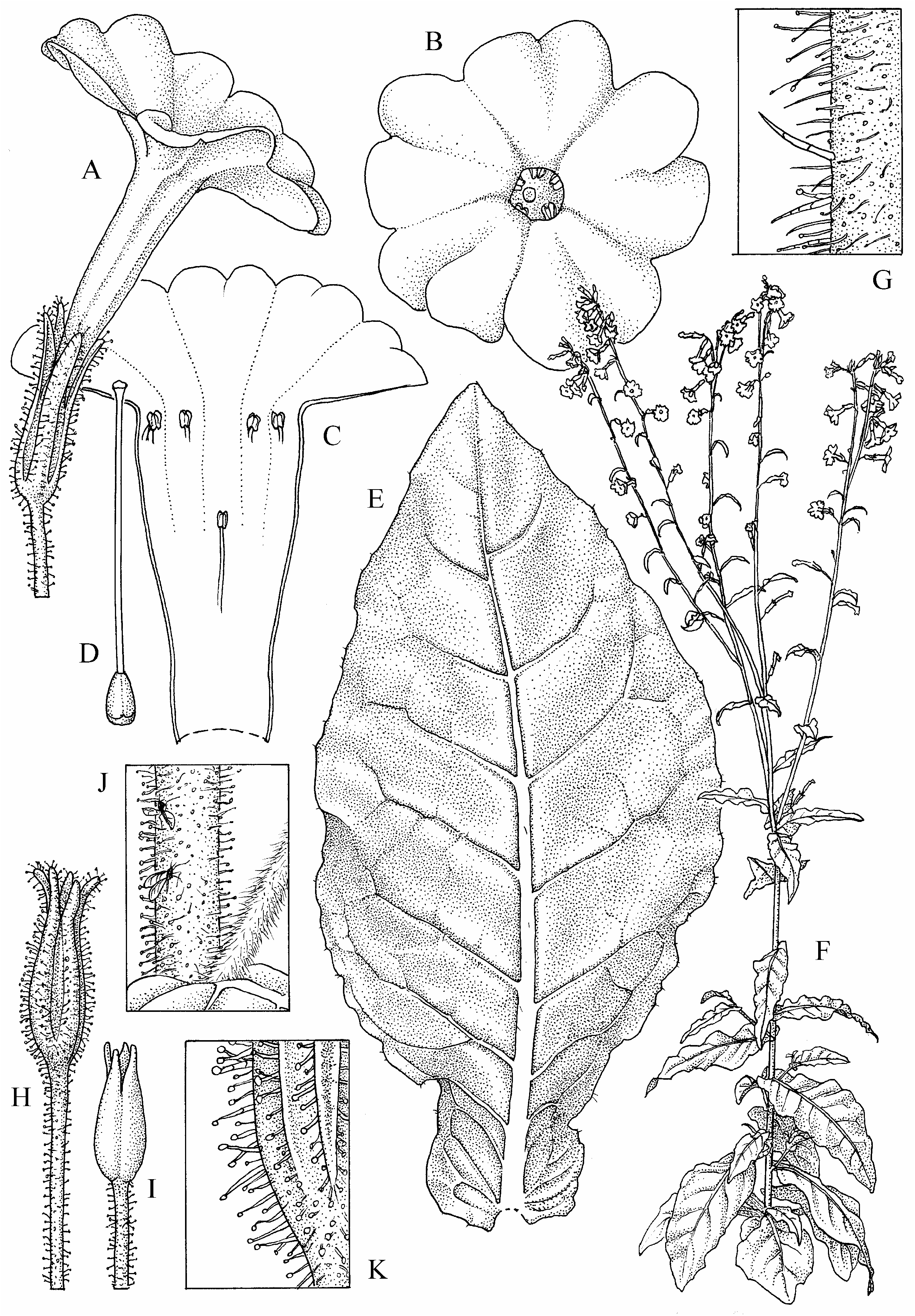
Nicotiana attenuata, known as coyote tobacco, is a wild tobacco species native to western North America, ranging from British Columbia to Texas and northern Mexico. It is an annual herb with glandular and sparsely hairy leaves, growing up to over a meter in height. The plant produces tubular flowers with pinkish or greenish white throats and five white lobes, enclosed in pointed sepals. Its fruit is a capsule approximately 1 centimetre long.
Description
This species is found in a wide range of habitats across western North America, including British Columbia, Arizona, California, and other regions. The leaves of Nicotiana attenuata are up to 10 centimetres long, with lower leaves being oval and upper ones narrower. The plant's inflorescence bears several flowers, each with a tubular throat measuring 2 to 3 centimetres in length. It was first described in 1871 by S.Watson, based on earlier work by Torr. It belongs to the Solanaceae family, commonly known as nightshades.
Other common names
coyote tobacco
Distribution
British Columbia · DK · Arizona · California · Colorado · Idaho · Mexican Pacific Is. · Mexico Northwest · Montana · Nevada · New Mexico · Oregon · Texas · Utah · Washington · Wyoming
Synonyms
Nicotiana torreyana