Coyote gourd
Cucurbita palmata S.Watson

Cucurbita palmata, known as coyote gourd, is a species in the Cucurbitaceae family. It was first identified by Sereno Watson in 1876. This species is native to the Southwestern United States and Northwestern Mexico, including areas such as northeastern Baja California, southeastern California, and southwestern Arizona. C. palmata is part of a restricted xerophyte species group within the genus Cucurbita, which includes Cucurbita californica, Cucurbita cordata, Cucurbita cylindrata, and Cucurbita digitata. These species are relatively uncommon and are adapted to hot, arid regions with low rainfall and loose, gravelly, well-drained soil.
Description
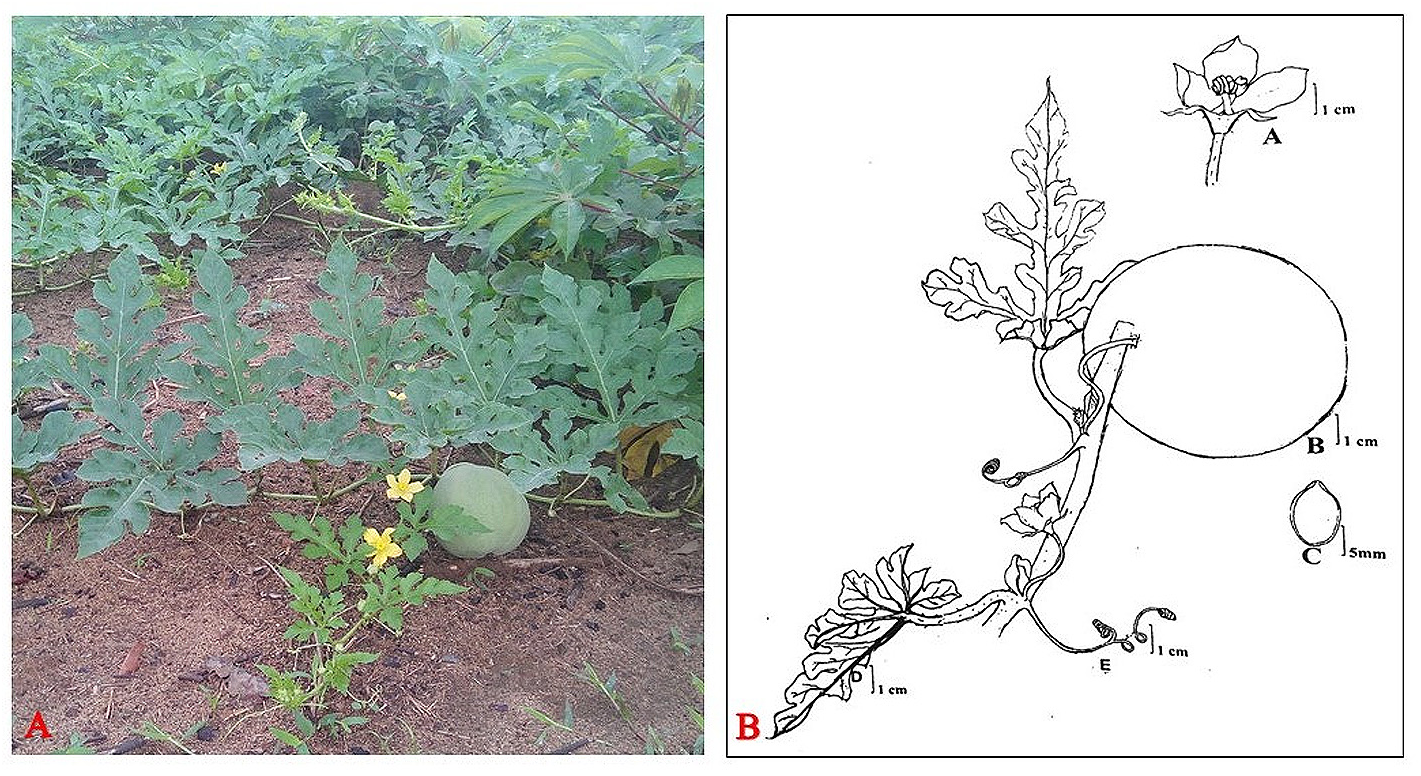
Cucurbita palmata is a flowering plant in the gourd family, Cucurbitaceae. It is commonly known as coyote gourd and is part of a group of species that are native to the Southwestern United States and Northwestern Mexico. This species is found in hot, arid regions with low rainfall and prefers loose, gravelly, and well-drained soil. C. palmata is native to northeastern Baja California, southeastern California, and southwestern Arizona. It is part of a restricted xerophyte species group in the genus Cucurbita, which includes Cucurbita californica, Cucurbita cordata, Cucurbita cylindrata, and Cucurbita digitata. These species hybridize readily and are relatively uncommon in their native habitats. The fruits of C. palmata are round, green mottled, and striped, turning yellow when mature. The juvenile leaves of these species are similar, but their mature leaves and root structures differ. C. palmata and C. digitata are sympatric, with C. palmata separating the ranges of C. digitata at the junction of Baja California, California, and Arizona.
Other common names
Coyote gourdCoyote-melon
Distribution
Global · Arizona · California · Mexico Northwest · Nevada · Utah
Synonyms
Cucurbita californica