Common Aldrovanda
Aldrovanda vesiculosa L.

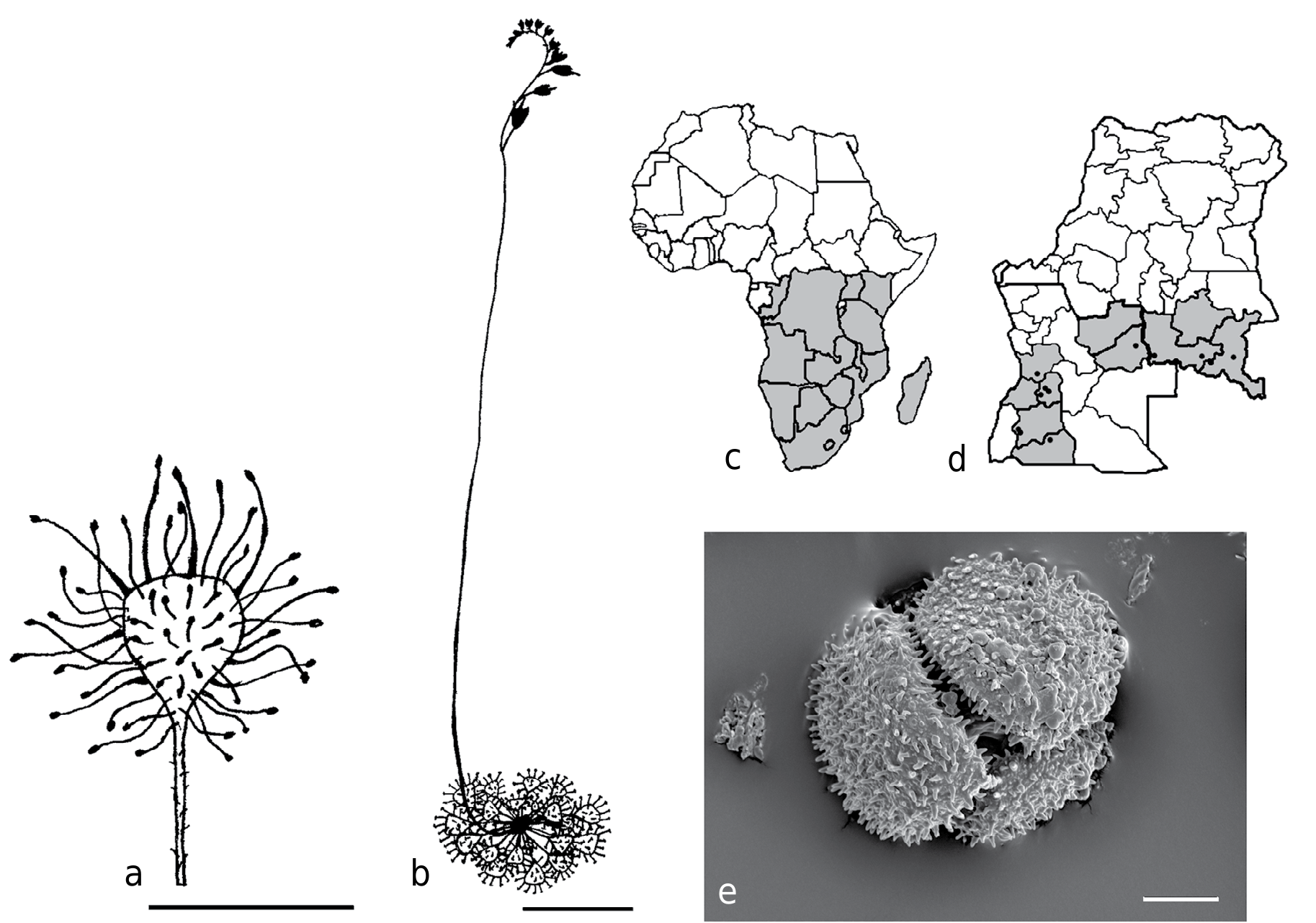
Aldrovanda vesiculosa is the only living species in the genus Aldrovanda within the Droseraceae family. It is known for its unique waterwheel-like structure and rapid-trapping mechanism to capture small aquatic invertebrates, similar to the Venus flytrap. The plant is free-floating and has a widespread distribution across multiple regions, including the Afrotropical, Australasian, Oriental, and Palaearctic zones, as well as various countries in Europe and the Americas.
Description
Aldrovanda vesiculosa, or waterwheel plant, is a carnivorous aquatic species with specialized traps arranged in whorls around a central stem. These traps snap shut to catch prey, making it one of the few plants with rapid movement. It is native to a wide range of regions, including parts of Africa, Asia, Europe, and the Americas. The species was first described in 1753 and is found in diverse locations such as Belgium, France, the Netherlands, and the United States. It is a unique and ecologically significant plant within the Droseraceae family.
Other common names
Waterwheel plantCommon AldrovandaWaterwheel
Distribution
Afrotropical · Australasian · Oriental (Indomalaya) · Palaearctic · Belgium · France · The Netherlands · Great Britain · Switzerland · CH · Flemish Region · Global · conterminous 48 United States · Amur · Assam · Austria · Baltic States · Bangladesh · Belarus · Botswana · Bulgaria · Burundi · Cambodia · Cameroon · Central European Rus · Chad · Czechoslovakia · Germany · Ghana · Greece
Synonyms
Aldrovanda generalisAldrovanda verticillataAldrovanda vesiculosa var. australisAldrovanda vesiculosa var. duriaeiAldrovanda vesiculosa var. verticillataDrosera aldrovandaAldrovanda vesiculosa var. rubescens