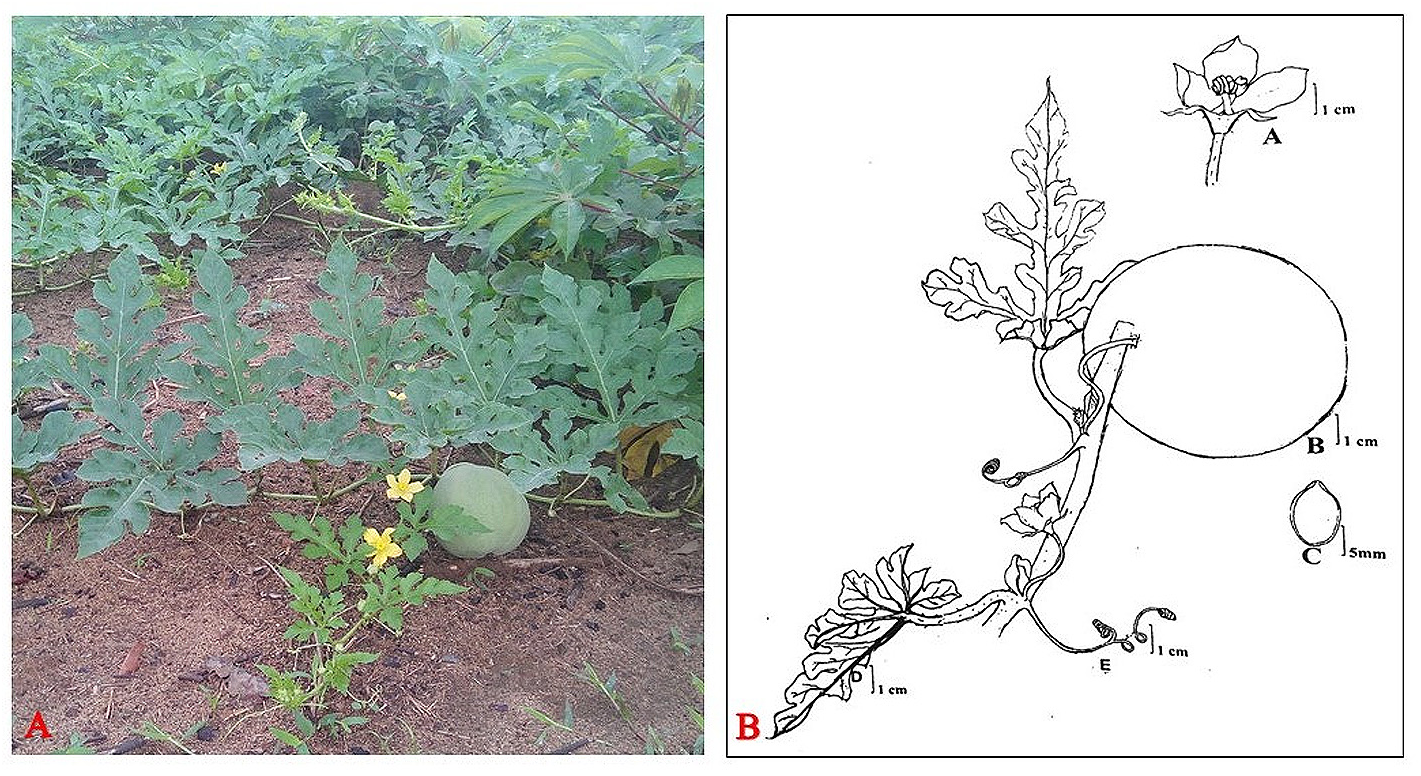
Coccinia rehmannii
Coccinia rehmannii Cogn.

Coccinia rehmannii is a perennial climber or creeper in the Cucurbitaceae family, native to several regions in southern Africa, including Angola, Botswana, and Zimbabwe. It was first described in 1895 by Cogn. The plant features stems up to 4 m long, with variable trichome coverage and white pustules, especially in drier areas. Leaves are variable in shape, ranging from shallowly to deeply lobed, with denticulate margins and white pustules on the upper surface. Male flowers are solitary or in small clusters, with variable trichome presence on the pedicels and perianth tube.
Description
Coccinia rehmannii is a perennial vine with stems that can grow up to 4 meters in length. The stems are glabrous or covered with broad-based trichomes, and in older plants, they often develop dense white pustules, particularly in drier regions. The petioles range from 0.2 to 4.2 cm in length and may be glabrous or have erect, broad-based trichomes. Leaves are variable, measuring 0.9 to 9.7 cm in width and 1.4 to 16.6 cm in length, with 3- to 5-lobed, auriculate, or rarely cordate shapes. The upper leaf surface is often densely covered with white pustules, while the lower surface is glabrous, with small blackish glands and erect trichomes on the nerves. Male flowers are typically solitary or in small clusters, with peduncles ranging from 0.7 to 8.5 cm and pedicels from 0.6 to 9 cm. The perianth tube is usually covered with long trichomes.
Distribution
Angola · Botswana · Cape Provinces · Free State · KwaZulu-Natal · Mozambique · Namibia · Northern Provinces · Swaziland · Zimbabwe
Synonyms
Coccinia oviferaCoccinia rehmannii var. littoralis