coast polypody
Polypodium scouleri Hook. & Grev.

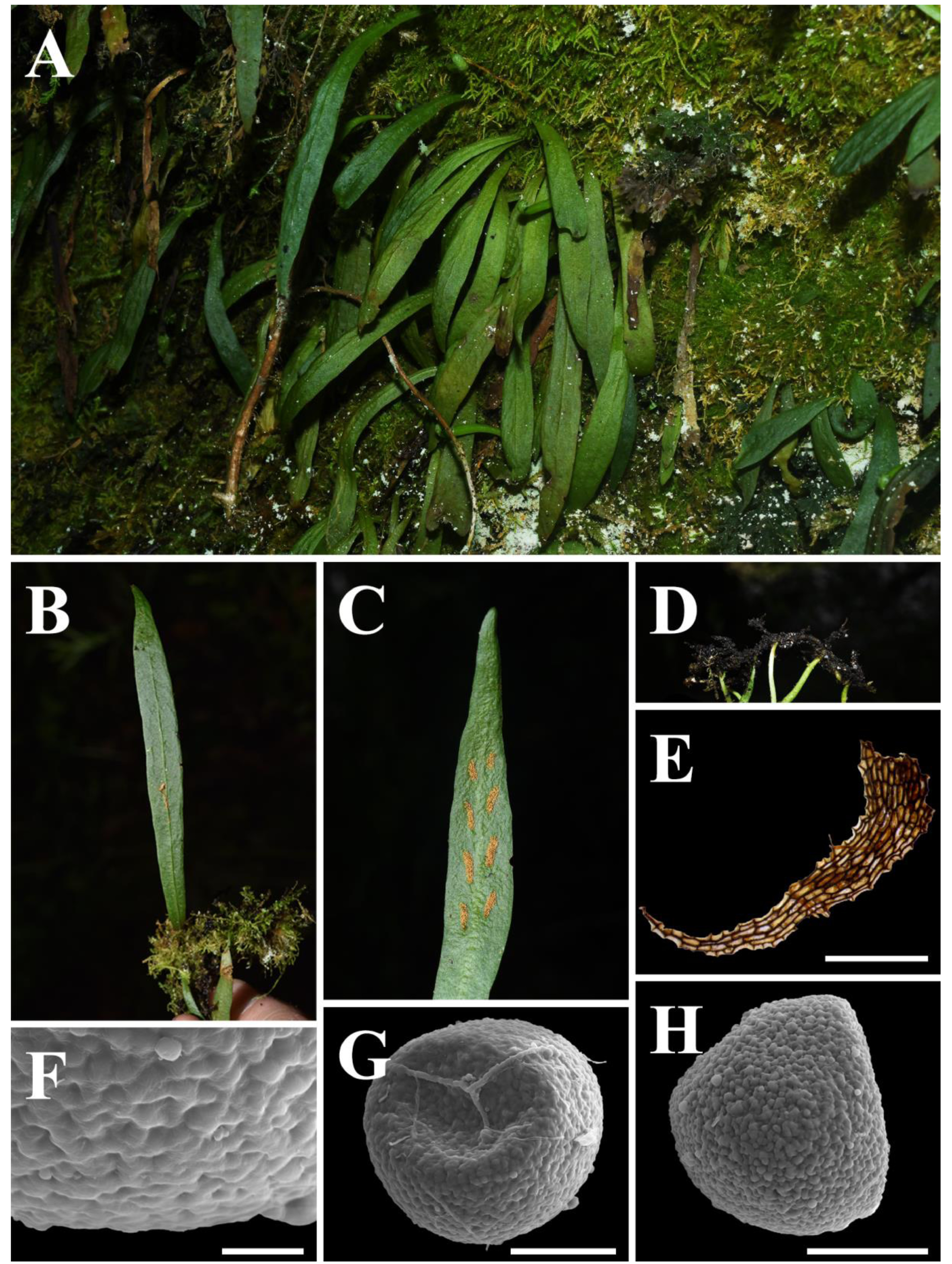
Polypodium scouleri, known as coast polypody, is a fern species native to coastal western North America, from British Columbia to Guadalupe Island. It thrives in coastal habitats such as bluffs, dunes, and forests, often exposed to sea spray and fog. The plant features a waxy, scaly rhizome and produces stiff, leathery leaves up to 85 cm long. Each leaf consists of round-tipped segments with shallow, rounded teeth and is covered in sori on the underside, which contain spores.
Description
Polypodium scouleri is a member of the Polypodiaceae family and is commonly found in coastal regions of British Columbia, California, Oregon, and Washington, extending to Mexican Pacific islands. It grows in rocky coastal areas, including bluffs, dunes, and ocean-side forests. The fern's leaves are triangular or oblong, composed of stiff, leathery segments with rounded teeth. The underside of the leaves has sori, which are up to 0.5 cm wide and contain spores. This species was first described in 1828 by Hook. & Grev.
Other common names
Scouler's polypodycoast polypodyleather-leaved polypodyleathery polypody
Distribution
British Columbia · California · Mexican Pacific Is. · Mexico Northwest · Oregon · Washington
Synonyms
Goniophlebium pachyphyllumPolypodium pachyphyllumGoniophlebium scouleriPolypodium vulgare var. scouleriPolypodium carnosum