Chinese Crab Apple
Malus baccata (L.) Borkh.

Malus baccata (L.) Borkh., commonly known as Chinese Crab Apple, is a species of small tree or shrub in the Rosaceae family. Native to parts of Asia, it is widely cultivated for ornamental purposes, as rootstock, and in bonsai. The species is characterized by its white, fragrant flowers and small, edible fruits. It is adaptable to a range of climates and has a broad geographic distribution across several continents.
Description
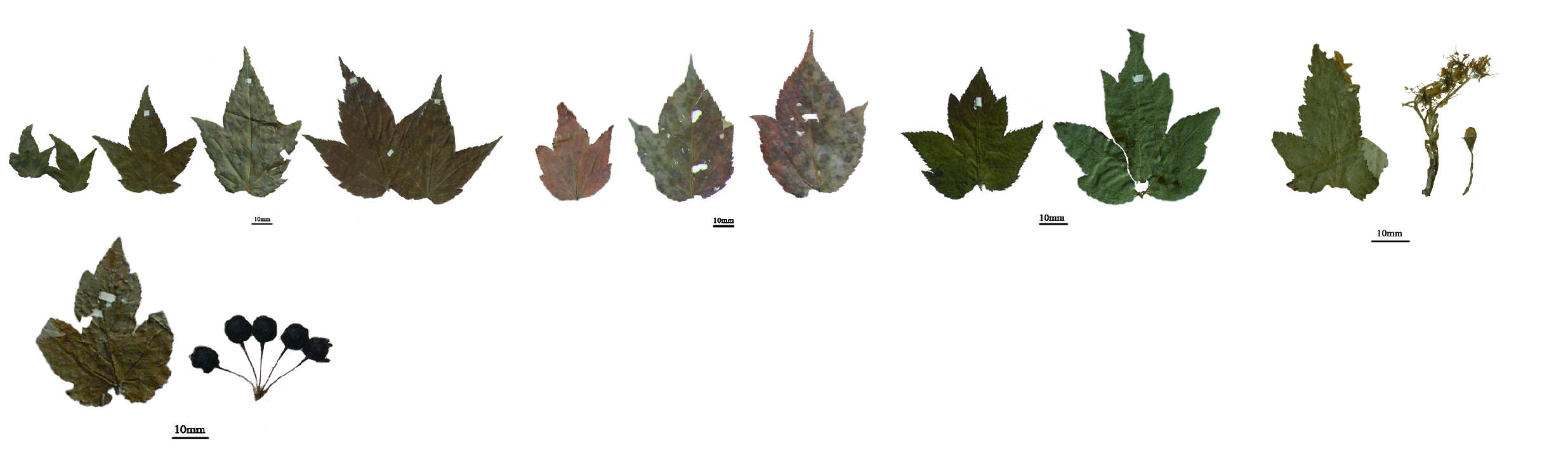
Malus baccata is a small tree or shrub with terete branches that may be piliferous or glabrous. The leaves are petiolate, with a puberulous or glabrescent petiole and an oval to ovate lamina. The base of the leaf is cuneate, and the apex is retuse to caudate, with a margin that is crenate to serrulate. The abaxial surface of the blade is piliferous or glabrescent. The inflorescence is umbellate, with piliferous or glabrous pedicels and a glabrous hypanthium. Sepals are lanceolate, glabrous on the abaxial side and puberulous on the adaxial side, and are caducous. The petals are white and obovate, with 15 to 20 stamens that are unequal in length. The styles number 3 to 5 and are longer than the stamens, remaining glabrous. The pome is subglobose and may be piliferous or glabrous on the carpopodium.
Habitat
Malus baccata is native to parts of Asia, including regions of China, Russia, and surrounding areas. It is also cultivated in various parts of Europe and North America. The species thrives in temperate climates and is often found in forest edges, open woodlands, and disturbed areas. It is well adapted to a range of soil types and can tolerate cold winters and moderate drought.
Cultivation
Malus baccata is a hardy species that is relatively easy to cultivate. It prefers well-drained, loamy soils and full sun to partial shade. It is cold-tolerant and can survive in USDA zones 3 to 7. The tree is often used as rootstock for other apple varieties due to its vigor and adaptability. It requires minimal pruning and is resistant to many common pests and diseases. Propagation is typically done through seeds or grafting.
Uses
Malus baccata is cultivated for a variety of purposes, including ornamental use, bonsai, and as rootstock for apple trees. Its fragrant, white flowers make it a popular choice for gardens and parks. The small, edible fruits can be used in jams, jellies, and other culinary applications. The tree is also valued for its use in bonsai due to its compact size and attractive form. In addition, it is sometimes used in traditional medicine for its astringent properties.
Other common names
Chinese Crab AppleFlowering CrabappleSiberian CrabSiberian Crab AppleSiberian Crabapple
Distribution
New Brunswick · Nova Scotia · Ontario · RU · Belgium · Flemish Region · NO · DK · Latvia · Finland · Norway · European part of Russia · Sweden · Ukraine · SE · Vermont-US · CZ · AM · LV · Global · CA · conterminous 48 United States · Altay · Amur · Assam · Buryatiya · Central European Rus · China North-Central · Chita · Connecticut
Synonyms
Pyrus baccataMalus baccata f. baccataSinomalus baccataPyrus baccata var. genuinaMalus baccata f. genuinaMalus microcarpa unranked baccata