candelabra aloe
Aloe candelabrum A.Berger

Aloe candelabrum is a striking, tree-like aloe native to KwaZulu-Natal, South Africa. Reinstated as a valid species after taxonomic confusion, it is distinguished by its tall, unbranched stem, long, recurved leaves, and a unique, multi-branched inflorescence that resembles a candelabrum. It flowers in mid-winter, producing vivid scarlet or pinkish-orange flowers. This species is ecologically and horticulturally significant, though it remains relatively rare and poorly understood in cultivation.
Description
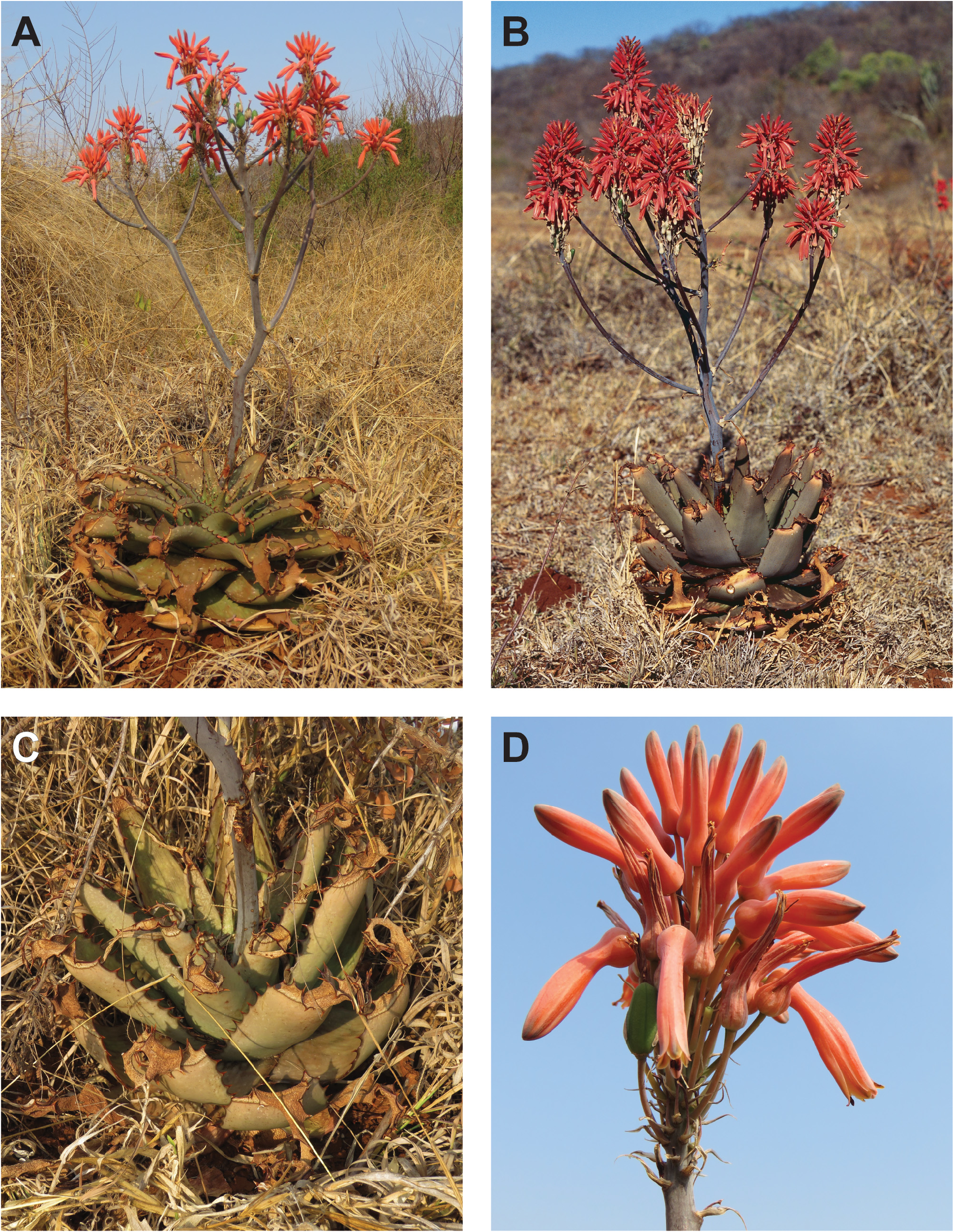
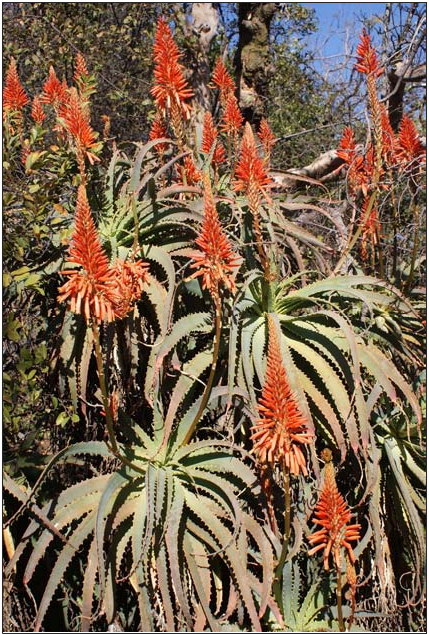
Aloe candelabrum is a solitary, arborescent plant that can grow up to 2–4 meters tall, with a straight, unbranched stem covered in persistent, dried leaves. The rosette of leaves is densely packed, spreading to recurved, and can reach lengths of about 100 cm with a base width of 15 cm. The leaves are dull green to glaucous, smooth, and deeply channelled, with a few scattered spines on the lower surface near the apex and pungent, reddish to reddish-brown, deltoid teeth along the margins. The inflorescence is a tall, multi-branched structure (5–12 branches) with cylindrical, dense racemes that can extend up to 80 cm in length. The terminal raceme is often the longest and stands out above the lateral ones. Flowers are typically scarlet, sometimes rose-pink or orange, and occasionally white, with white inner segment tips. Each flower is about 32 mm long, clavate-cylindrical in shape, and slightly ventricose above the ovary. The floral bracts are small, white, and thin, while the pedicels are short and measure about 6 mm in length. The stamens and style are exserted, with the stamens showing a color change from lemon yellow to deep orange or purplish at the tips.
Habitat
Aloe candelabrum is endemic to the KwaZulu-Natal province in South Africa, where it grows in ecologically diverse habitats. It is typically found in rocky or semi-arid environments, often in association with other aloes and succulent flora. The species is adapted to the region's seasonal climate, with a dry summer and a mid-winter flowering period (June to July). It appears to intergrade with Aloe ferox in some areas, particularly in the eastern parts of the Eastern Cape and southern KwaZulu-Natal, where populations may exhibit intermediate morphological traits.
Cultivation
Cultivating Aloe candelabrum requires a well-draining soil mix and a warm, sunny position. It is suited to Mediterranean or arid climates and should be protected from frost and excessive moisture. Watering should be moderate, with periods of dryness between waterings to prevent root rot. Propagation is typically done through offsets, though seed propagation is also possible. In cultivation, the plant may take several years to mature and produce its characteristic tall inflorescence. It is best suited for rock gardens or as a specimen plant in xeriscapes. Due to its rarity and specific habitat requirements, it is not commonly available in commercial nurseries and is often grown by specialist succulent enthusiasts.
Uses
Aloe candelabrum is primarily valued for its ornamental qualities, with its tall, tree-like form and showy winter flowers making it a striking addition to botanical gardens and private collections. It is not widely used in traditional medicine or horticulture outside of its native range, but its unique appearance and ecological role in its habitat make it an important species for conservation and botanical study. Its potential for horticultural use is growing, particularly in specialized succulent and arid-plant gardens. However, due to its specific growing conditions and slow growth, it is not commonly cultivated on a large scale.
Other common names
candelabra aloe
Distribution
Africa · KwaZulu-Natal