Callilepis leptophylla
Callilepis leptophylla Harv.

Callilepis leptophylla is a perennial herb in the Asteraceae family, native to KwaZulu-Natal, Northern Provinces, and Swaziland. It was first described in 1865 by Harv. The species is characterized by its linear or filiform leaves with a prominent single main vein, solitary radiate capitula with narrow involucral bracts, white ray florets, and mostly dark purplish or occasionally white disc florets. The cypselae are glabrous. It is a spring-flowering plant commonly found in grassland habitats.
Description
This species grows from underground rootstock, producing annual stems that are 200–600 mm tall, occasionally reaching up to 1 m. The stems are unbranched or branched, ribbed, and may be glabrous or hairy, with tufts of hair in leaf axils. Leaves are subopposite, alternate, or spirally arranged, linear or filiform, and decrease in size upwards, transitioning into peduncular bracts. The involucre is hemispherical or broadly campanulate, with involucral bracts in 3–4 rows. The outer bracts are linear-triangular or narrowly triangular, while the second row is narrowly to very narrowly ovate. The species is distinguished by its white ray florets and dark purplish or white disc florets, with some specimens showing variations in disc coloration.
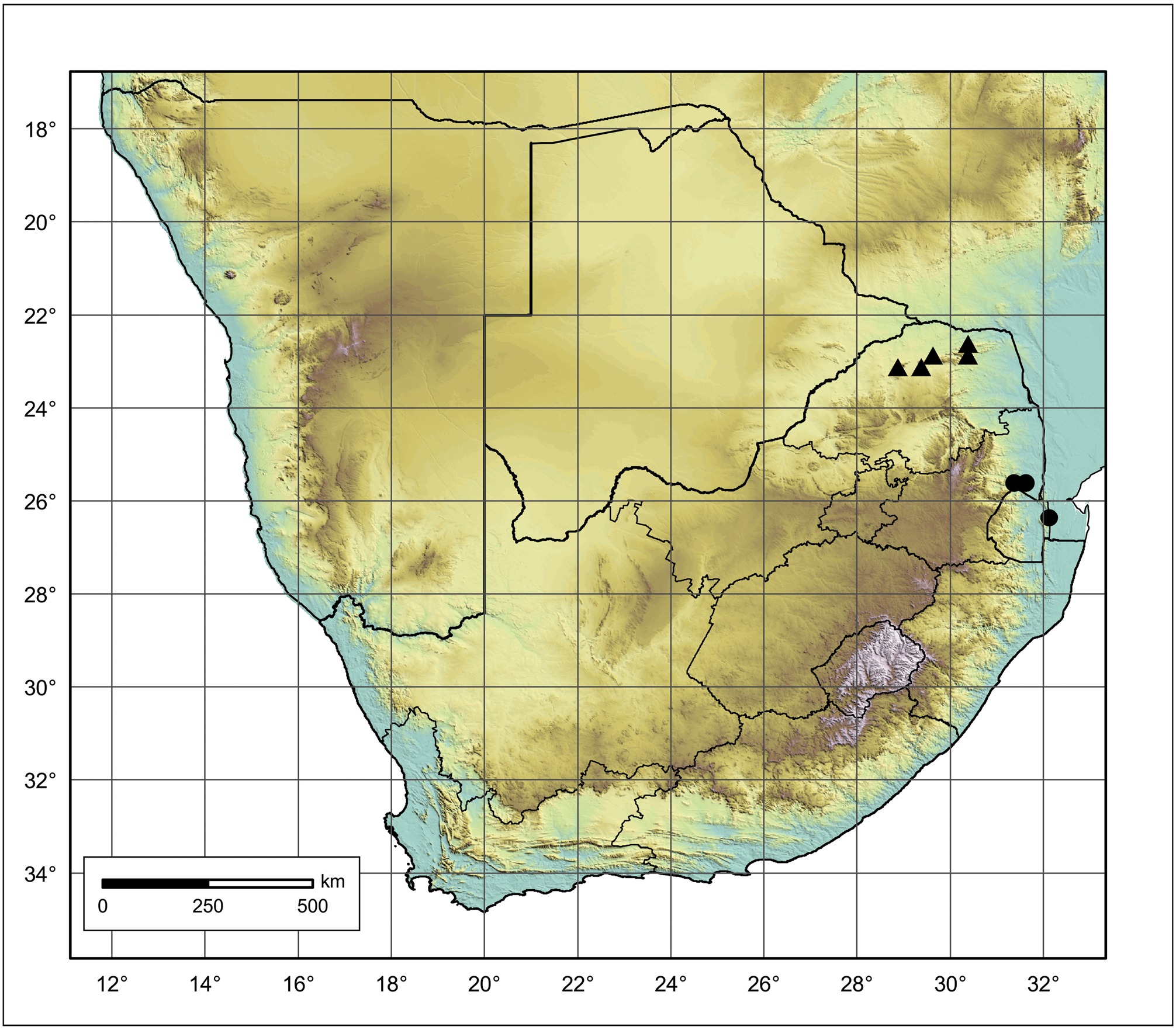
Distribution
KwaZulu-Natal · Northern Provinces · Swaziland