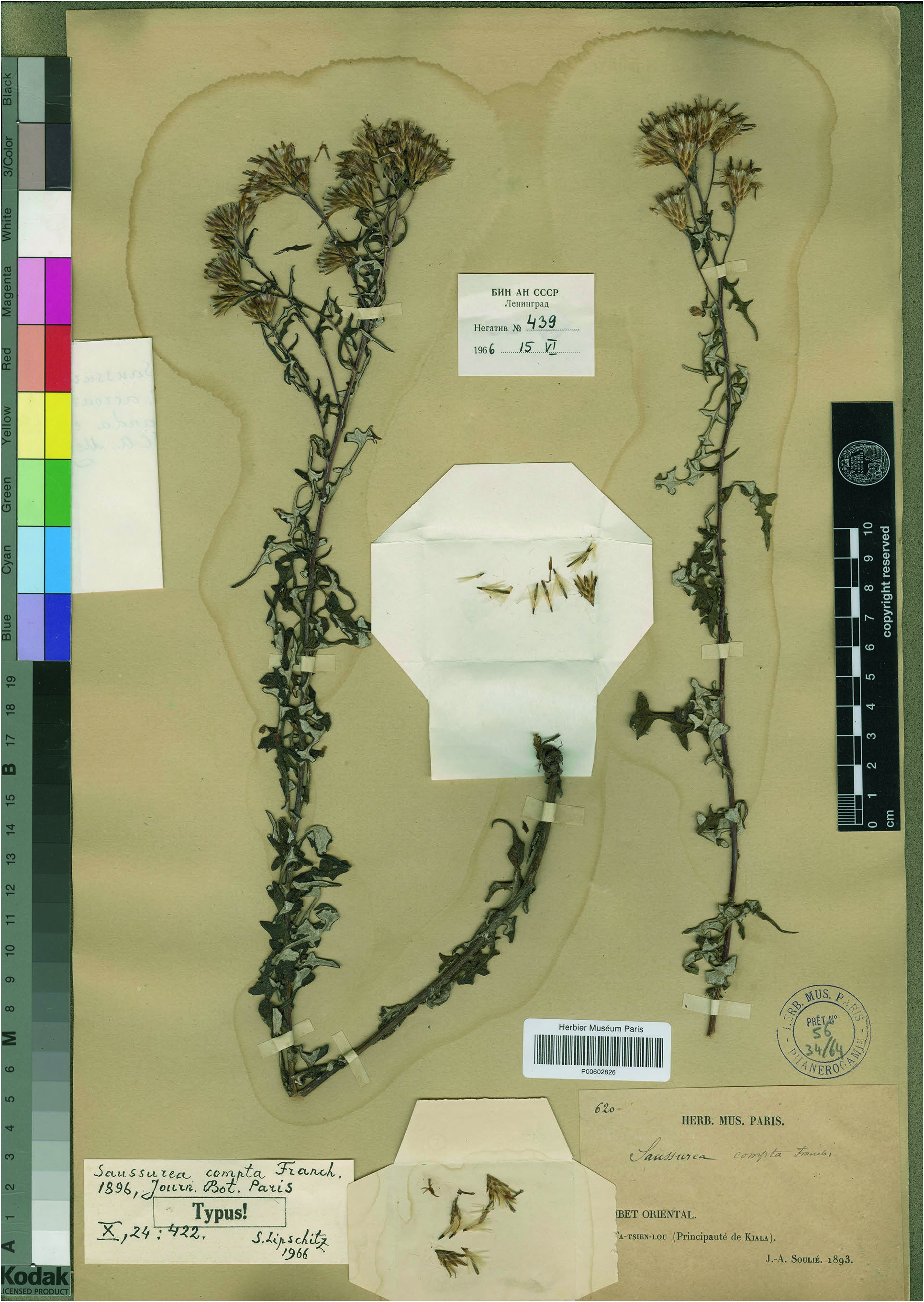
brownplume wirelettuce
Stephanomeria pauciflora (Torr.) A.Nelson

Stephanomeria pauciflora is a perennial plant in the Asteraceae family, native to the southwestern United States and northern Mexico. It is commonly known as brownplume wirelettuce. The plant has woody caudices and stems that are intricately branched, forming dense bushes. It produces 3–6 pink-liguled florets per head, with tuberculate, grooved cypselae and plumose pappus bristles. The species was first described in 1909.
Description
Stephanomeria pauciflora is a perennial herb or subshrub with stems that are 20–50 cm tall and often form dense, branched bushes. The plant has withered basal leaves and reduced, bractlike cauline leaves. It produces solitary flower heads with 3–10 mm peduncles and 4–6 glabrous phyllaries. Each head contains 5–6 florets. The cypselae are tan, 3.5–5 mm long, and tuberculate, with a pappus of 15–20 bristles that are usually tan, though occasionally white. The plant is found in a range spanning from the U.S. states of Wyoming, New Mexico, and California to parts of Mexico. It grows in diverse habitats, including deserts, woodlands, and plains. The specific epithet pauciflora refers to the plant's few-flowered inflorescence.
Other common names
brownplume wirelettuce
Distribution
Wyoming · New Mexico · Colorado · Oklahoma · Sonora · Baja California · Kansas · Utah · Arizona · Texas · Chihuahua · California · Nevada · Mexico Northeast · Mexico Northwest · Oregon
Synonyms
Stephanomeria pauciflora var. paucifloraLygodesmia paucifloraJamesia paucifloraPtiloria lygodesmoidesPtiloria cinereaStephanomeria lygodesmoidesPtiloria paucifloraPtiloria divaricataPrenanthes paucifloraStephanomeria cinereaStephanomeria haleyiStephanomeria pauciflora var. parishiiStephanomeria lygodesmoides