Bracken
Pteridium aquilinum (L.) Kuhn

Pteridium aquilinum, known as bracken, is a widespread fern species found in temperate and subtropical regions around the world. It is a member of the Dennstaedtiaceae family and is characterized by its large, triangular fronds and creeping rhizomes. The plant is highly adaptable and has a cosmopolitan distribution, having spread far beyond its original native range in Eurasia and North America due to the lightness of its spores. It is commonly found in a variety of habitats, including woodlands, grasslands, and disturbed areas.
Description
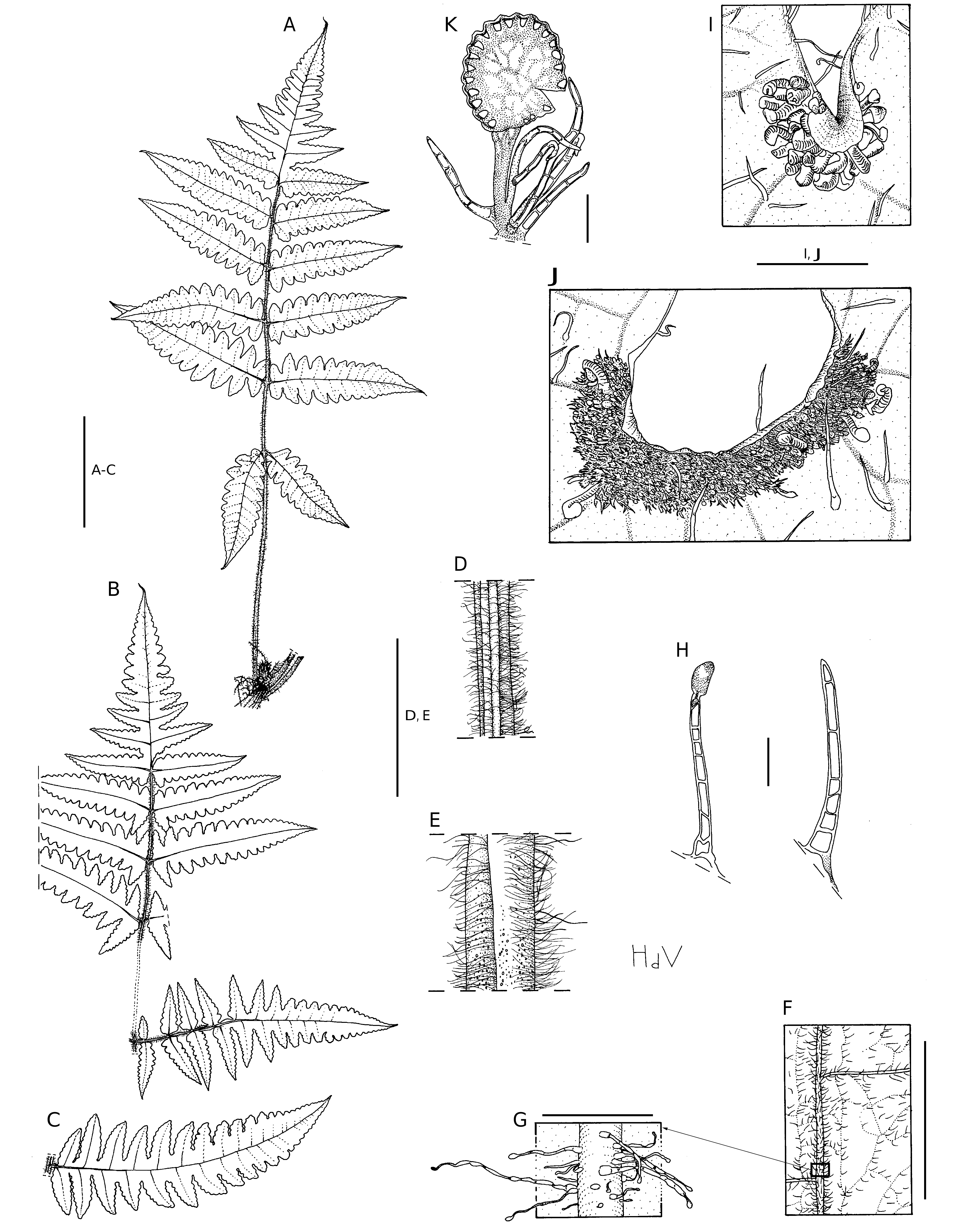
Pteridium aquilinum is a robust, perennial fern that can grow up to 1.5 meters in height. It has large, triangular, and often deeply lobed fronds that can reach lengths of up to 2 meters. The plant reproduces both sexually through spores and vegetatively through its rhizomes. The spores are extremely light and can be easily dispersed by wind, allowing the plant to colonize new areas quickly. The rhizomes are fleshy and can store nutrients, enabling the plant to survive in a range of environmental conditions.
Habitat
Bracken is highly adaptable and can be found in a wide range of habitats, including woodlands, grasslands, heaths, and disturbed areas such as roadsides and abandoned fields. It is often dominant in open, sunny locations and can form dense stands that suppress other vegetation. The plant is particularly common in temperate and subtropical regions and is known for its ability to thrive in both acidic and alkaline soils.
Cultivation
Pteridium aquilinum is not typically cultivated for ornamental purposes due to its aggressive growth and potential to become invasive. However, it can be grown in gardens with adequate space and well-drained soil. It prefers full sun to partial shade and can tolerate a wide range of soil types. The plant spreads rapidly through rhizomes and can be difficult to control once established. Regular pruning and monitoring are necessary to prevent it from overtaking other plants.
Uses
Historically, bracken has been used for a variety of purposes, including as a source of food and medicine. The young fronds, known as fiddleheads, can be cooked and eaten, although they must be prepared carefully to remove toxic compounds. In traditional medicine, various parts of the plant have been used to treat a range of ailments, including skin conditions and digestive issues. However, the plant contains several toxic compounds, and its use in food and medicine is not without risk. In some regions, bracken is also used as a mulch or for erosion control due to its dense growth habit.
Other common names
BrackenBracken / FernBracken FernBrackenfernBrakeCommon BrackenNorthern Bracken FernWestern Brackenfern
Distribution
Corvo Island · Faial Island · Flores Island · Graciosa Island · Pico Island · Santa Maria Island · São Jorge Island · São Miguel Island · Terceira Island · Barrancas | Distracción | Hatonuevo | Riohacha | Garagoa | Ramiriquí | Tibaná | Chinavita | Ciénaga | Viracachá · DK · FI · NO · SE · BR · CO · MX · KM · JM · MU · Bucaramanga | Encino | Piedecuesta | Tona · Flanders · MW · Vermont-US · CM · TR · GY · MG · ZM · IR
Synonyms
Pteris aquilina f. glabriorPteridium aquilinum var. lanuginosumPteris aquilina var. languinosaFilix-foemina aquilinaPteridium aquilinum var. aquilinumPteridium aquilinum subsp. typicum