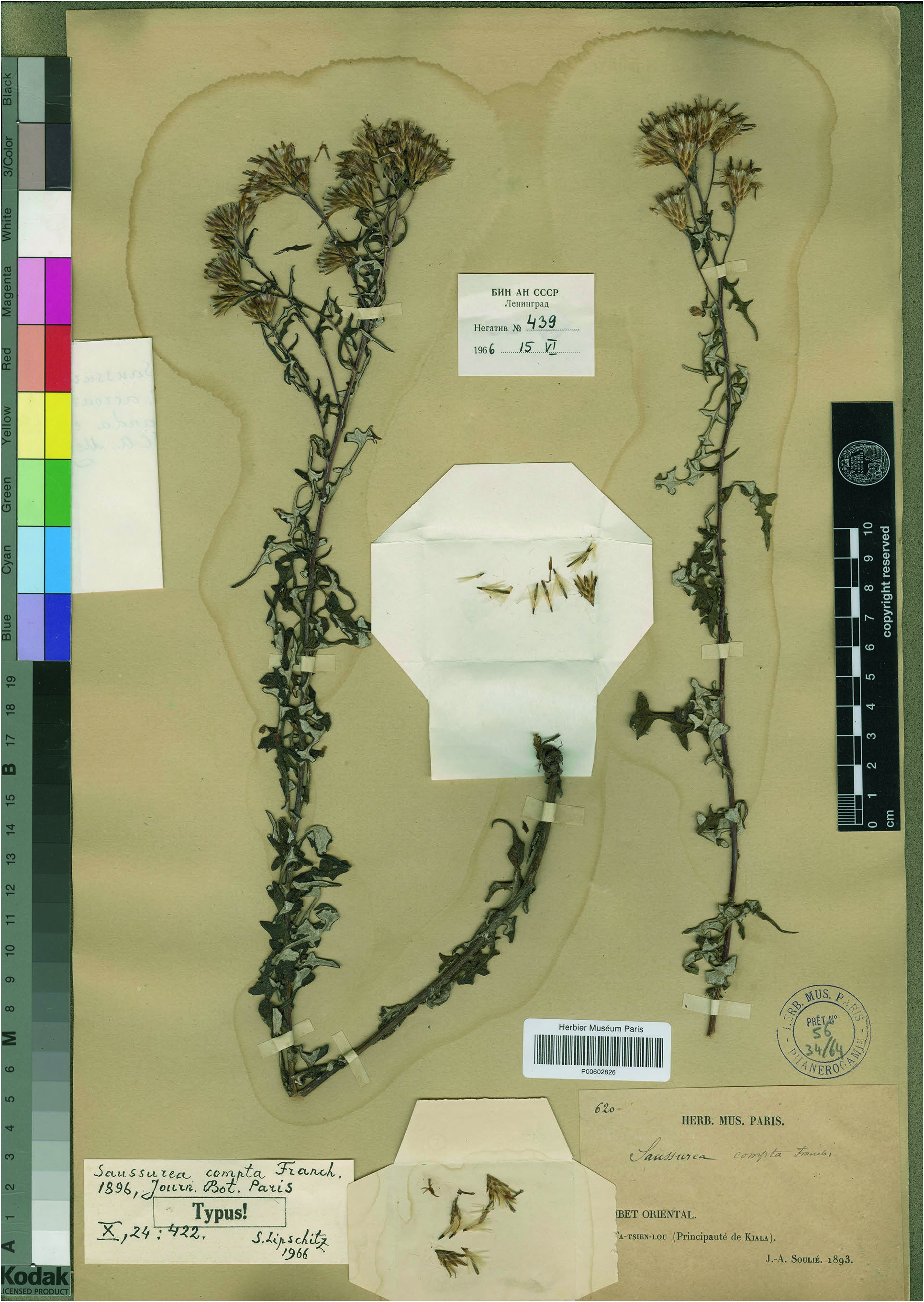
Blue Lettuce
Lactuca tatarica (L.) C.A.Mey.

Lactuca tatarica, known as blue lettuce, is a perennial herb native to Eurasia and a member of the Asteraceae family. It is distinguished by its tall, erect growth, glaucous leaves, and striking blue ligules. The plant is widely distributed across Europe and Asia, thriving in a range of temperate climates. Its inflorescence is composed of numerous small flower heads arranged in a panicle, and it produces ribbed achenes with a short beak and a white pappus. The species was first described in 1831 and is recognized for its ornamental and ecological value in its native habitats.
Description
Lactuca tatarica is a tall, perennial herb that can reach up to 150 cm in height. It is almost glabrous and has a thick, vertical rhizome with numerous underground stolons. The stems are erect and branch in the upper portion. Basal leaves are petiolate and pinnatifid, while the cauline leaves are similar in shape but sessile with a semi-amplexicaul base. All leaves are glaucous, rigid, and have denticulate margins. The inflorescence is a spike-like or corymbose panicle, with numerous heads each containing 16–23 florets. The involucre consists of 3–4 rows of bracts, with the outer bracts lanceolate, obtuse, and often purplish-tinted. The ligules are typically blue, though occasionally white. The achenes are slightly compressed, 4.5–6.5 mm long and 1 mm wide, with a yellowish to blackish color and 5–7 ribs. The beak is short, measuring 1–1.5 mm, and the pappus is white and about 8–9 mm long. Chromosome number is 2n = 18.
Habitat
Lactuca tatarica is found in a wide range of temperate habitats, including meadows, roadsides, and open woodlands. It is adaptable to various soil types and thrives in full sun to partial shade. The species is native to regions such as Europe, Central Asia, and parts of North America, where it often grows in disturbed or semi-natural environments. It is commonly found in countries like Latvia, Ukraine, Poland, and Iran, as well as in the United States in states such as Iowa, California, and Kansas.
Cultivation
Lactuca tatarica is relatively easy to cultivate in temperate gardens. It prefers well-drained soil and full sun but can tolerate partial shade. The plant is hardy and can survive in a range of soil pH levels. It is best propagated from seeds sown directly in the garden in spring. Regular watering is beneficial during dry periods, though the plant is moderately drought-tolerant once established. Deadheading spent flowers can encourage a longer blooming period. It is important to note that the plant may self-seed freely in favorable conditions, so gardeners should monitor its spread.
Uses
Lactuca tatarica is primarily valued for its ornamental qualities, with its striking blue flowers making it a popular choice for wildflower gardens and naturalized landscapes. It also serves as a nectar source for pollinators, including bees and butterflies. The plant has no significant culinary use, but like other members of the Lactuca genus, it may contain latex and should be handled with care. In some traditional herbal practices, species of Lactuca are used for their mild sedative properties, though specific uses for L. tatarica are not well documented.
Other common names
Blue Lettuce
Distribution
Latvia · Khabarovsk · Ukraine · Iowa · Pennsylvania · Gansu · Abkhaziya · California · Slovakia · Saskatchewan · Krym · Kaliningrad · Indiana · Alaska · Adzhariya · Poland · Kansas · Iran · South Dakota · Finland · Mongolia · Shaanxi · Manitoba · Wisconsin · Ontario · Azerbaijan · Missouri · Armenia · Utah · Illinois
Synonyms
Mulgedium runcinatumSonchus volhynicusCrepis charbonneliiMulgedium heterophyllumMulgedium alatoicumLagedium tataricumLactuca tatarica subsp. tataricaLactuca pulchella var. pulchellaMulgedium tataricum var. typicumMulgedium tataricum var. floccosumLactuca tatarica f. tataricaMulgedium tataricum var. anomalumMulgedium roborovskiiSonchus sibiricusLactuca tatarica var. tataricaMulgedium tataricum var. integrumCicerbita tataricaMulgedium tataricum var. subfloccosumLactuca tatarica var. tibeticaMulgedium tataricum var. tataricumLactuca kochianaSonchus tataricusLactuca multipesMulgedium salicifoliumWiestia tataricaLactuca tatarica var. pulchellaLactuca sylvaticaLactuca tatarica var. heterophyllaLactuca salicifoliaMulgedium tataricum