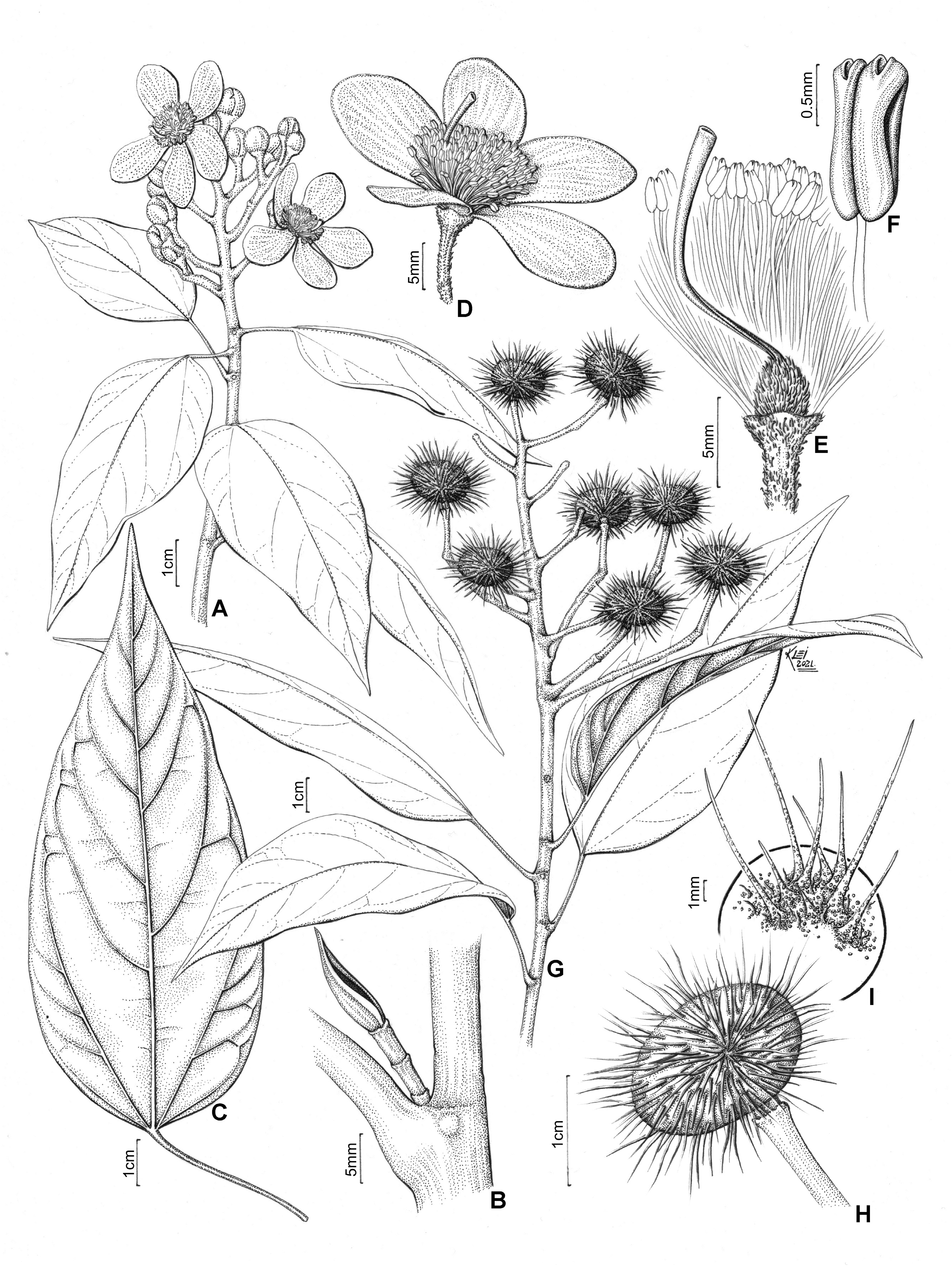
Bixa arborea
Bixa arborea Huber
Bixa arborea is a species in the genus Bixa, belonging to the family Bixaceae. It was first described by Huber in 1910. The species is distributed across several regions, including Brazil (Northeast, North, and Southeast), as well as Ecuador and Peru. It is part of the broader global distribution of the genus Bixa.
Description
Bixa arborea is a member of the Bixaceae family, a small plant family primarily known for its economically important genera such as Bixa. The species was formally described in 1910 by the botanist Huber. It occurs in multiple regions of Brazil, specifically in the Northeast, North, and Southeast, as well as in Ecuador and Peru. These areas represent its native range within the Neotropical region. The species contributes to the diversity of the Bixa genus, which is known for its mordant-producing properties and use in traditional dyes.
Distribution
BR · Global · Brazil Northeast · Brazil North · Brazil Southeast · Ecuador · Peru