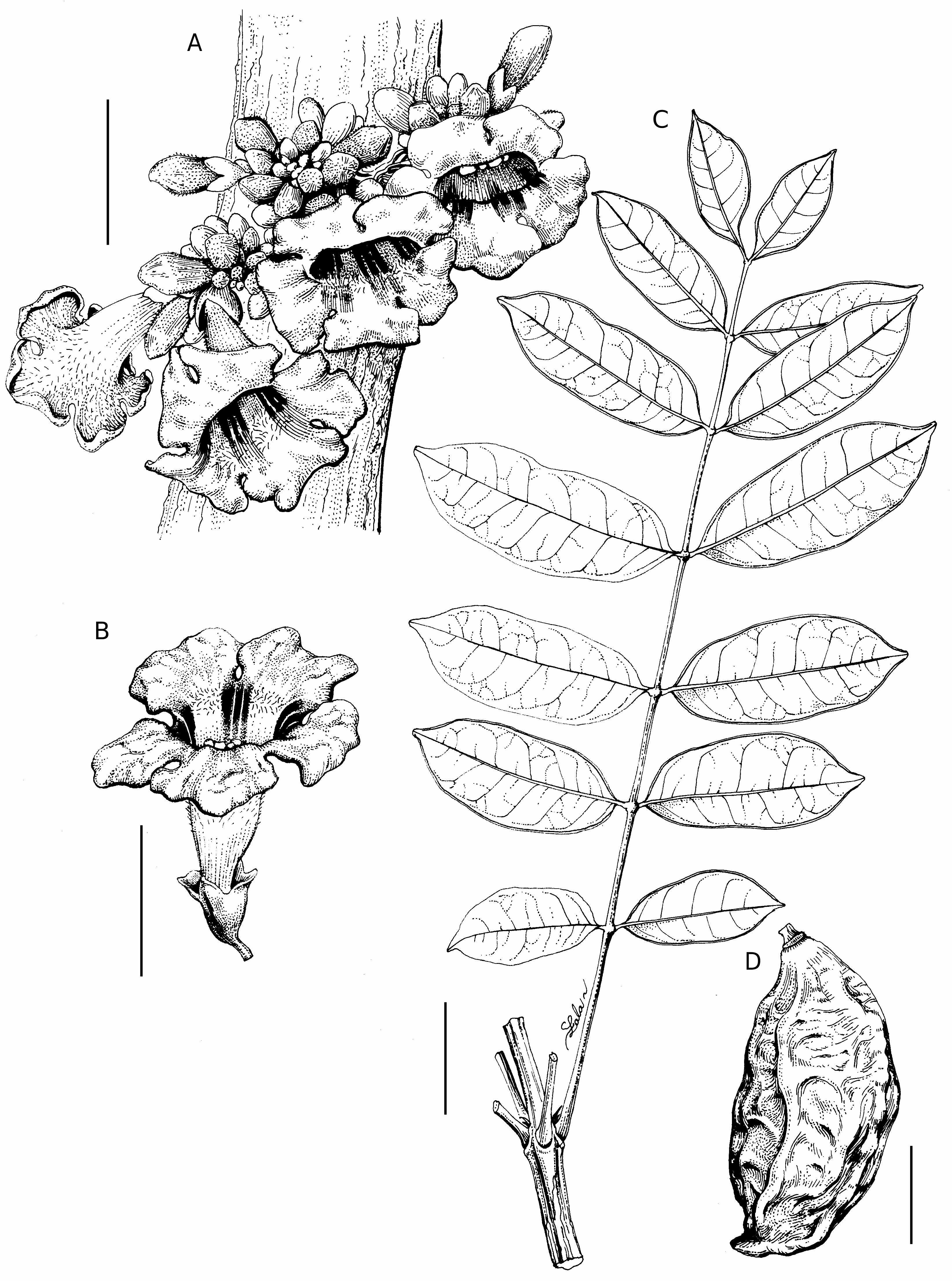
Bignonia neoheterophylla
Bignonia neoheterophylla L.G.Lohmann

Bignonia neoheterophylla is a species in the Bignoniaceae family, native to several regions in Central and South America. It has been documented in countries including Belize, Colombia, Costa Rica, Cuba, El Salvador, Guatemala, Honduras, Mexico, Nicaragua, and Panama. Specific locations include Bolívar, Sucre, and the municipality of Barrancas in Colombia, as well as the Jardín Botánico de Cartagena 'Guillermo Piñeres' and surrounding areas. The species was first described in 2014 by L.G. Lohmann.
Description
Bignonia neoheterophylla is found in the tropical dry forests of the Caribbean region of Colombia, specifically in the area of Cerrejón Cerro La Potrosa, at elevations between 206 and 259 meters. Its geographic range extends across Central America and parts of northern South America. The species was formally published in 2014 by L.G. Lohmann. It is part of the Bignonia genus within the Bignoniaceae family, a group of flowering plants commonly found in tropical and subtropical regions.
Distribution
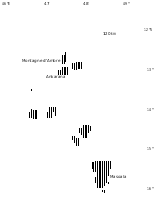
Bolívar, Sucre · Municipio de Barrancas, Cerrejón Cerro La Potrosa, Bosque Seco Tropical del caribe colombiano, lat: 11° 05' 5.1'' N, long: 72° 33' 57.8'' W, 206-259 m · Belize · Colombia · Costa Rica · Cuba · El Salvador · Guatemala · Honduras · Mexico Gulf · Mexico Southeast · Mexico Southwest · Nicaragua · Panamá · Colombia | Bolívar | Turbaco | Jardín Botánico de Cartagena "Guillermo Piñeres" y alrededores
Synonyms
Bignonia lepidotaCydista heterophylla