Bertolonia marmorata
Bertolonia marmorata (Naudin) Naudin

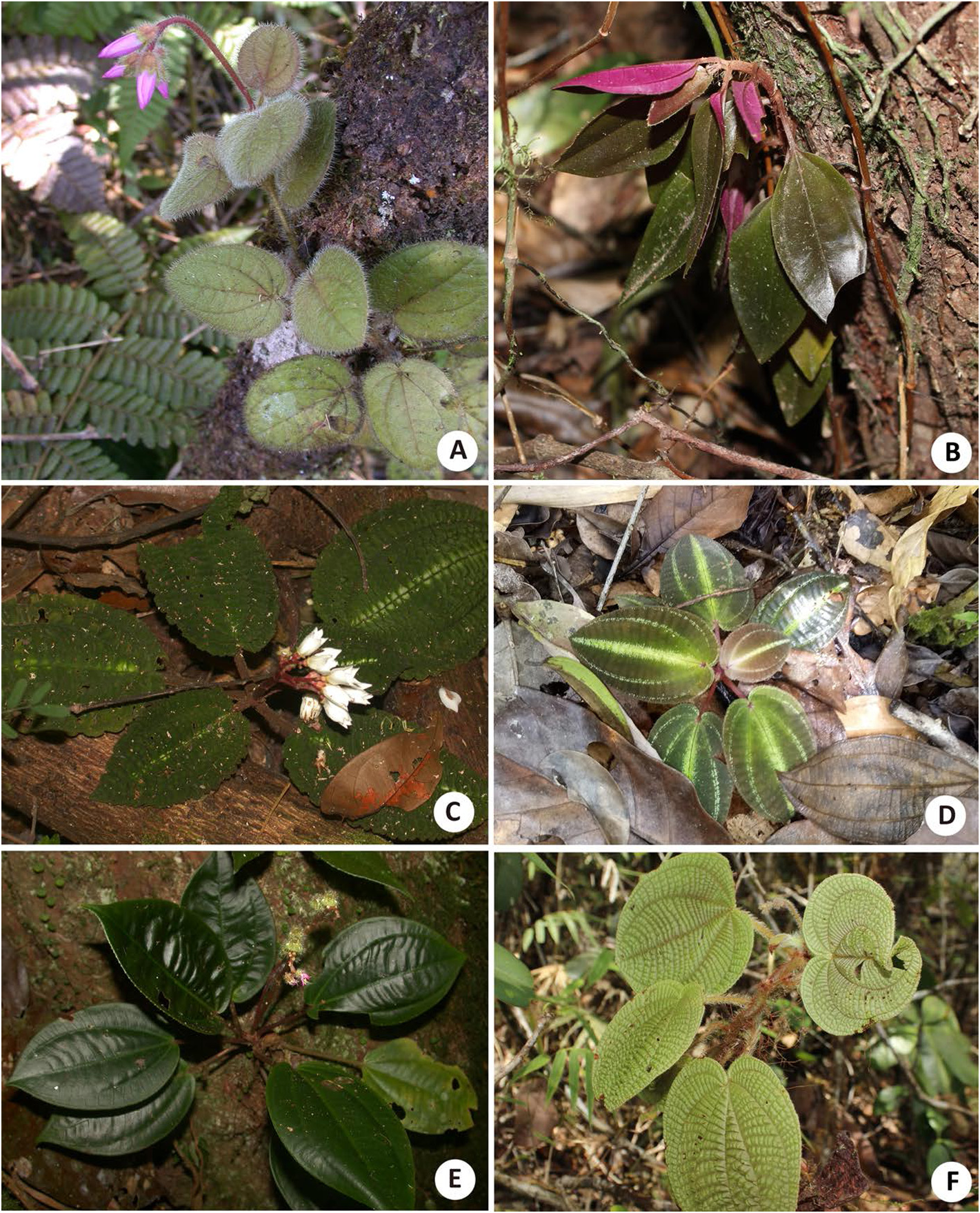
Bertolonia marmorata is a terrestrial herb in the Melastomataceae family, native to northeastern Brazil, specifically the states of Bahia, Alagoas, and Pernambuco. It grows in lowland and occasionally montane rainforests, often near water. The plant reaches about 15 cm in height, with a stem 2–6 mm wide. Its leaves are opposite, ovate or elliptic, with a rounded apex and a cordate base. The species is distinguished by its leaf morphology and flowers with small anthers (1.6–2 mm long) that dehise through a triangular, introrse pore. It is closely related to B. carmoi and B. maculata, and some specimens remain difficult to classify definitively.
Description
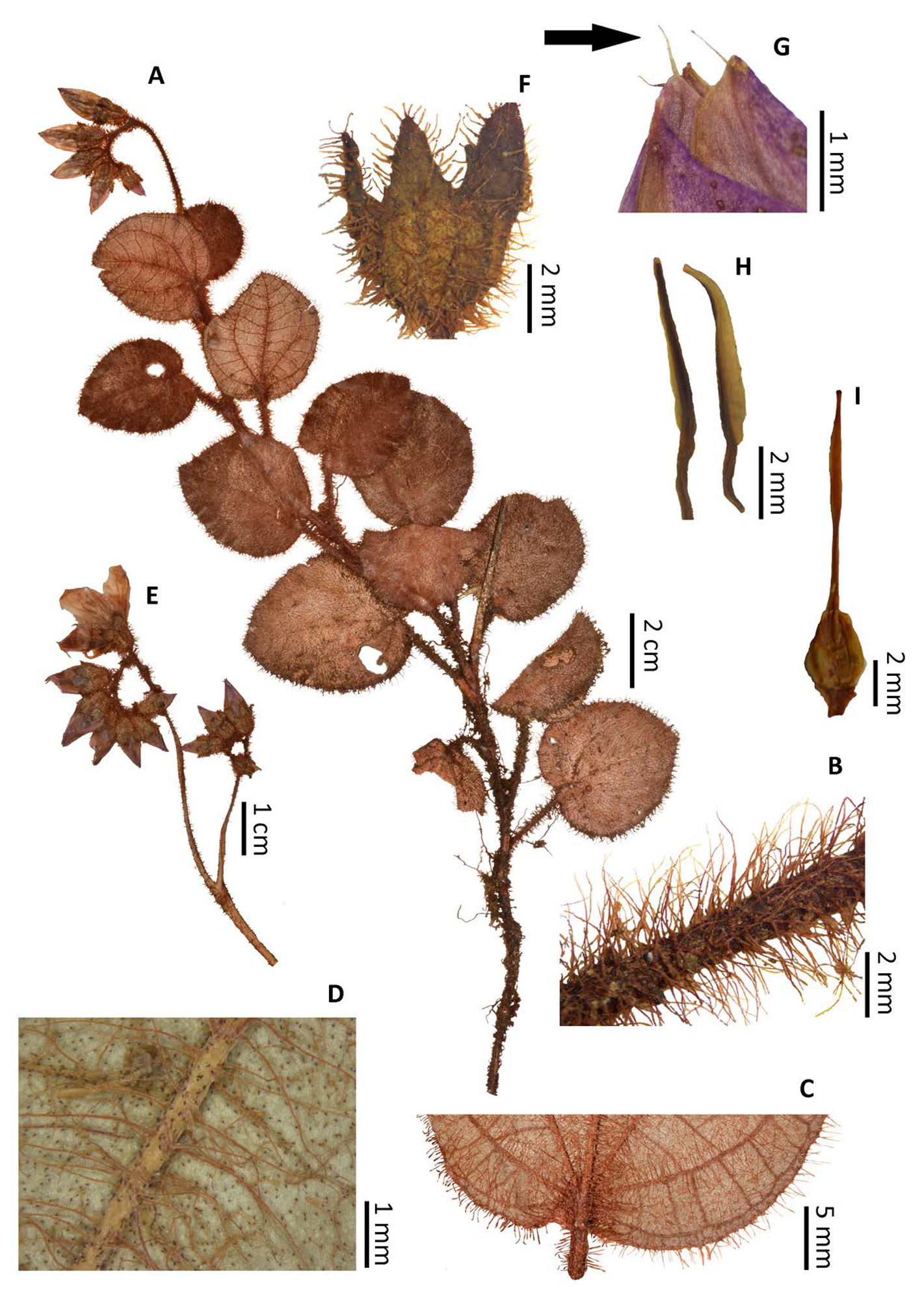
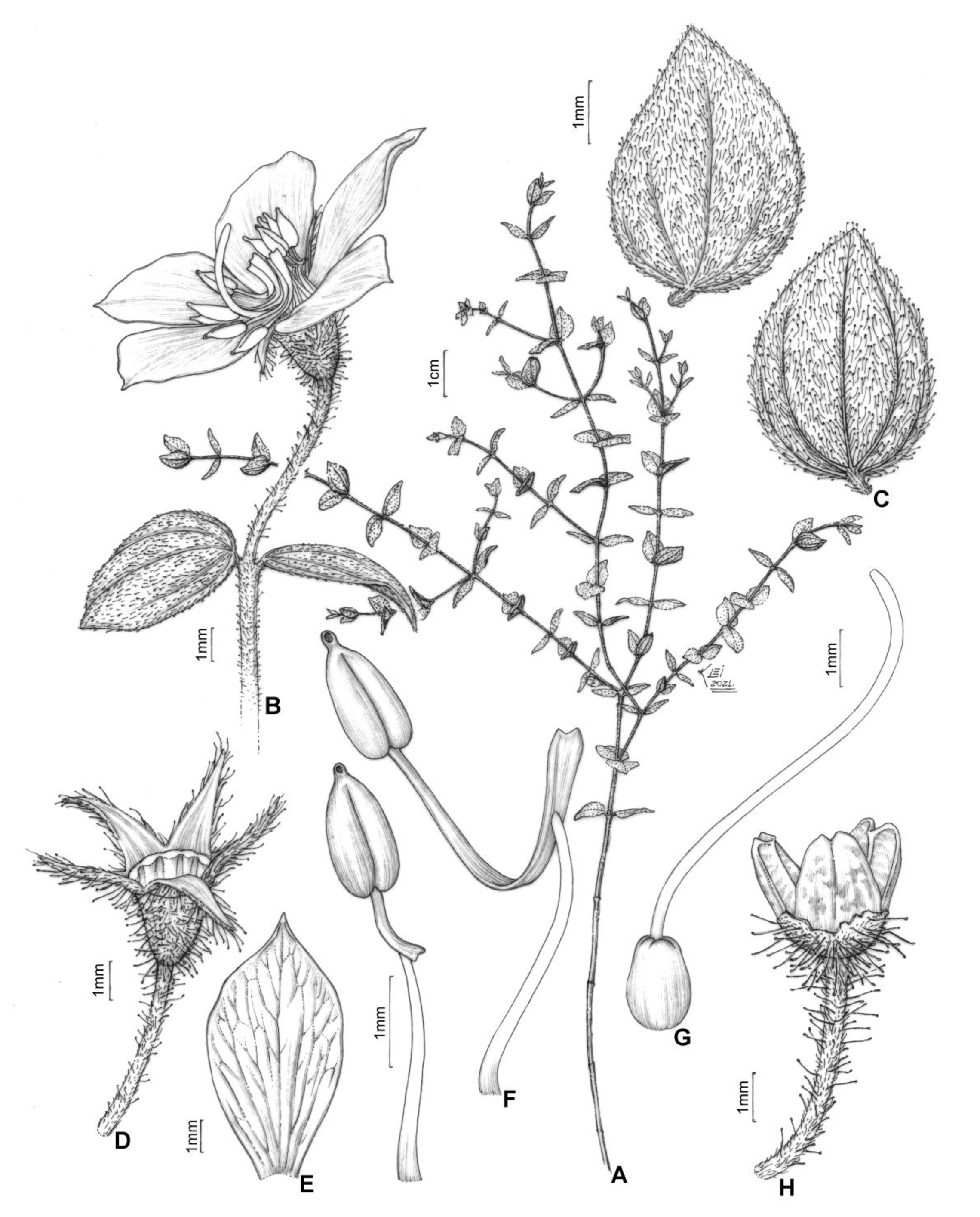
Bertolonia marmorata is characterized by its densely glandulose-punctate and glandulose-villose stem and leaves. The leaves have petioles 0.7–4 cm long and blades 4–12.4 cm long, with 5 main veins and two pairs not reaching the apex. The inflorescences are terminal, 6.4–17.8 cm long, with lanceolate bracts and bracteoles. The hypanthium is 1.8–2.9 mm long, and the sepals are ovate or widely ovate. This species is found in lowland rainforests and transitional zones between the Atlantic Forest and Caatinga. It flowers and fruits from October to February and July. Some specimens from various locations exhibit features overlapping with B. maculata and B. marmorata, complicating taxonomic classification.
Distribution
BR · Brazil Northeast
Synonyms
Eriocnema aeneaEriocnema marmorataBertolonia maculata var. marmorataBertolonia marmorata var. aeneaBertolonia marmorata var. genuina