Bertolonia maculata
Bertolonia maculata DC.

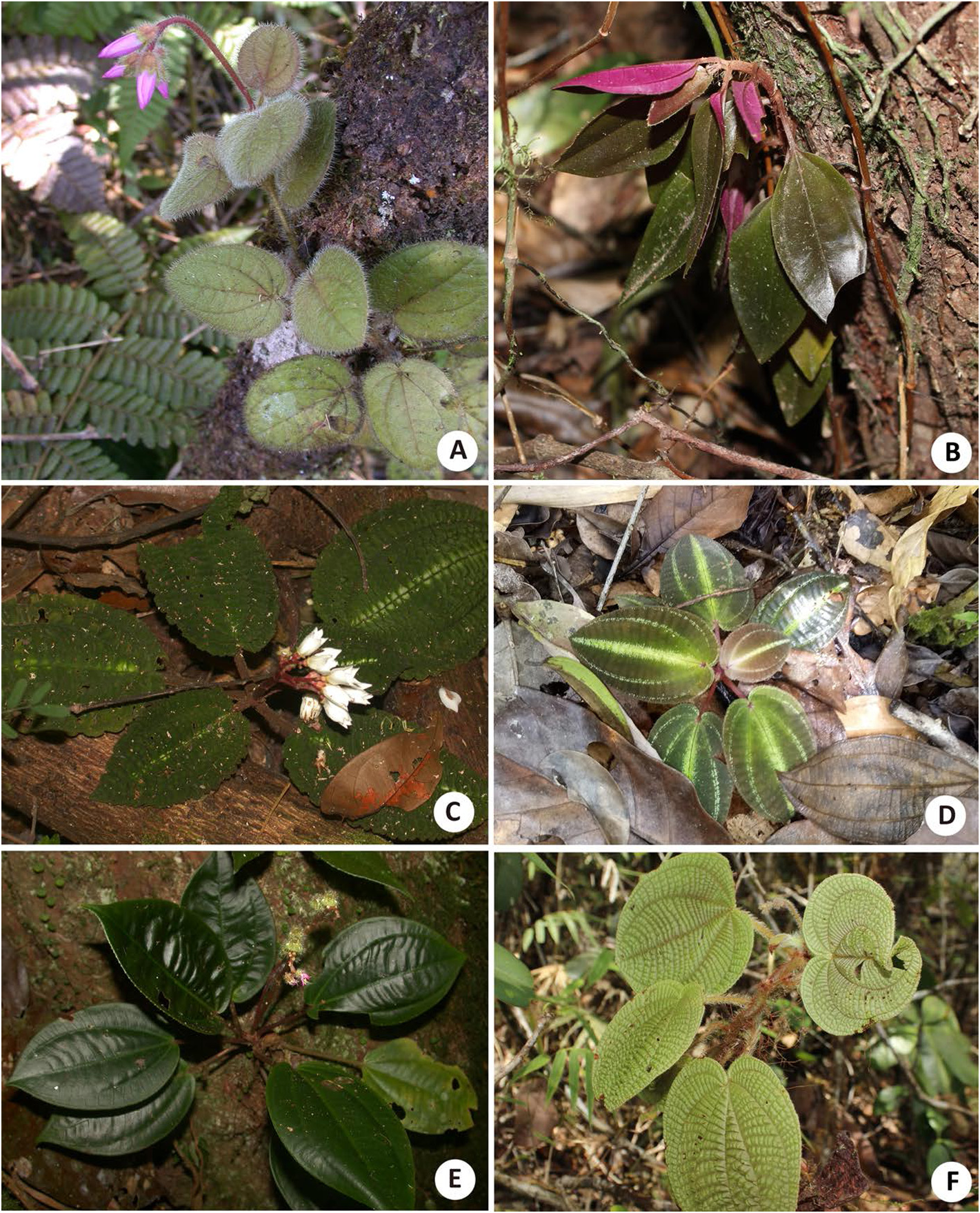
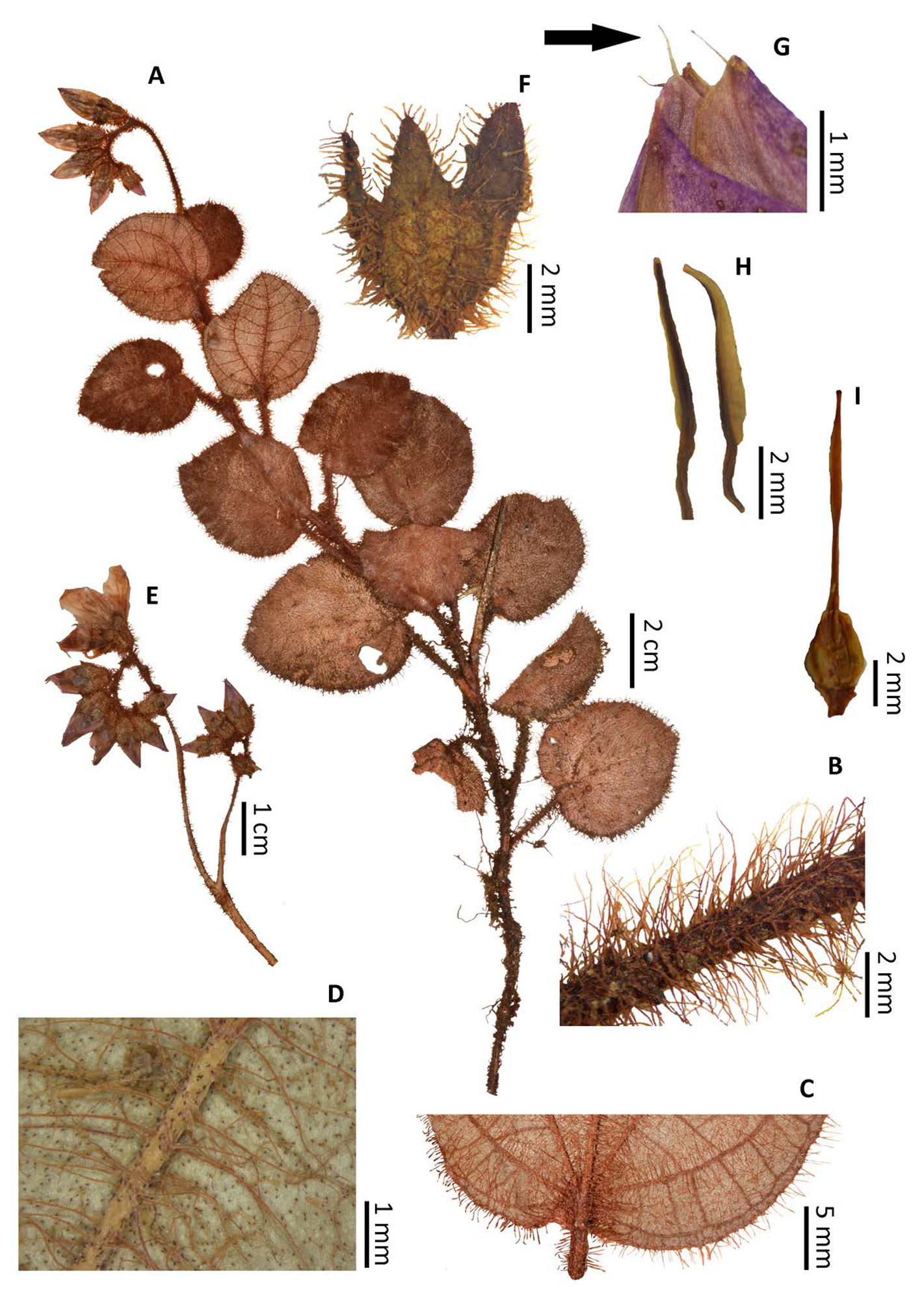
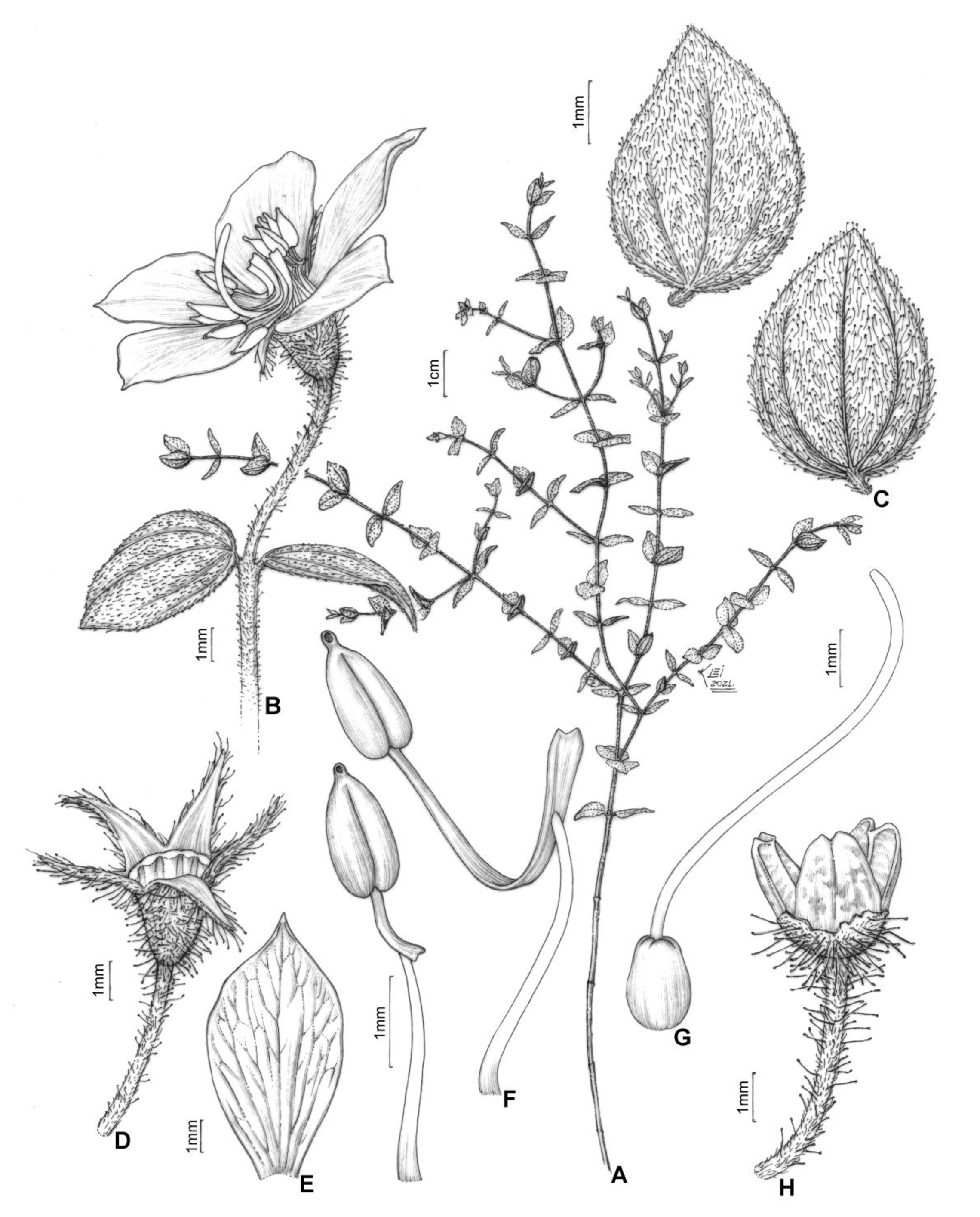
Bertolonia maculata is a species in the Melastomataceae family, native to Brazil, particularly in the states of Bahia and Espírito Santo. It is a terrestrial, epiphytic, or occasionally rupiculous herb growing 10–30 cm tall. The plant is characterized by a densely glandulose-punctate and glandulose-villose stem, opposite leaves with cordate to subcordate bases, and pink petals with an apiculate apex. It flowers and fruits between January and November. The species is distinguished by its anthers, which dehise through an introrse pore with thickened margins, and by its densely glandular trichomes on the stem, petioles, and hypanthium.
Description
Bertolonia maculata is found in lowland rainforests along the central and southern coasts of Bahia and in low elevation areas of Espírito Santo, often on rocky outcrops or at the base of trees. The plant has a stem 3–6 mm wide, with leaves 3.4–14.5 cm long and 2.5–8.9 cm wide, and a terminal inflorescence 6–15 cm long. The petals are pink, elliptic, and have an apiculate apex. The hypanthium is 2.4–3.1 mm long, and the sepals are ovate with ciliate margins. The species differs from B. marmorata by its flat or slightly undulate anthers and from B. carmoi by its apiculate petals and unappendaged anthers.
Distribution
BR · Brazil Northeast · Brazil Southeast
Synonyms
Bertolonia aeneaBertolonia maculata var. aeneaBertolonia smaragdina