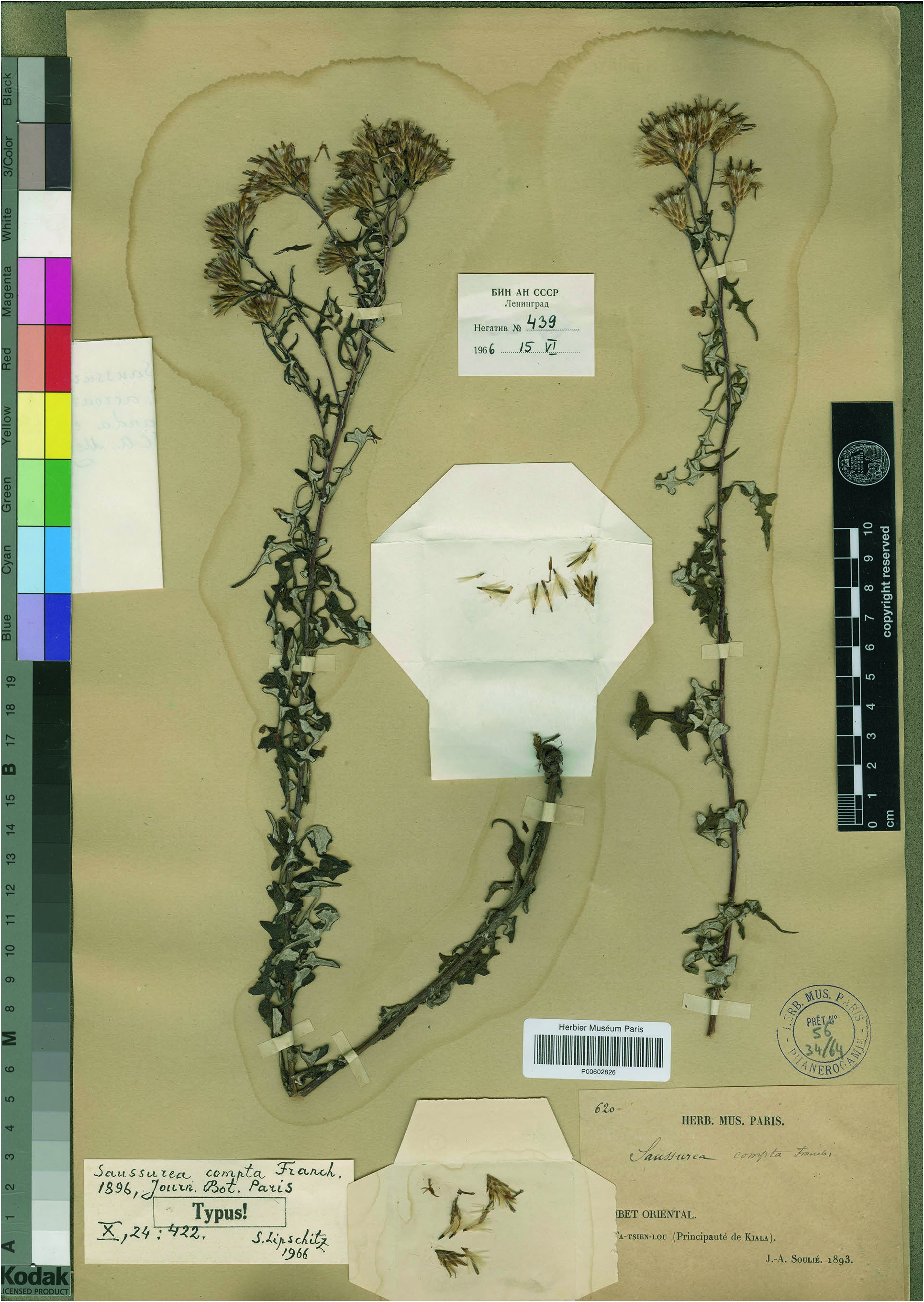
beaked crepis
Crepis vesicaria L.

Crepis vesicaria, commonly known as beaked crepis, is a flowering plant in the Asteraceae family. Native to Europe, it has a wide distribution across Western and Southern Europe and has been introduced to other regions, including North America. This species is characterized by its variable growth habit, ranging from annual to perennial, and is often found in a range of habitats. Its distinguishing features include a beaked achene and yellow ligulate corollas.
Description
Crepis vesicaria is an herb that can be annual, biennial, or perennial, reaching heights of 2 to 120 cm. It features a thin or thick taproot and a swollen caudex. The flowering stems are usually multiple, erect to procumbent, and often strongly branched in the upper half. Rosette leaves are obovate to ovate, ranging from 10 to 35 cm in length, with a petiole-like base and varying degrees of lobing. Cauline leaves are amplexicaul and auriculate, with the upper ones often reduced to scales. The inflorescence is corymbiform, with 10 to 20 heads, each containing 50 to 70 yellow flowers. The involucre is cylindrical to campanulate, with tomentose or glandular bracts. The achenes are dimorphic or homomorphic, with a beak 2 to 5 mm long, and are yellowish or pale brown with 10 ribs.
Habitat
Crepis vesicaria is commonly found in a variety of habitats, including roadsides, disturbed soils, meadows, and waste areas. It is well-adapted to temperate climates and can thrive in both dry and moist conditions. The plant is often seen in open, sunny locations and is able to tolerate a range of soil types, from sandy to loamy.
Cultivation
Crepis vesicaria is not typically cultivated for ornamental purposes, but it can be grown in gardens where its yellow flowers add a naturalistic touch. It prefers full sun and well-drained soil. The plant is relatively easy to grow from seed and can self-seed readily in suitable conditions. It is drought-tolerant once established and requires minimal maintenance. However, due to its tendency to spread, it may be considered invasive in some regions.
Uses
Crepis vesicaria is primarily of ecological interest and is not widely used in agriculture or horticulture. It serves as a food source for various insects, including pollinators such as bees and butterflies. In some regions, it may be used as a ruderal plant in restoration projects due to its ability to colonize disturbed areas. The plant is not known for medicinal or culinary uses.
Other common names
Beaked hawksbeardBeaked Hawk's-beardcrepis-dandeliondandelion crepisdandelion hawk's-beardbeaked crepisweedy hawk's-beardweedy hawksbeard
Distribution
New York · Corse · Turkey-in-Europe · Western Australia · Bosnia-Herzegovina · Germany · Ireland · Madeira · Portugal · Tunisia · Switzerland · Netherlands · New Zealand South · Montenegro · Spain · Algeria · Morocco · Canary Is. · Liechtenstein · Libya · Turkey · New Zealand North · North Carolina · Pennsylvania · Sicilia · Belgium · Slovenia · Gibraltar · France · Connecticut
Synonyms
Barkhausia taraxacoidesBarkhausia raphanifoliaCrepis muricataLagoseris raphanifoliaCrepis hiemalisCrepis taraxacifolia subsp. vesicariaCrepis taraxacoidesCrepis scariosaCrepis taraxacifoliaCrepis vesicaria var. pectinataCrepis vesicaria var. longisetaCrepis vesicaria var. recognitaCrepis taraxacifolia var. aissaeLagoseris taraxacoidesCrepis vesicaria var. ramosissimaBarkhausia hiemalisBarkhausia vesicariaHieracioides vesicariaCrepis vesicaria subsp. euvesicariaCrepis vesicaria var. scariosa