Banksia neoanglica
Banksia neoanglica (A.S.George) Stimpson & J.J.Bruhl

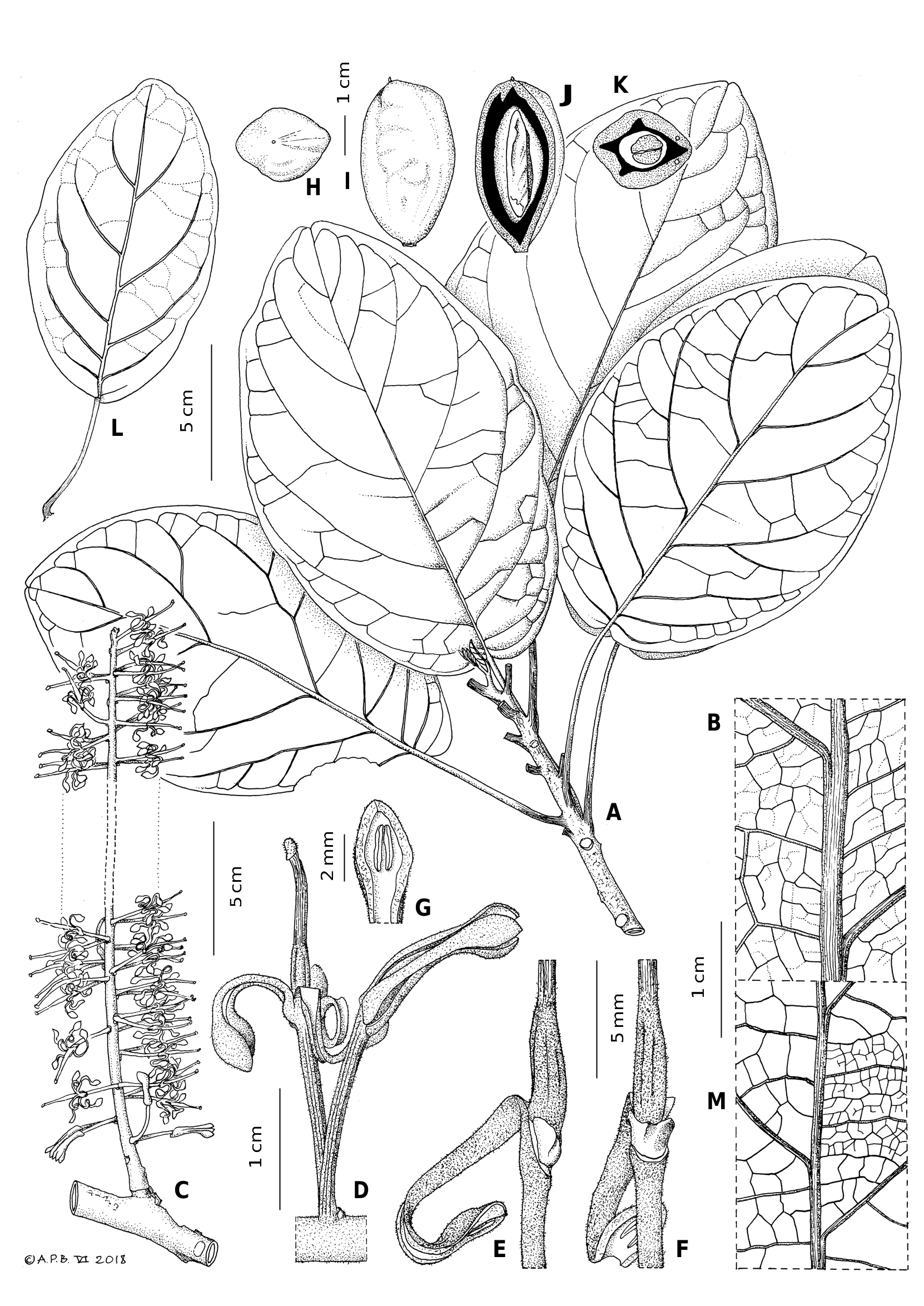
Banksia neoanglica is a shrub or small tree species in the Proteaceae family, native to New South Wales and Queensland, and described in 2012. It grows up to 7 m tall and is characterized by juvenile and adult leaves with distinct morphological features. The species is part of the Banksia spinulosa complex and is distinguished by its ecological and geographic traits.
Description
Banksia neoanglica is a shrub or tree with 2–8 (–10) stems, reaching up to 2.5 m as a shrub or 7 m as a tree, often growing from a lignotuber. Juvenile leaves are narrowly obovate, strongly dentate, and bidentate at the apex, while adult leaves are linear, occasionally toothed, and glabrous on the upper surface. Involucral bracts are subulate and grey-brown pubescent. The conflorescence is 84–119 mm long, with 12–16 floral pairs. The common bract has a thickened keel on the abaxial surface, with brown and green coloration. The perianth is yellow-orange at maturity, and the style is apically hooked, changing color to red, maroon, or black before anthesis. Infructescences are 85–120 mm long, and seeds are 15–19 mm long, including the wing.
Distribution
Global · New South Wales · Queensland
Synonyms
Banksia spinulosa var. neoanglica