bamboo palm
Raphia vinifera P.Beauv.

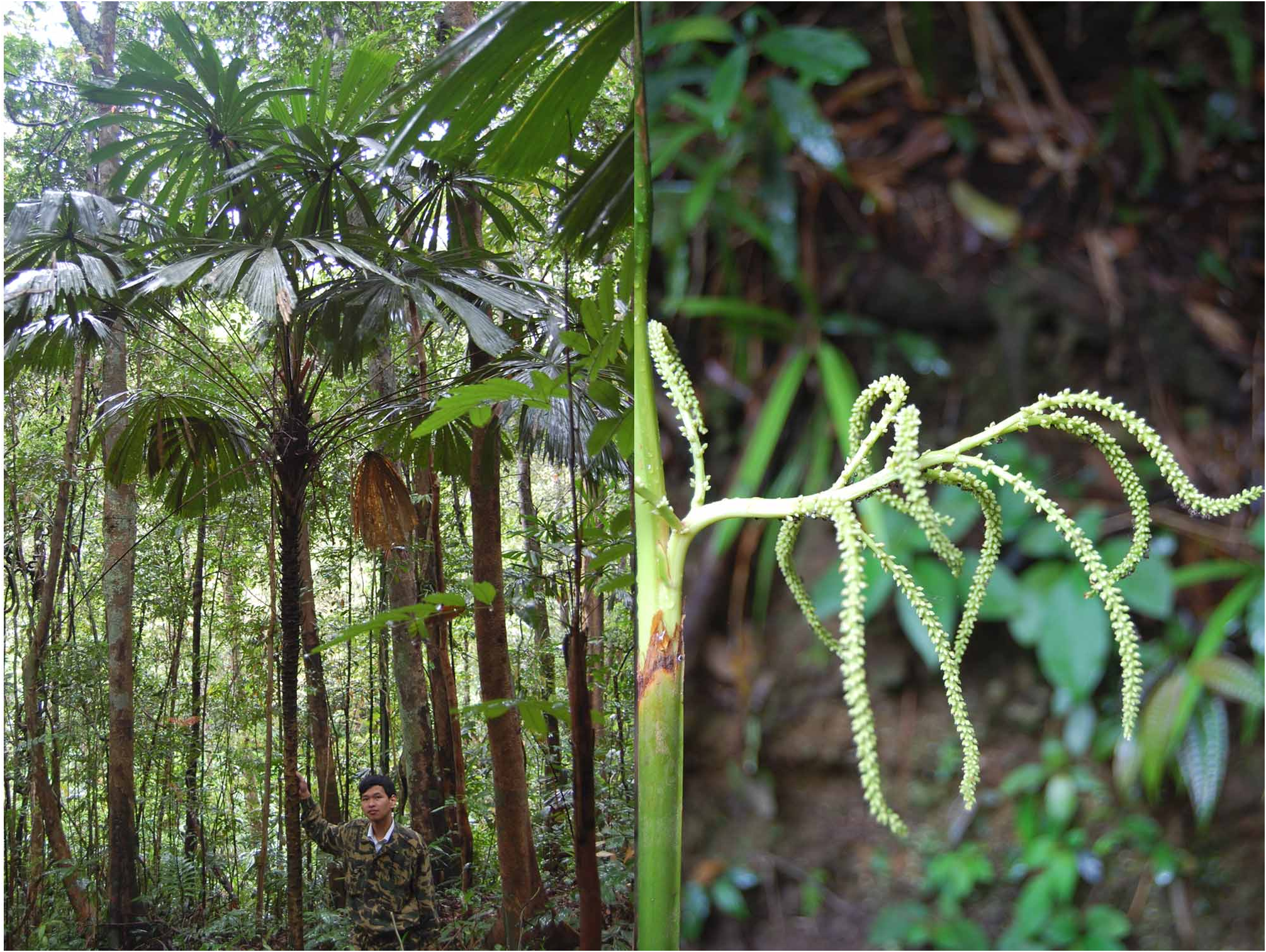
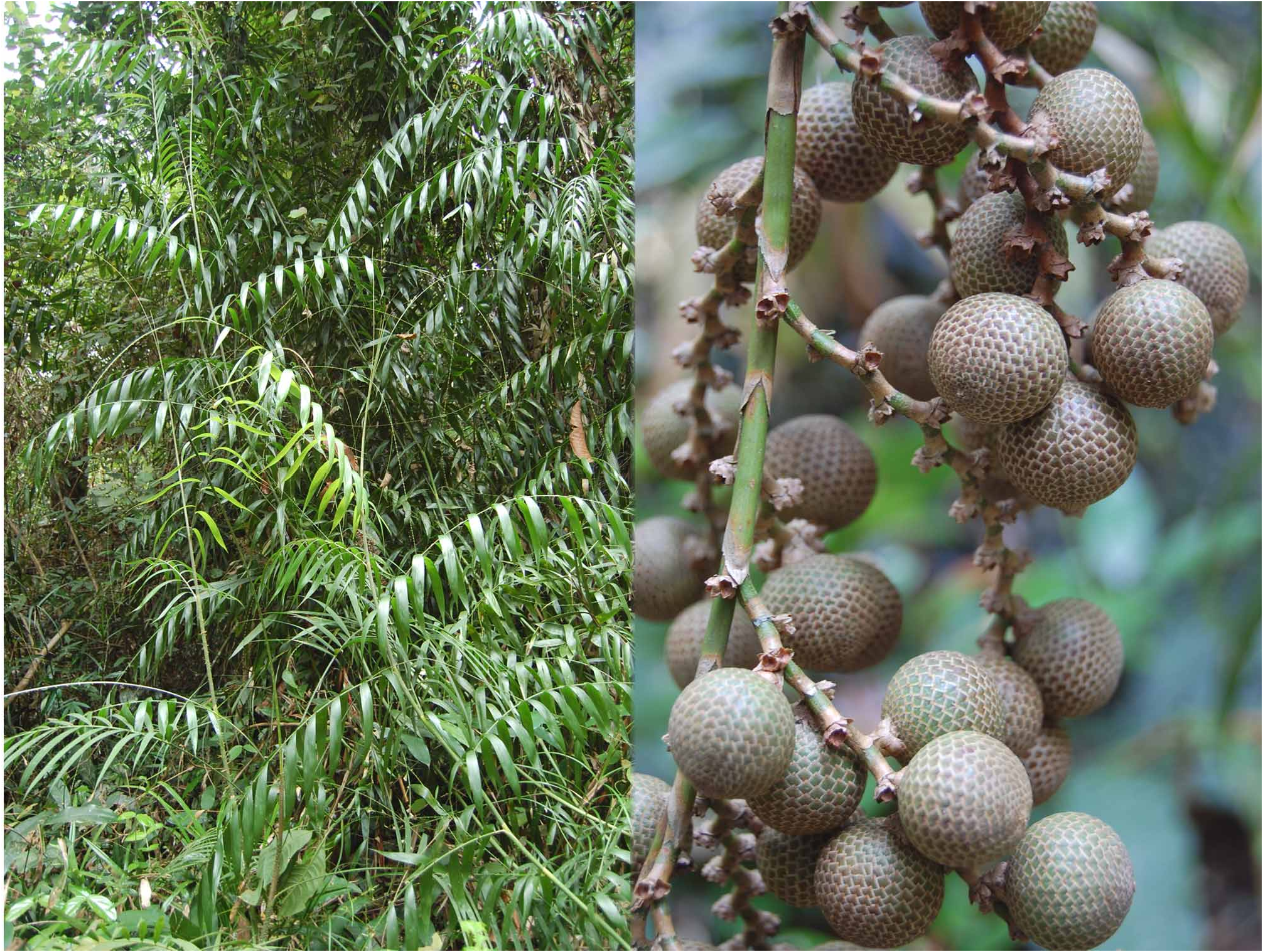
Raphia vinifera, a member of the Arecaceae family, is an acaulescent palm reaching 7–10 m in height. It is native to several African countries, including Cameroon, Nigeria, and the Central African Republic, and is commonly known as bamboo palm. This species is characterized by its clustering growth habit, persistent dead leaf sheaths, and long, arched leaves with spiny margins. It produces pendulous inflorescences and is used for food, fiber, and construction in its native range. The plant is also known as West African piassava palm and is particularly abundant in the Niger Delta and other lowland areas.
Description
Raphia vinifera is a shrubby palm tree that grows in riverbanks and floodable lowlands. It has 10–12 leaves, each up to 7–10 m long, with sheaths up to 80–90 cm and petioles 3–5 m long. The leaves bear 100–126 pinnae per side, which are 0.2–1.3 m long and arranged in four planes. The inflorescences are 0.60–1.95 m long, with pinkish-brown bracts and two orders of rachillae. The flowers are solitary and arranged in one or two rows. It is known locally as palmeira-bordão and is used for food, fiber, and building materials. This species is native to parts of West and Central Africa, including Benin, Gambia, Ghana, Nigeria, and Togo.
Other common names
Raphia Palmbamboo palmWest African piassava palm
Distribution
Cameroon · Global · Central African Repu · Nigeria · Sudan
Synonyms
Metroxylon viniferumRaphia mambillensisRaphia vinifera var. nigericaSagus raphiaSagus viniferaSagus viniferaRaphia vinifera var. vinifera