Bamboo Cycad
Ceratozamia hildae G.P.Landry & M.C.Wilson

Ceratozamia hildae is a cycad species in the family Zamiaceae, native to northeastern Mexico. It is commonly known as the Bamboo Cycad. The plant has a semi-epigeous stem, persistent cataphylls, and 2–7 ascending leaves. Its leaflets are clustered, oblong, and membranous, with distinct glaucous surfaces. The species is distinguished by its clustered leaflets and is found in deciduous oak woodlands at elevations of 850–1,300 m. It is threatened by habitat loss and over-collecting.
Description
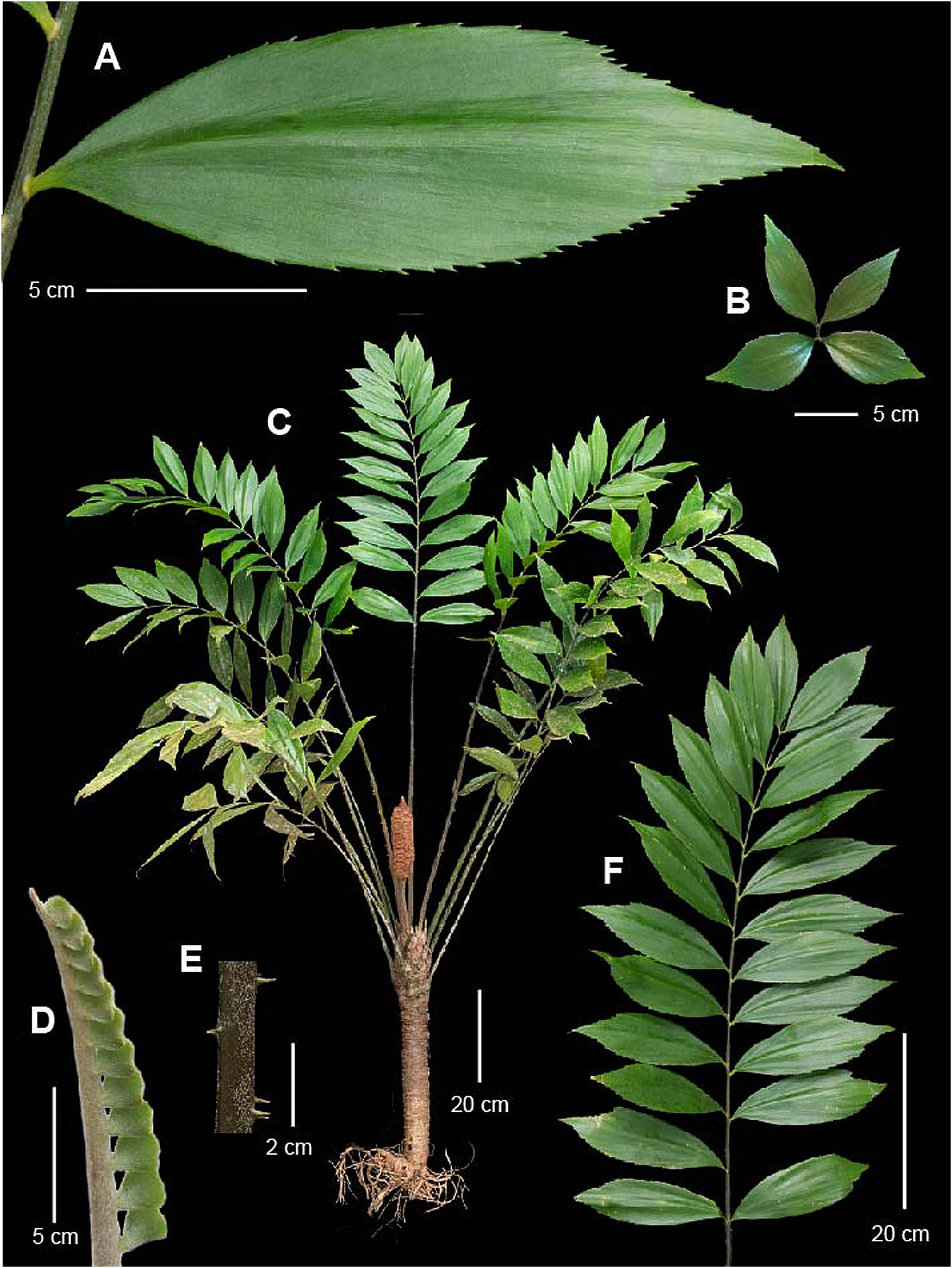
Ceratozamia hildae is a cycad species with a semi-epigeous stem, 10–20 cm long and 10–15 cm in diameter. It has 2–7 ascending leaves, 95–202 cm in length, with reddish-brown cataphylls that are densely tomentose at emergence and partially tomentose at maturity. The petiole is 43–89 cm long, with thin prickles, and the rachis is 60–130 cm long. Leaflets are in 5–11 fascicles, 16–56 in total, oblong, clustered, and membranaceous, with glaucous adaxial and abaxial surfaces. The species is native to the Huasteca Potosina in Querétaro and San Luis Potosí, inhabiting deciduous oak woodlands. It is distinguished by its clustered leaflets and is threatened by habitat loss and over-collecting.
Other common names
Bamboo CycadCycad
Distribution
Global · Mexico Northeast