Avens
Geum urbanum L.

Geum urbanum is a perennial herb belonging to the Rosaceae family, commonly known as wood avens. It is native to temperate regions of Eurasia and North America, where it thrives in shaded habitats. This plant has a long history of use in traditional medicine and is recognized for its distinctive yellow flowers and palmate leaves. Its scientific name was first published by Carl Linnaeus in 1753.
Description
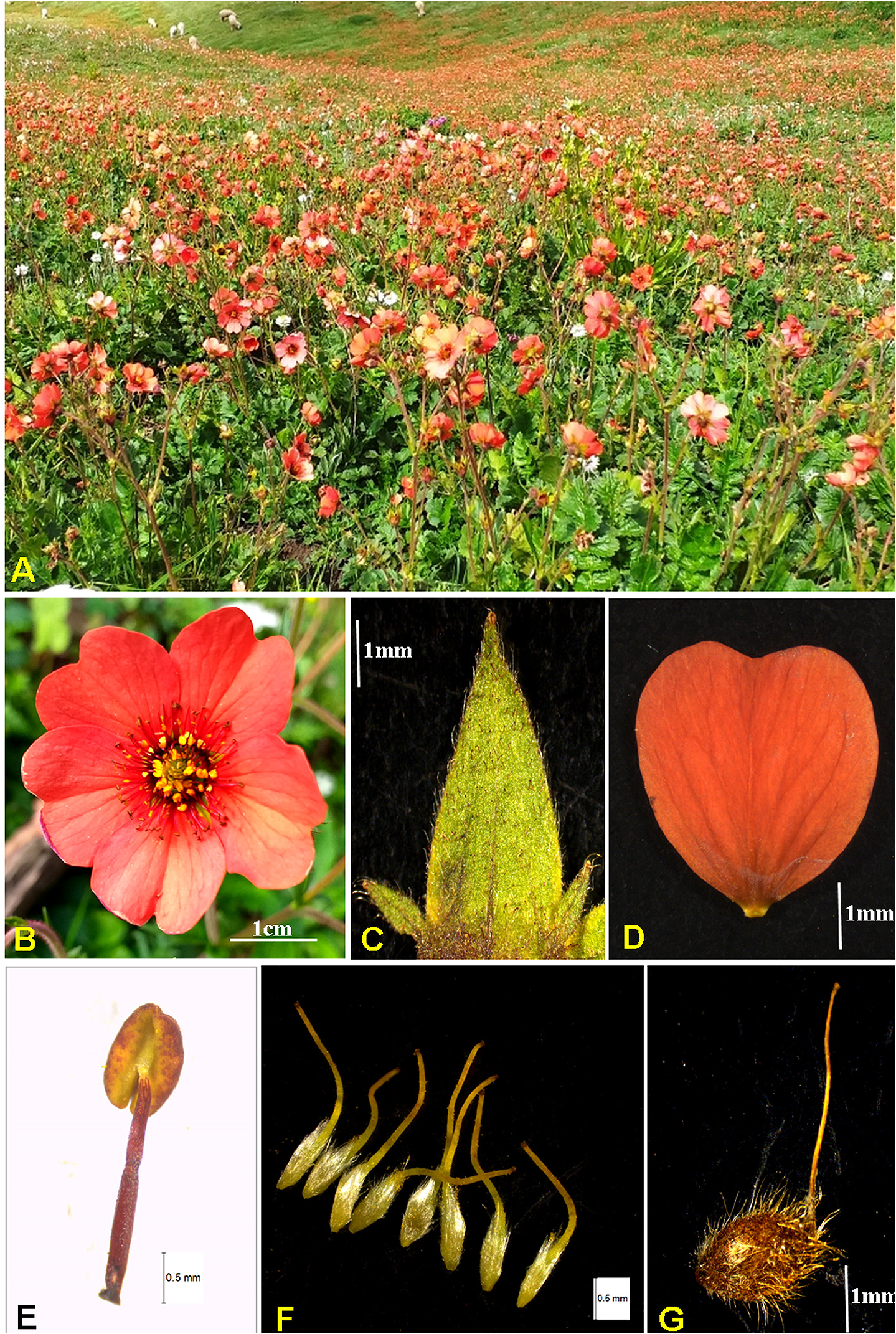
Geum urbanum is a herbaceous perennial with a rhizomatous root system. It typically reaches heights of 30 to 80 cm. The leaves are palmately divided into three to five lobes and are arranged alternately along the stem. The flowers are bright yellow, with five petals and a prominent central column of stamens and styles. The fruit is a cluster of achenes, each with a long, feathery appendage that aids in wind dispersal. The plant is known for its ability to form dense colonies in suitable habitats.
Habitat
This species is commonly found in woodland understories, shaded thickets, and along stream banks. It prefers moist, well-drained soils and thrives in partial to full shade. Geum urbanum is often associated with rich, loamy soils and is a common sight in deciduous forests and other shaded environments across its native range.
Cultivation
Geum urbanum is relatively easy to grow in a garden setting, provided it is given the right conditions. It prefers partial shade and moist, fertile soil. The plant can be propagated through division of the rhizomes or by seed. It is somewhat drought-tolerant once established but performs best with regular watering. It is a hardy plant that can tolerate a range of soil types, though it prefers soils with good organic content.
Uses
Historically, Geum urbanum has been used in traditional medicine for its astringent and anti-inflammatory properties. The roots were often used to make infusions for treating digestive issues and respiratory ailments. The plant has also been used in folk remedies for skin conditions and as a general tonic. In culinary use, the young leaves and shoots can be eaten raw or cooked, though they have a slightly bitter taste. The plant is also valued in horticulture for its ornamental qualities and ability to naturalize in shaded garden areas.
Other common names
AvensBennet'S RootBennet'S-RootClove-RootCloverootColewortHerb BennetHerb-BennetSt. Benedict'S HerbWood Avens
Distribution
New Brunswick · Ontario · Prince Edward Island · Quebec · Portugal Continental · DK · FI · NO · SE · Flanders · Vermont-US · CA · conterminous 48 United States · Belgium · Brussels-Capital Region · Flemish Region · Walloon Region · Albania · Algeria · Austria · Baltic States · Belarus · Bulgaria · Central European Rus · Corse · Czechoslovakia · Denmark · East European Russia · Finland · France
Synonyms
Geum rubifoliumCaryophyllata urbanaCaryophyllata officinalisGeum royleiGeum hyrcanumStreptilon odoratumBernoullia mediaCaryophyllata officinalisCaryophyllata vulgarisGeum umbrosumGeum salvatorisGeum sordidumGeum rivale subsp. urbanumGeum hederifoliumGeum hirtumGeum caryophyllataGeum ambiguumGeum klettianumGeum robustumGeum vicanumGeum ibericumGeum caucasicumGeum vidaliiGeum pseudomolleGeum klettianumGeum urbanum var. platyolobumGeum urbanum var. stenolobumGeum ibericumGeum urbanum var. mauritanicumGeum urbanum var. strictum