Aspidosperma pyrifolium
Aspidosperma pyrifolium Mart.

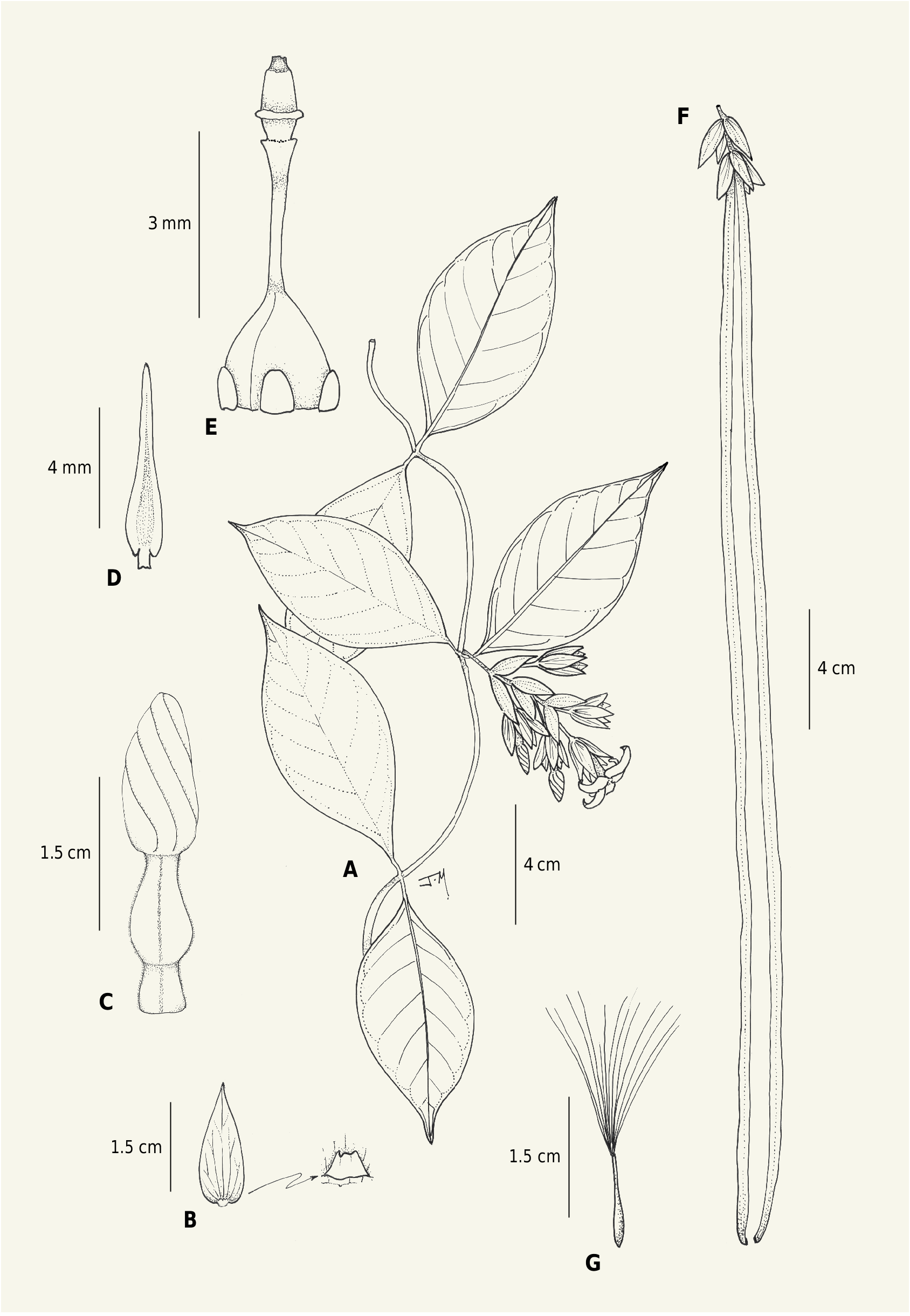
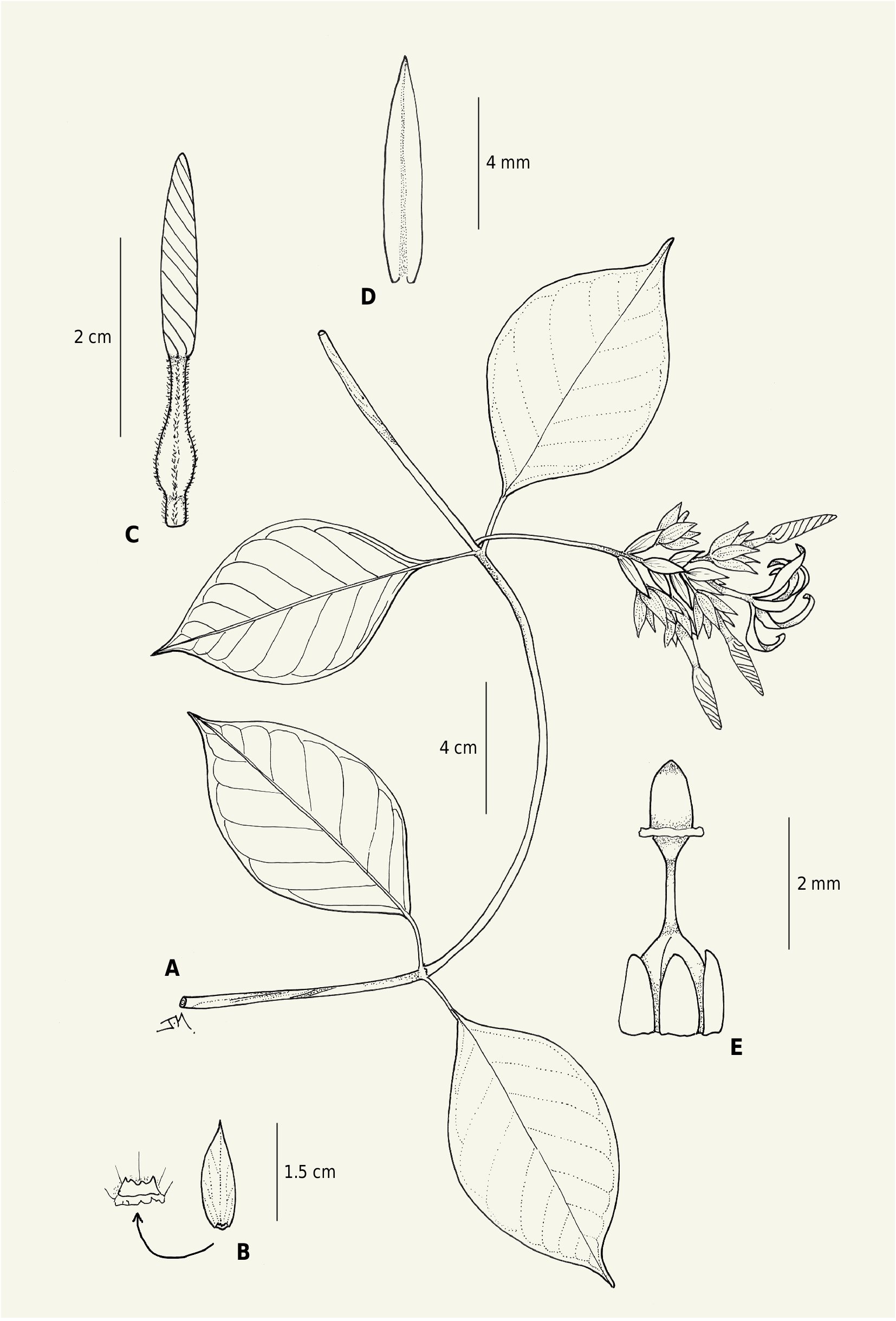
Aspidosperma pyrifolium is a tree species native to Brazil and Paraguay, first described by Carl Friedrich Philipp von Martius in 1824. It is associated with the Caatinga vegetation and has utility in beekeeping. The species belongs to the genus Aspidosperma within the Apocynaceae family. Its original description was based on a single collection by Martius, and a lectotype was later designated to stabilize its taxonomic status.
Description
Aspidosperma pyrifolium was first published by Martius in 1824 in 'Flora,' based on a single collection. The original material lacked a holotype, prompting the selection of a lectotype (M-0184040) to clarify its taxonomic status. The species is native to Brazil and Paraguay and is characteristic of the Caatinga biome. It has been used in beekeeping. Taxonomic analysis revealed that one of the isolectotypes belongs to A. multiflorum and was excluded from A. pyrifolium. The species is part of the Apocynaceae family, a group of flowering plants commonly known as the dogbane family.
Distribution
BR · Global · Bolivia · Brazil Northeast · Brazil North · Brazil Southeast · Brazil West-Central · Paraguay
Synonyms
Macaglia martiiMacaglia populifoliaMacaglia pyrifoliaMacaglia refractaAspidosperma guaraniticumAspidosperma martiiAspidosperma molleAspidosperma populifoliumAspidosperma refractumAspidosperma pyrifolium var. molleAspidosperma martii