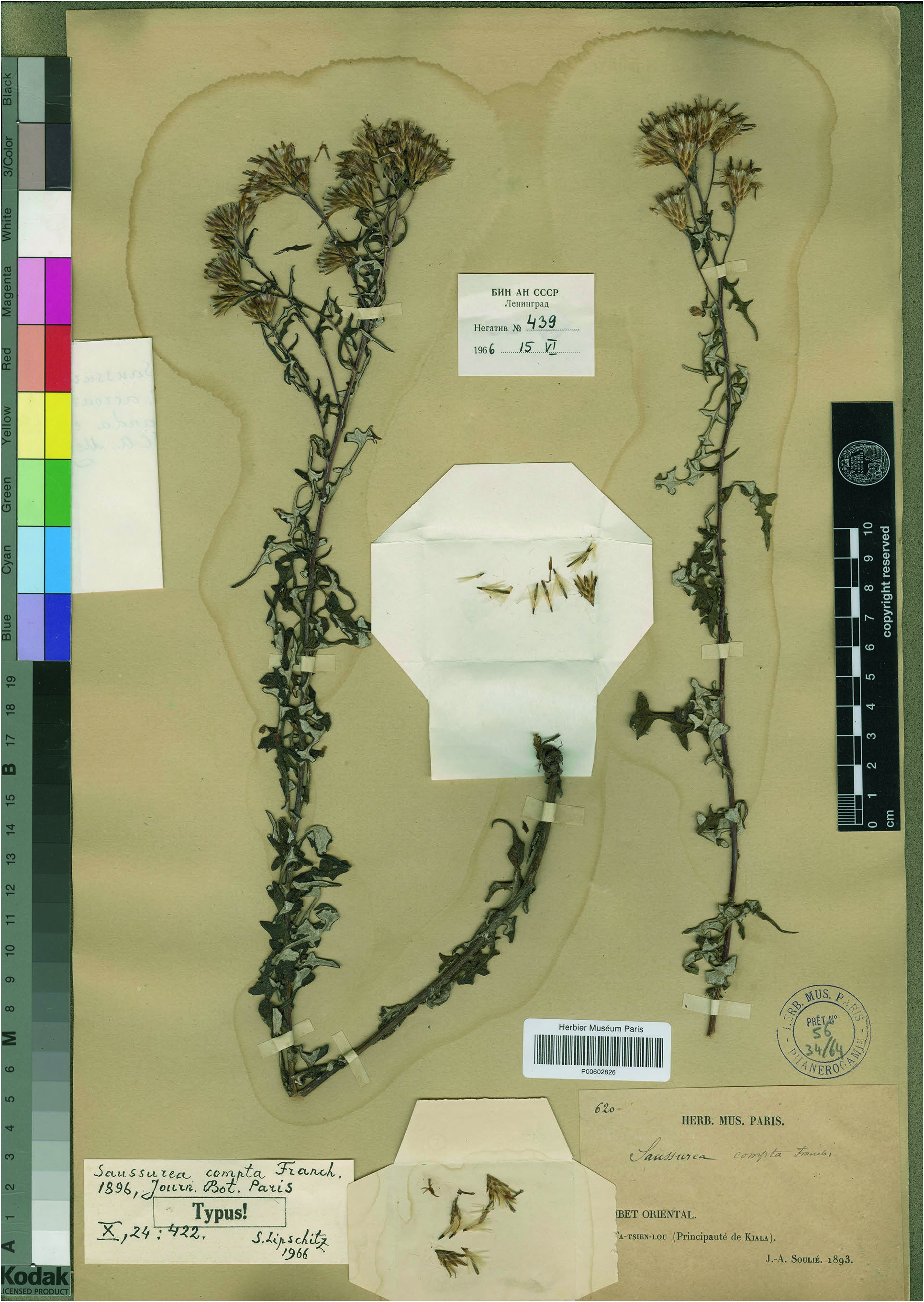
Artemisia
Artemisia vulgaris L.
Artemisia vulgaris is a flowering plant in the daisy family Asteraceae. It is widely known as mugwort and is one of the most commonly recognized species in the Artemisia genus. This plant has a long history of use in traditional medicine and as a culinary herb. Native to a broad range of regions, it has been naturalized in many parts of the world and is often found in disturbed habitats.
Description
Artemisia vulgaris is a perennial herb that can grow up to 2 meters in height. It has finely divided, gray-green leaves that are often aromatic. The plant produces small, inconspicuous yellowish flowers in dense clusters during the summer and autumn months. The leaves and stems are covered with a fine, silvery down, which gives the plant a distinctive appearance. The plant is dioecious, meaning that male and female flowers are found on separate plants.
Habitat
Artemisia vulgaris is commonly found in a variety of habitats, including roadsides, fields, waste areas, and along the edges of forests. It thrives in disturbed soils and is often one of the first plants to colonize such areas. It is adaptable to a wide range of environmental conditions, including different soil types and levels of moisture. It is native to Europe, North Africa, and Asia, and has been introduced to North America and other regions, where it is often considered an invasive species.
Cultivation
Artemisia vulgaris is relatively easy to grow and can be propagated from seeds or cuttings. It prefers full sun to partial shade and well-drained soil. The plant is drought-tolerant once established and does not require frequent watering. It is often grown in herb gardens for its aromatic foliage and historical uses. However, due to its vigorous growth and tendency to spread, it should be planted with care to avoid becoming invasive.
Uses
Artemisia vulgaris has a long history of use in traditional medicine, where it has been employed to treat a variety of ailments, including digestive issues, menstrual disorders, and skin conditions. It has also been used as a culinary herb, particularly in European cuisines, where it was historically used to flavor beer before the widespread use of hops. In modern times, it is sometimes used in aromatherapy and as a natural insect repellent. The plant is also used in some cultural and spiritual practices due to its aromatic properties.
Other common names
ArtemisiaCommon MugwortCommon WormwoodFelon-HerbFelonherbGreen-GingerHierba De San JuanLobed WormwoodMother Of HerbsMugwort
Distribution
Greenland · Newfoundland · Alberta · British Columbia · Manitoba · New Brunswick · Nova Scotia · Ontario · Prince Edward Island · Quebec · Saskatchewan · Saint Pierre and Miquelon · Portugal Continental · FI · IS · NO · SE · BR · PW · Belgium · France · The Netherlands · Great Britain · GB · BY · FM · Flanders · Bulgaria · Channel Is. · Ireland
Synonyms
Artemisia opulentaArtemisia cannabifolia var. cannabifoliaArtemisia indica f. indicaArtemisia opulenta f. opulentaArtemisia vulgaris var. latilobaArtemisia selengensis var. selengensisArtemisia vulgaris var. selengensisArtemisia glabrataArtemisia hispanicaArtemisia vulgaris var. vulgarisAbsinthium vulgare