arching bushweed
Flueggea suffruticosa (Pall.) Baill.

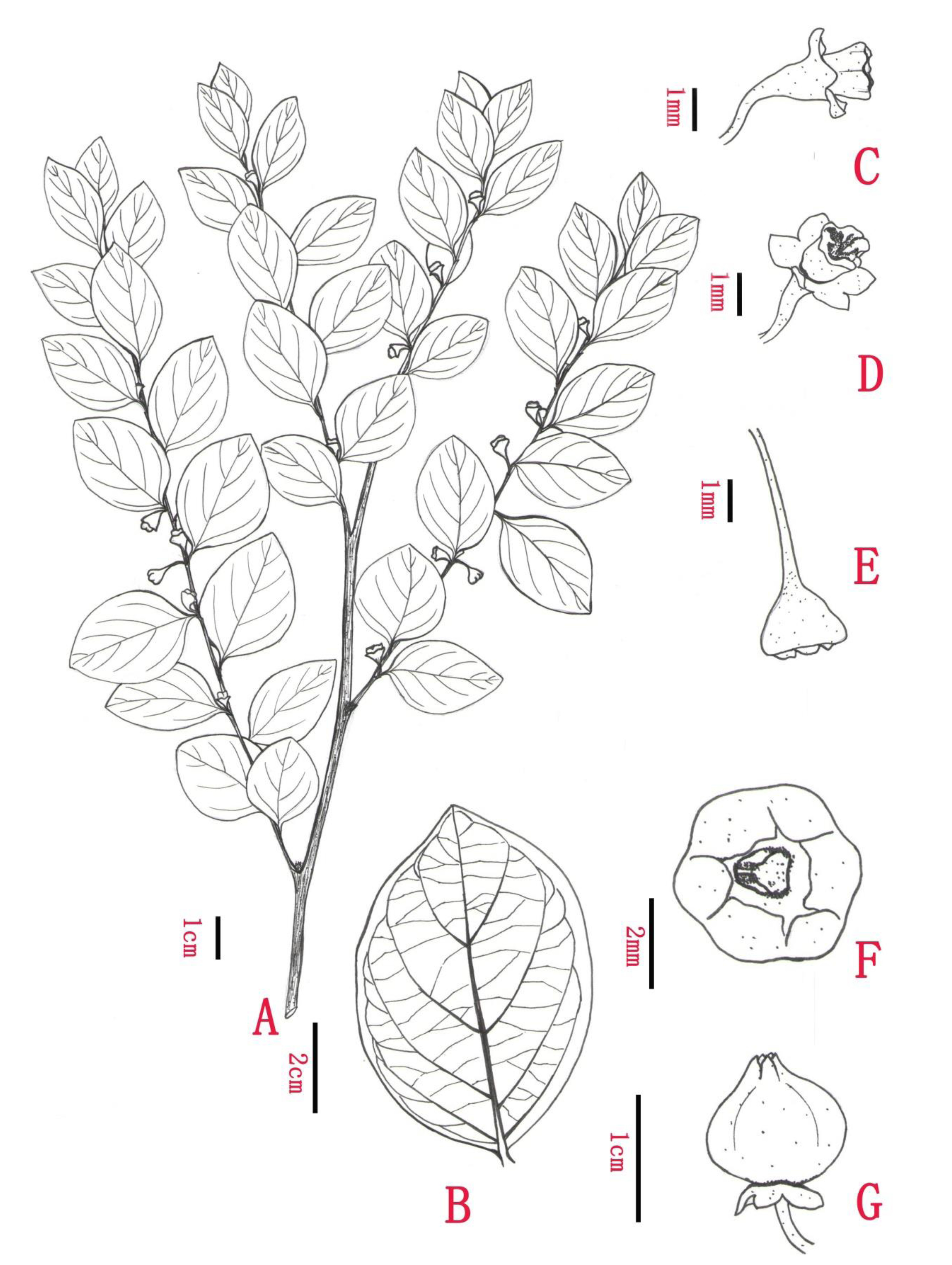
Flueggea suffruticosa, a deciduous shrub in the family Phyllanthaceae, is native to East Asia and parts of eastern Europe and northern Asia. It is one of the 50 fundamental herbs in traditional Chinese medicine, known as yī yè qiū. The plant is characterized by alternate, odd-pinnate compound leaves and unisexual flowers that bloom with or after the leaves, arranged in terminal inflorescences. Its fruit is a nut or drupe with 2–4 seeds, lacking endosperm, and with many-veined cotyledons. Winter buds are typically covered or naked, with scale or hair features depending on the subspecies.
Description
Flueggea suffruticosa is found in regions including China, Japan, Korea, Mongolia, and parts of Russia and Europe. The species was published in 1858. It is distinguished in the Juglandaceae key by features such as the number of bundle scars, presence or absence of hair on the buds, and the shape of the fruit. The shrub plays a role in traditional Chinese medicine and is recognized for its ecological and medicinal value in its native range.
Other common names
arching bushweedbushweed
Distribution
Quebec · TW · Ukraine · SE · AM · NO · Amur · China North-Central · China South-Central · China Southeast · Chita · Hainan · Inner Mongolia · Japan · Korea · Manchuria · Mongolia · Primorye · Taiwan · Tibet
Synonyms
Pharnaceum suffruticosumPhyllanthus flueggeoidesPhyllanthus ramiflorusPhyllanthus trigonocladusSecurinega fluggeoidesSecurinega japonicaSecurinega multifloraSecurinega ramifloraSecurinega suffruticosaSecurinega suffruticosa var. amamiensisAcidoton flueggeoidesAcidoton ramiflorusXylophylla parvifloraXylophylla ramifloraFlueggea flueggeoidesFlueggea japonicaFlueggea trigonocladaGeblera chinensisGeblera suffruticosaGeblera sungariensisSecurinega microcarpaSecurinega suffruticosa f. japonicaSecurinega suffruticosa var. japonica