Ameroglossum pernambucense
Ameroglossum pernambucense Eb.Fisch., S.Vogel & A.V.Lopes

Ameroglossum pernambucense is a saxicolous chamaephyte endemic to the Borborema Plateau in Pernambuco, northeastern Brazil. It grows on tall granite rocks and is pollinated by hummingbirds from March to October, with a peak in July. The species is threatened by drought, trampling by cattle, and habitat fragmentation. Populations typically number around 50 mature plants.
Description
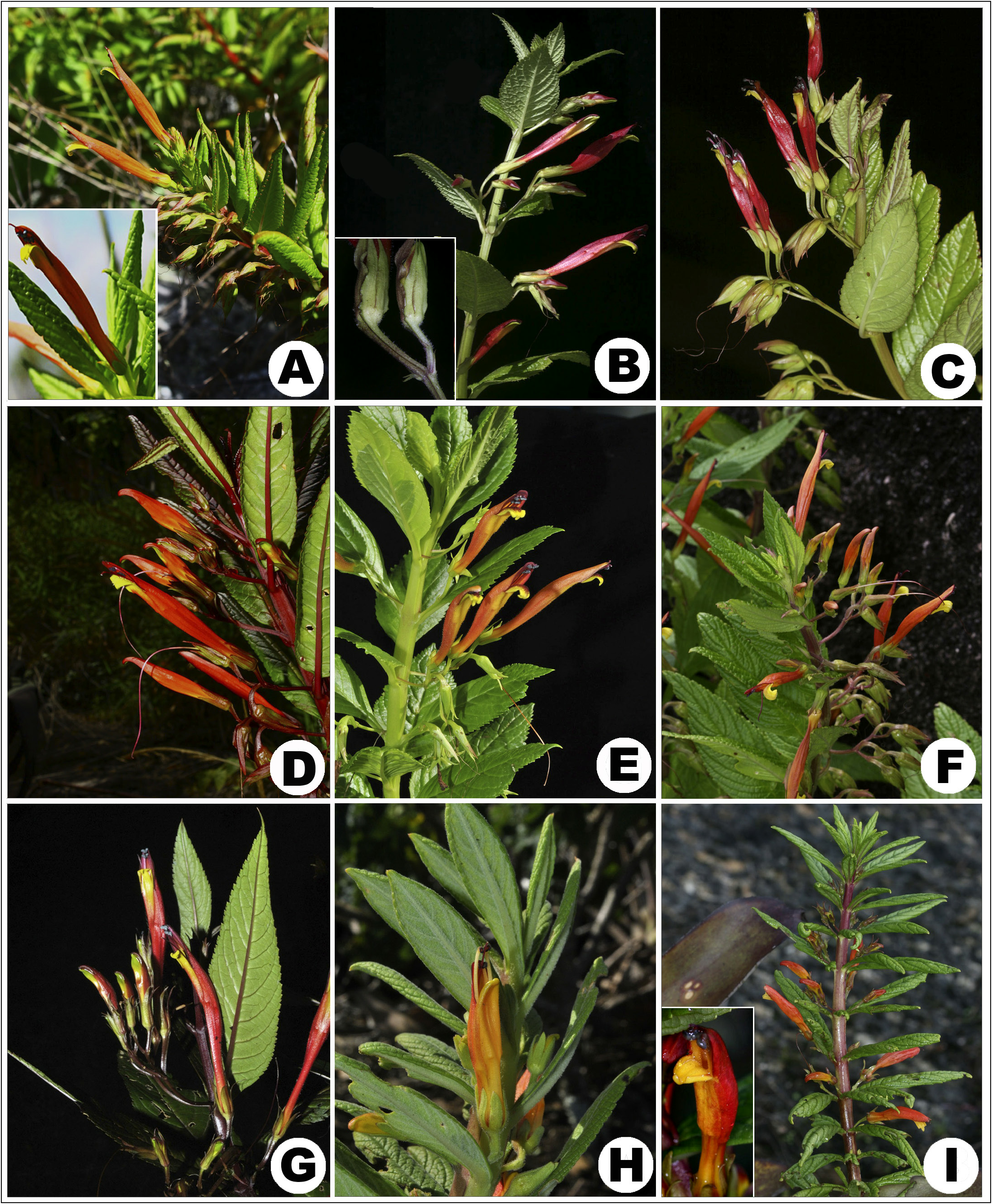
Ameroglossum pernambucense is a member of the Scrophulariaceae family and is characterized by verticillate, villose leaves and a simple dichasium inflorescence. The plant reaches up to 2 m in height and has green to purplish, winged, and villose young branches. Leaves are elliptic to narrowly elliptic, with bifid trichomes on the abaxial side. The calyx is pubescent with aciculate and bipinnate trichomes. It differs from related species by its verticillate leaves and pubescent foliage. The species was first described in 1999 and is named after the state of Pernambuco, where it was first collected.
Distribution
BR · Global · Brazil Northeast