`ama`u
Sadleria squarrosa (Gaudich.) T.Moore

Sadleria squarrosa, commonly known as `ama`u, is a species in the fern family Blechnaceae. It was first described in 1857 by T.Moore, with the original work based on Gaudichaud's material. This species is native to the Hawaiian Islands, where it is an important component of the native flora.
Description
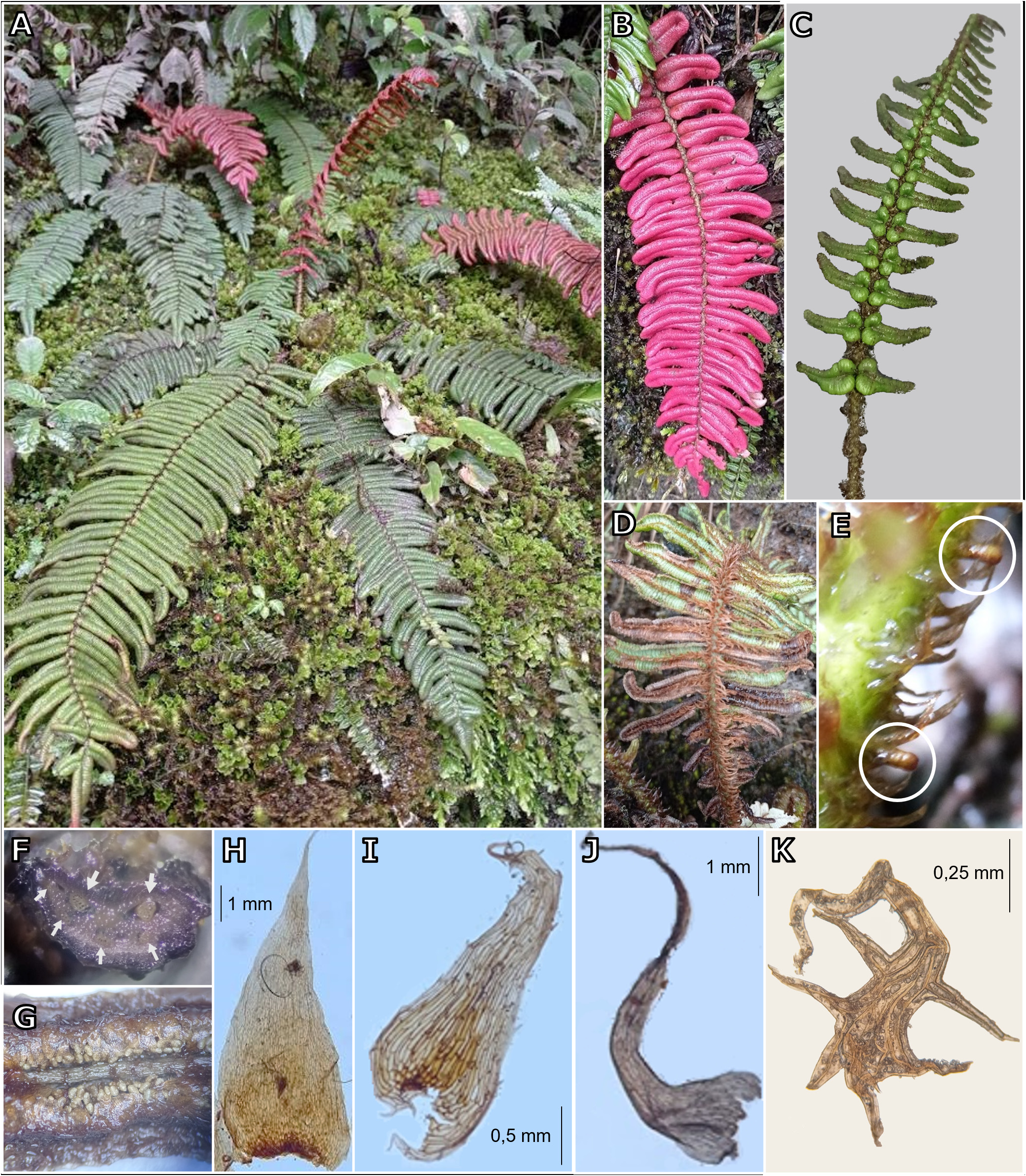
Sadleria squarrosa is a terrestrial fern characterized by its distinctive, leathery fronds that are typically arranged in a rosette. The plant is adapted to moist, shaded environments and is often found in mesic to wet forests. As a member of the Blechnaceae family, it shares traits with other wood ferns, including a creeping rhizome and persistent, scale-covered stems. The species plays a role in stabilizing soil and providing habitat for native insects and birds. It is also culturally significant to Native Hawaiians, who historically used it for thatching and other practical purposes.
Other common names
`ama`u`ama`uma`u`apu`uforest plume fernma`uma`uma`upua`a `ehu`ehu
Synonyms
Blechnum polystichoidesSadleria polystichoidesBlechnum squarrosum