African Barwood
Pterocarpus erinaceus Poir.

Pterocarpus erinaceus, known as African Barwood, is a tree species native to West Africa. It is listed in CITES Appendix II due to its endangered status. The tree is used for fuel, woodwork, and as a nitrogen-fixing plant in agriculture. It is found in savannahs and forests across several West African countries, including Côte d'Ivoire and Nigeria. It typically grows to 11 meters in height, with dark scaly bark, yellow flowers, and winged fruits. It thrives in sunny, hot environments with long dry seasons and frequent fires.
Description
Pterocarpus erinaceus is native to the Sahelian region of West Africa and is recognized for its utility in fuel, woodworking, and medicinal applications. It is also used to enhance nutrient-depleted soils through nitrogen fixation. The species is becoming increasingly rare and is sometimes cultivated. Common names for the tree include kosso, barwood, African kino tree, muninga, vène, and mukwa. It is found in savannahs and in the forests of Comoé National Park in Côte d'Ivoire. The tree grows in abundance in Kurmi Local Govt. of Taraba State in Nigeria. It is characterized by its dark, scaly bark, yellow flowers, and winged fruits. P. erinaceus thrives in sunny, hot African plains with long dry seasons and frequent fires.
Other common names
African BarwoodAfrican Kino TreeAfrican RosewoodAfrican TeakKenoKossoSenegal RosewoodAfrican kinoWest African kinoWest African rosewoodbarwoodmadobiaGambian kinoAfrican-teakblack camwood
Distribution
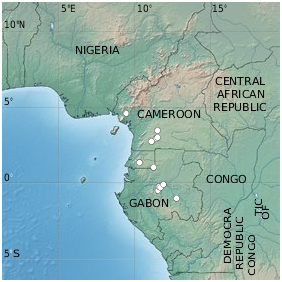
Global · Benin · Burkina · Cameroon · Central African Repu · Chad · Gabon · Gambia · Ghana · Guinea-Bissau · Guinea · Ivory Coast · Liberia · Mali · Nigeria · Niger · Senegal · Sierra Leone · Togo · Base-Guinée · Guinée forestière · Haute-Guinée · Moyenne-Guinée
Synonyms
Pterocarpus senegalensisDrepanocarpus senegalensisEchinodiscus erinaceusPterocarpus adansoniiPterocarpus africanusLingoum erinaceum